- 17 June, 2026

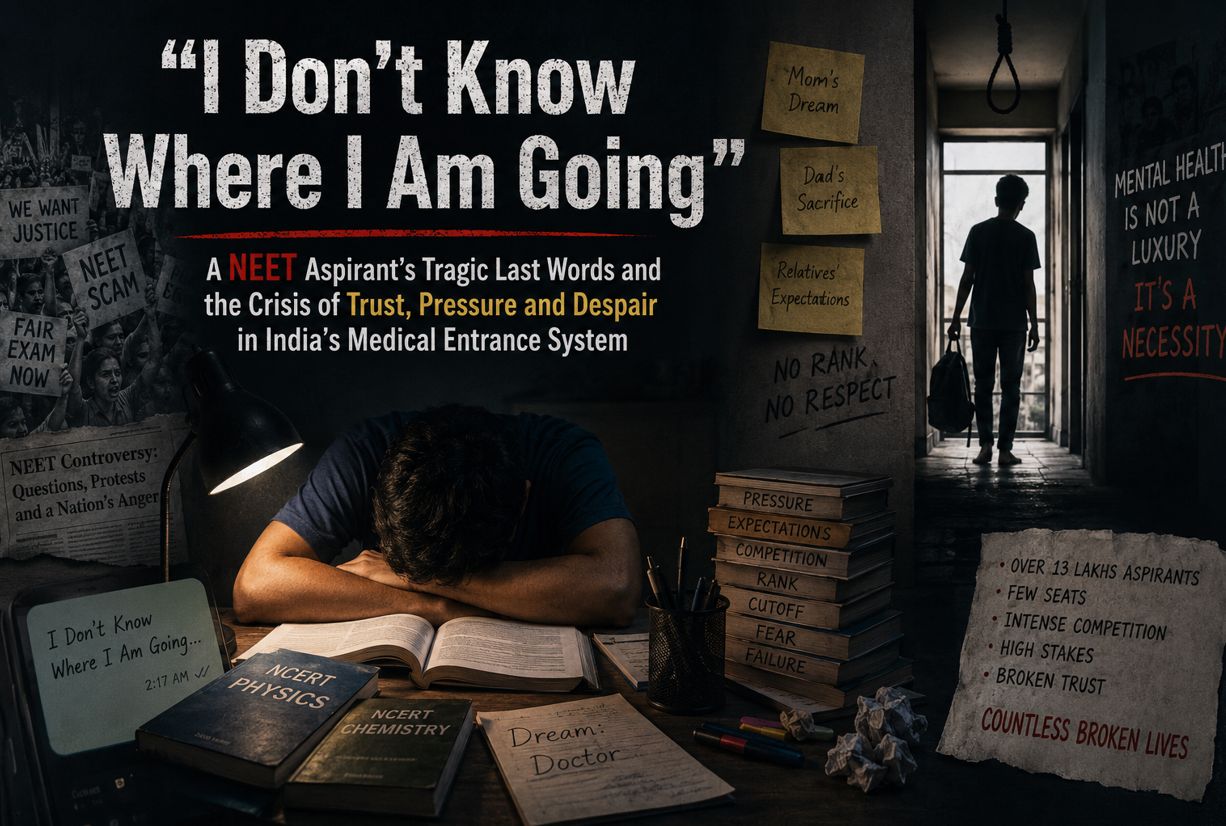
New Delhi, June 17, 2026: The growing distress among NEET aspirants has been reflected in a series of tragic incidents across India. In Rajasthan’s Sikar district, a 22-year-old NEET aspirant died by suicide just days before the examination, reportedly leaving behind the words, “I am going very far away, I don’t know where I am going.”


In another case, a NEET aspirant from Dehradun, Uttarakhand, died by suicide amid concerns surrounding examination-related uncertainty and pressure. These incidents have intensified concerns about the emotional burden faced by thousands of students preparing for one of India’s most competitive entrance examinations.
For millions of Indian students, the National Eligibility cum Entrance Test (NEET) represents a pathway to achieving the dream of becoming a doctor. Every year, lakhs of aspirants spend months and even years preparing for one of the country’s most competitive examinations, often sacrificing their childhood, social life and personal well-being. However,allegations surrounding NEET paper leaks, examination irregularities and demands for re-tests have created deep uncertainty among students and families. For many young aspirants, the examination that was meant to decide their future became a source of anxiety, disappointment and emotional distress.


The recent deaths by suicide of NEET aspirants, including cases reported from Rajasthan’s Sikar and other regions, have brought renewed attention to the immense pressure faced by students. These tragedies have sparked questions about examination transparency, accountability and whether India’s competitive education system is placing an unbearable burden on young minds.
The National Eligibility cum Entrance Test was introduced as a single national-level medical entrance examination to replace multiple state and private medical entrance tests. The objective was to create a more uniform and transparent admission process for medical colleges across India.
NEET was designed to reduce inequality by ensuring that students from different states and educational backgrounds would compete through a common examination system. Over the years, the test became one of the most challenging examinations in India, attracting millions of applicants every year.
However, as competition increased, so did concerns about examination security, coaching pressure and the mental health challenges faced by students.
The medical profession carries immense social respect in India, and many families see becoming a doctor as a symbol of success and stability. This expectation has created intense pressure, with students often feeling that failure in NEET represents failure in life itself.
The emergence of alleged paper leaks and irregularities added another layer of distress. Students who had prepared honestly began questioning whether their hard work was being valued fairly.
The controversy surrounding NEET paper leaks has raised serious concerns among students, parents and education experts.
Reports of leaked examination material and alleged malpractice created anger among aspirants who felt that the integrity of the examination process had been compromised.
For students who spend years preparing, even the possibility that some candidates may have gained unfair advantages creates a feeling of injustice. Many aspirants demanded investigations, transparency and corrective measures.
Protests emerged in different parts of the country, with students calling for accountability and assurances that future examinations would be conducted fairly.
The issue also became a political debate, with opposition parties criticising the government’s handling of examination security, while authorities highlighted efforts to investigate wrongdoing and strengthen procedures.
Behind every examination controversy are real human stories.
The reported suicides of NEET aspirants in places such as Sikar, Rajasthan, and Dehradun have highlighted the devastating impact of academic pressure combined with uncertainty about the future.
Families have spoken about the emotional struggles of students who felt overwhelmed by expectations, repeated attempts and fears about losing opportunities.
Mental health experts have repeatedly warned that young students facing high-pressure examinations require emotional support alongside academic guidance. A student’s identity and worth cannot be measured only by marks, rankings or admission results.
The NEET crisis has reminded society that behind every examination number is a young person with dreams, hopes and a family that believes in them.
The outcome of the NEET controversy has made one point clear: India needs stronger systems to protect the credibility of competitive examinations.
Several measures can help prevent similar incidents in the future:
Examination authorities must adopt advanced technology and strict monitoring systems to prevent leaks and unauthorised access.
Students and parents need timely communication about investigations, examination procedures and corrective action.
An independent body could help monitor major national examinations and ensure accountability when irregularities occur.
Schools, coaching institutions and families must focus not only on academic performance but also on emotional well-being.
Counselling support should become a central part of competitive examination preparation.
The NEET crisis should become an opportunity to improve India’s education system rather than deepen fear among students.
Examinations must remain a fair measure of knowledge and ability, not a source of hopelessness. Authorities, educators, parents and society must work together to create an environment where students can pursue their dreams without feeling crushed by pressure.
A future doctor should enter medical education with confidence, compassion and resilience — qualities that cannot be measured by marks alone. Restoring trust in examinations will require honest investigations, stronger safeguards and a renewed commitment to student welfare. The dreams of millions of young Indians depend on a system that rewards dedication, protects fairness and values every student’s life beyond an examination result.
If you or someone you know is struggling with emotional distress, anxiety, depression, loneliness, or thoughts of self-harm, help is available. The Catholic Mental Health Ministry (CMHM) Helpline offers free and confidential online counselling, referrals, and emotional support to individuals and families in need. Through its network of member institutions across India, CMHM provides access to professional mental health support in English, Malayalam, Tamil, Telugu, Kannada and Hindi. Remember, you are not alone, and support is available.
Email: connect@cmhmindia.org
Helpline: 9611393454
In an emergency situation, contact local emergency services or visit the nearest hospital for immediate assistance.
No examination, result or career setback should ever make someone feel that life has no value. Every student’s life carries dignity, purpose and hope.
By Catholic Connect Reporter


© 2026 CATHOLIC CONNECT POWERED BY ATCONLINE LLP