- 30 October, 2026
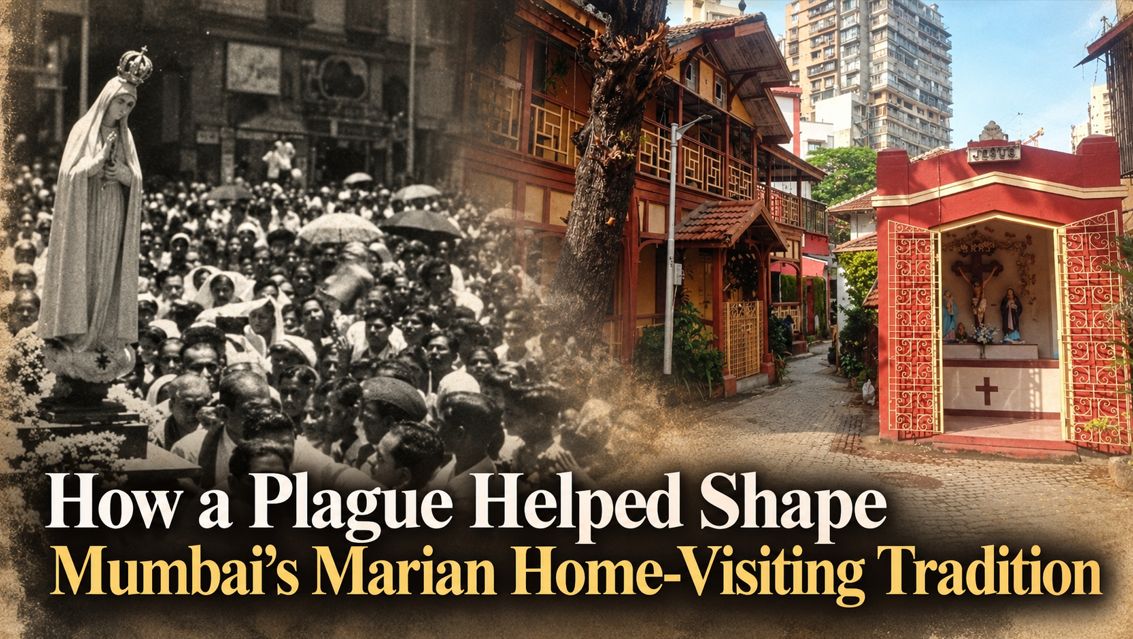
Khotachiwadi, Mumbai, October 30, 2026: Every October, a statue of Our Lady of Fatima travels from one family home to another in Mumbai’s historic Khotachiwadi neighbourhood. Families gather to pray the Rosary, sing Marian hymns and share fellowship. Yet behind this cherished tradition lies a story of fear, faith and survival during one of the city’s darkest periods: the devastating plague epidemic of 1896.


The bubonic plague struck Bombay, now Mumbai, in September 1896, spreading terror through densely populated neighbourhoods. As deaths mounted and many residents fled the city, families faced uncertainty about their future.
In Khotachiwadi, a historic East Indian Catholic enclave in Girgaum, residents turned to prayer, seeking the protection of the Blessed Virgin Mary. According to local tradition, the community erected a large cross in the neighbourhood during the epidemic.
The residents believed that Mary’s maternal intercession had protected their enclave while plague ravaged surrounding areas. In gratitude, they preserved the sacred site, which eventually developed into a roadside oratory.
The story remains an important part of Khotachiwadi’s religious memory. Although the community’s belief in miraculous protection belongs to its faith tradition, the historical setting of the plague and the enduring presence of the shrine give the devotion a distinctive place in Mumbai’s Catholic heritage.
Over time, devotion to Our Lady of Fatima became closely associated with the neighbourhood’s annual observance from 1 to 13 October.
During these days, a pilgrim statue of Mary visits different family homes. Each household welcomes the statue, opening its doors to neighbours and relatives for prayer and fellowship.
The Holy Rosary forms the heart of these gatherings, accompanied by Marian hymns and, often, shared meals. What began within a community shaped by memories of a devastating epidemic has become an expression of faith, gratitude and togetherness.
The tradition also ensures that devotion is not confined to a church or shrine. By bringing the statue into family homes, it makes prayer part of everyday domestic life and strengthens bonds between generations.
October holds special significance for Catholics devoted to Our Lady of Fatima. On 13 October 1917, the Virgin Mary appeared for the final time to the three shepherd children at Fatima, Portugal, identifying herself as the Lady of the Rosary. The event is associated with the phenomenon remembered as the Miracle of the Sun.
For Khotachiwadi’s residents, the October observance connects this wider Fatima devotion with their own local history.
More than a century after the plague, the annual home visits continue to preserve a collective memory of hardship and hope. The statue’s journey from door to door symbolises a community gathering around prayer, welcoming one another and passing its faith to younger generations.
What began as a story of seeking protection during an epidemic has become a lasting Marian tradition — one that keeps faith, family and community at the heart of Khotachiwadi’s October celebrations.
By Catholic Connect Reporter
© 2026 CATHOLIC CONNECT POWERED BY ATCONLINE LLP