
image

He Cleansed the Temple… and Challenged the World: The Truth Behind Holy Week Monday

Vatican City, March 30, 2026: Holy Week Monday marks a profound moment in the Catholic Church’s journey through Holy Week, commemorating the powerful actions of Jesus Christ in Jerusalem. On this day, the Church reflects on Christ cleansing the Temple and calling for true holiness, inviting believers into deep spiritual renewal as they prepare for the Passion, Death, and Resurrection of Christ.


Significance of Holy Week Monday

Holy Week Monday highlights Christ’s authority and desire for spiritual purity.

  • It commemorates Jesus cleansing the Temple, removing corruption and restoring sacredness.
  • The act symbolizes the need for inner purification and sincere worship.
  • It reminds Catholics that faith must be authentic, not superficial.
  • In Catholic teaching, it represents Christ’s call to cleanse our hearts from sin and distractions.


Historical Origins of Holy Week Monday

The observance of Holy Week Monday is rooted in early Christian tradition.

  • The events are recorded in the Gospels, particularly highlighting Jesus’ actions in Jerusalem.
  • Early Christians began commemorating Holy Week as early as the 1st century.
  • By the 3rd and 4th centuries, each day of Holy Week, including Monday, gained liturgical significance.
  • Pilgrims in Jerusalem retraced Christ’s steps, forming the foundation of today’s observances.


Relevance in the Catholic Church Today

Holy Week Monday continues to hold deep spiritual importance for Catholics worldwide.

  • It encourages repentance, reflection, and renewal of faith.
  • The liturgy focuses on preparing the heart for the events of Good Friday and Easter.
  • Catholics are invited to examine their lives and remove spiritual obstacles.
  • It sets the tone for a deeper engagement with the Passion of Christ.


Interesting Stories and Biblical Events

Holy Week Monday is associated with powerful and symbolic Gospel moments.

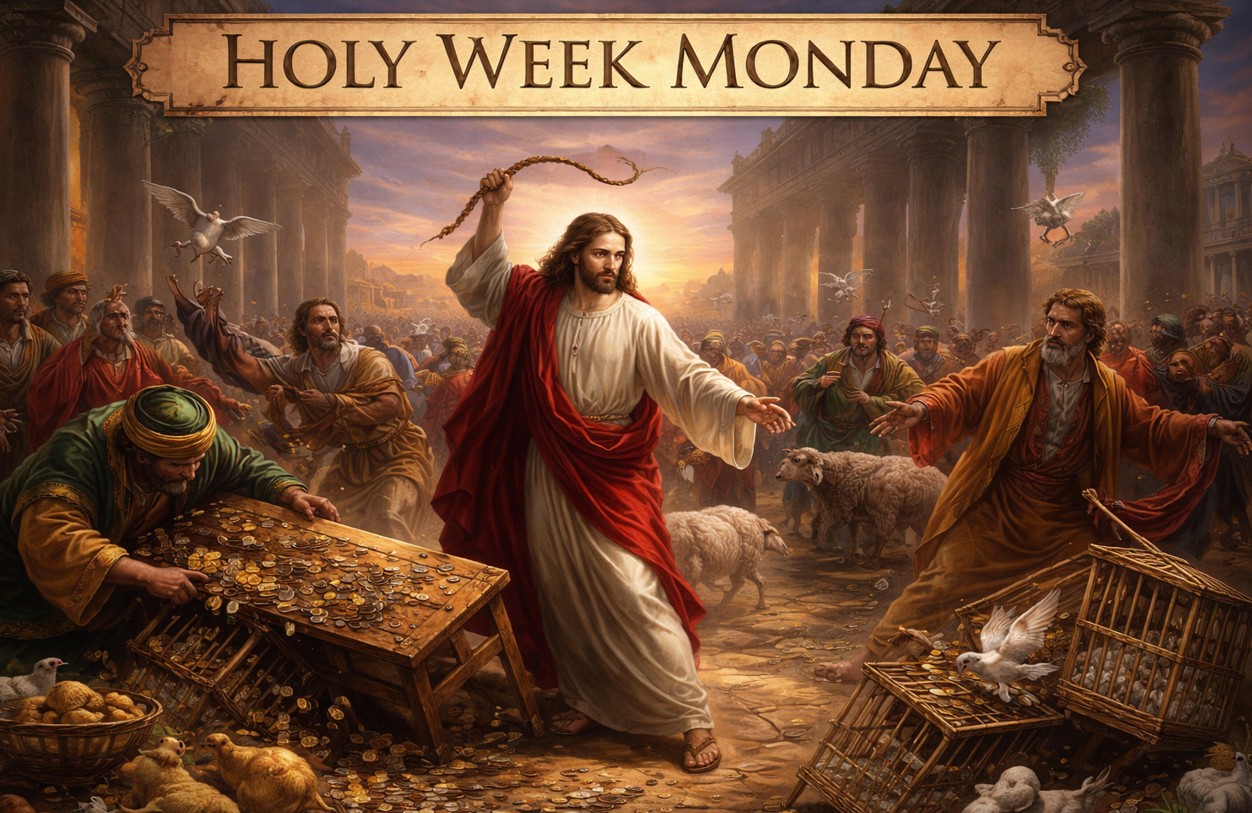
  • Jesus drives out money changers from the Temple, declaring it a house of prayer.
  • The cleansing of the Temple is seen as a bold stand against hypocrisy and misuse of religion.
  • The cursing of the fig tree (often linked to this day) symbolizes the danger of fruitless faith.
  • These events reveal Christ’s authority and foreshadow the conflict leading to His crucifixion.


When It Became Part of the Catholic Church

Holy Week Monday developed gradually within the Church’s liturgical life.

  • Early observances of Christ’s Passion began in the apostolic era.
  • By the 4th century, Holy Week was formally recognized with structured daily commemorations.
  • The Church incorporated Gospel readings specific to each day, including Monday.
  • Liturgical reforms in the 20th century helped restore and deepen its significance.


Other Interesting Facts About Holy Week Monday

  • It is not a Holy Day of Obligation but remains spiritually significant.
  • The Gospel readings emphasize authentic faith and judgment.
  • It is often a quieter day, focused more on reflection than ceremony.
  • Eastern Catholic traditions observe stricter fasting during this time.
  • It marks the beginning of intensified preparation for the Triduum.


Holy Week Monday stands as a powerful call to spiritual cleansing and authenticity. It invites believers to look within, renew their faith, and prepare their hearts for the sacred journey toward the Cross and the glory of Easter.


Reflective Keywords : Holy Week Monday Catholic meaning, Jesus cleanses the temple explanation, Holy Week reflection Catholic Church, spiritual purification Christianity, Holy Week significance Catholic, preparing for Easter Catholic traditions, Gospel meaning Holy Monday


By Catholic Connect Reporter

© 2026 CATHOLIC CONNECT POWERED BY ATCONLINE LLP