- 10 September, 2026
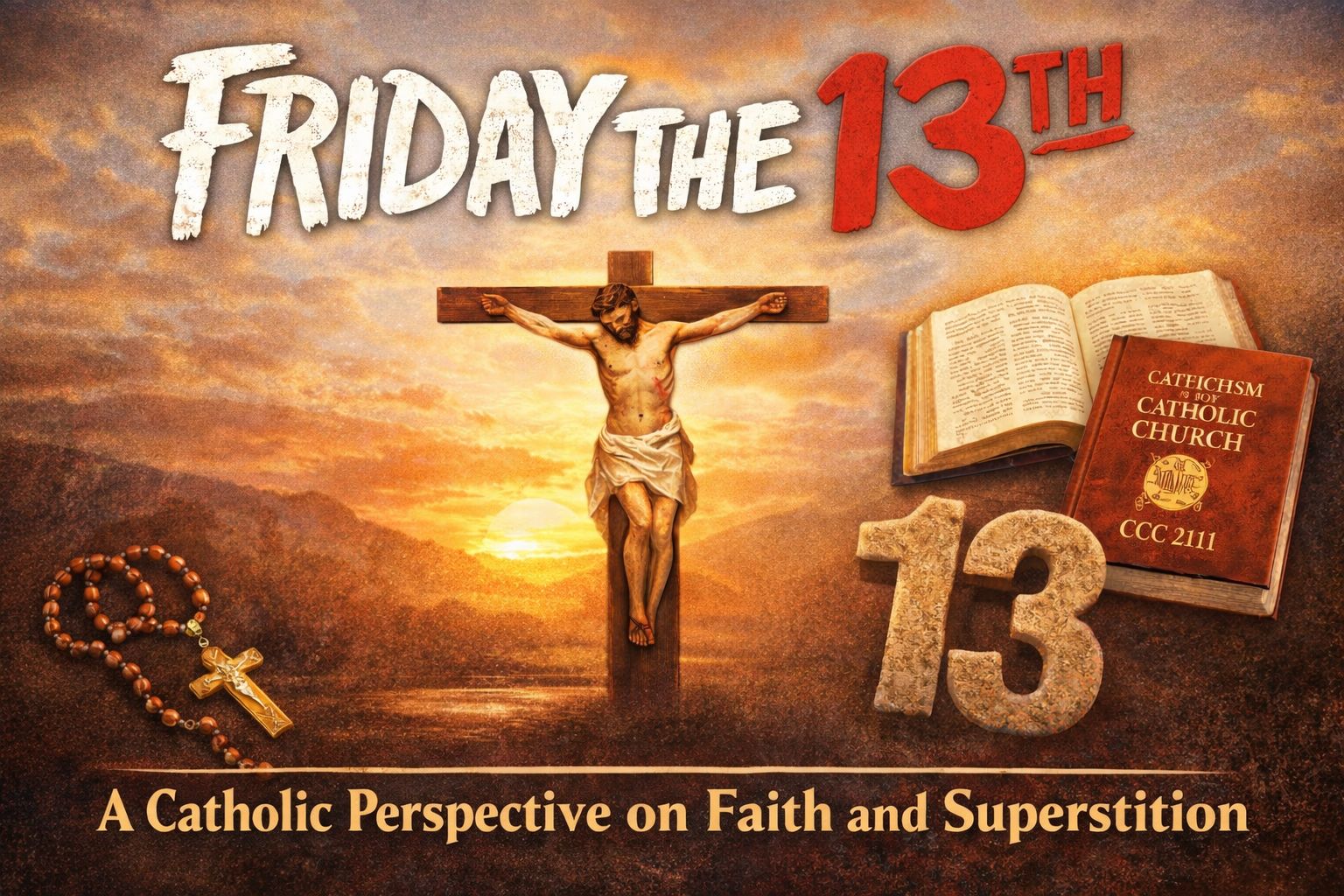
India, Feb 13th 2026: For centuries, Friday the 13th has been associated with bad luck, omens, and fear. Popular culture, novels, and horror films have reinforced the superstition, while even complex terms like triskaidekaphobia describe the fear of the number 13. But what is the Catholic Church’s view on such beliefs?


The Roots of the Superstition
The number 13 is often linked to the Last Supper, where Jesus dined with His 12 apostles—making 13 at table. The following day, Good Friday, marked the crucifixion of Christ. Over time, these biblical events were misinterpreted and woven into superstitions suggesting that 13 at table or Fridays themselves are unlucky.

Some traditions even claim that Friday was the day of other tragic biblical events, such as the fall of Adam and Eve or Cain’s killing of Abel. However, these associations belong more to folklore than to authentic Christian teaching.
The Church’s Teaching on Superstition
The Catholic Church does not recognise Friday the 13th as unlucky. In fact, the Church clearly teaches that superstition contradicts trust in God’s providence. The Catechism of the Catholic Church (No. 2111) states that superstition represents a deviation from the honour and trust we owe to God alone.
For Catholics, numbers and dates hold no mystical power to determine destiny. God alone is Lord of history. The belief that a particular day can bring unavoidable misfortune undermines faith in divine providence and fosters unnecessary fear.
Reclaiming Friday
Rather than being a day of bad luck, Friday holds profound Christian meaning. It is the day Christ offered His life for the salvation of the world. Every Friday is traditionally observed as a day of penance and remembrance of the Lord’s Passion. What the world may label as “unlucky,” the Church reveres as a day of redemptive love.
Similarly, the number 13 itself is not inherently negative. Scripture does not assign it any curse. Superstitions surrounding 13 often arise from cultural patterns—such as viewing 12 as a number of completeness—rather than from theological truth.
Faith Over Fear
While history records that certain tragic events happened on Friday the 13th—just as tragedies occur on many other dates—the Church cautions against drawing spiritual conclusions from coincidences. Correlation is not divine causation.
Christians are called to live not in fear, but in faith. As St. Paul reminds believers, “For God has not given us a spirit of fear, but of power, love, and self-control” (2 Timothy 1:7).
In a world fascinated by omens and horror narratives, Catholics are invited to witness to hope. Every day belongs to the Lord. No date can override God’s grace, and no number can dictate the life of one who trusts in Him.
Friday the 13th, then, is not a day to fear—but an opportunity to reaffirm confidence in Christ, who has already conquered sin, suffering, and death.
By Catholic Connect Reporter





© 2026 CATHOLIC CONNECT POWERED BY ATCONLINE LLP