- 23 September, 2026

June 8, 2026: Throughout Christian history, reports of Eucharistic miracles have inspired devotion, curiosity and controversy. These events typically involve a consecrated host or wine appearing to transform into human flesh or blood, leading believers to see them as signs of Christ's Real Presence in the Eucharist.


In recent decades, several alleged Eucharistic miracles have undergone scientific examination. Some investigators reported findings such as human heart tissue, AB blood type and living white blood cells. However, sceptics argue that many of these studies lack fully independent verification, rigorous chain-of-custody procedures and peer-reviewed publication. They also point to possible biological contamination or natural explanations.
Despite the debate, two modern cases have attracted international attention for the scientific investigations that followed.
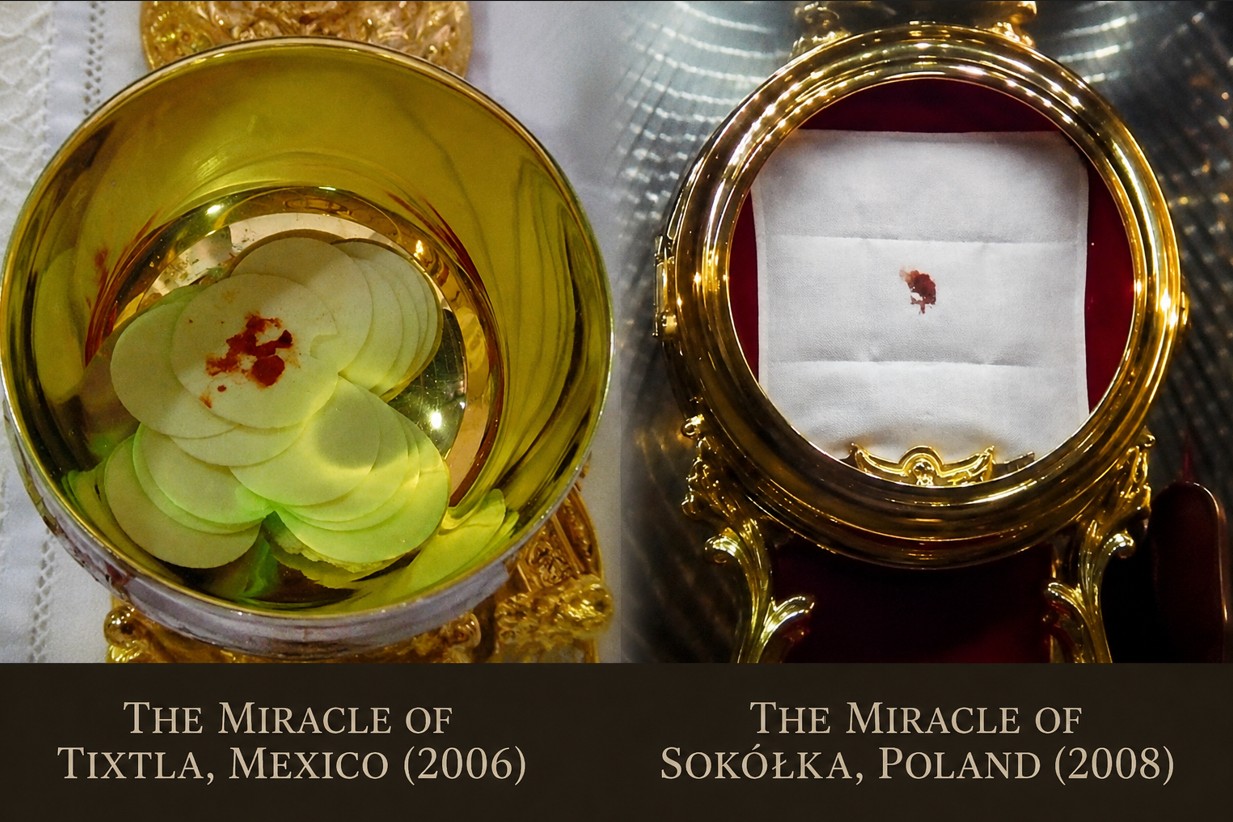
One of the most discussed Eucharistic miracles of the twenty-first century occurred in October 2006 at St Martin of Tours Parish in Tixtla, Mexico.

During a parish retreat, witnesses reported that a consecrated host began exuding a reddish substance resembling blood. The local diocese launched an investigation and authorised scientific studies that continued for several years.
A multidisciplinary team led by Dr Ricardo Castañón Gómez conducted examinations between 2009 and 2012. According to the published findings, the substance was identified as human blood of AB type. Researchers also reported the presence of haemoglobin, DNA, red blood cells and active macrophages—white blood cells associated with inflammation and healing.
(CLICK HERE to follow Catholic Connect for regular Catholic News & Content)
One of the most striking conclusions was that microscopic and ultraviolet analyses suggested the blood originated from within the host rather than being applied externally. Investigators also reported traces of myocardium, or heart muscle tissue, within the sample.
For believers, these findings strengthened claims that the event defied natural explanation. Critics, however, continue to call for broader independent verification and caution against drawing definitive scientific conclusions.
Just two years later, another event captured worldwide attention in the town of Sokółka, Poland.
On 12 October 2008, a consecrated host accidentally fell during Mass at St Anthony of Padua Church. Following standard Church protocol, the host was placed in water to dissolve respectfully.
Several days later, a red stain appeared on the host. The unusual occurrence prompted Church authorities to begin an investigation.
The sample was examined independently by two respected pathologists from the Medical University of Białystok: Professor Maria Sobaniec-Łotowska and Professor Stanisław Sulkowski.
Their analysis concluded that the red fragment closely resembled human myocardial tissue—heart muscle appearing to be under severe stress or in the process of dying. The researchers also noted that the tissue appeared intertwined with the bread fibres in a manner they considered difficult to explain through known natural processes.
The findings drew international attention and led many pilgrims to visit Sokółka. Yet, as with other Eucharistic miracles, sceptics questioned whether alternative biological explanations had been fully ruled out.
What makes Tixtla and Sokółka stand out is not merely the extraordinary claims but the involvement of scientific professionals in examining the evidence.
Supporters argue that the repeated appearance of heart tissue, inflammatory cells and AB blood across different cases deserves serious consideration. Critics counter that extraordinary claims require extraordinary evidence and maintain that more transparent and independently reproducible studies are necessary.
The Catholic Church itself approaches such reports cautiously. Before recognising any alleged miracle as worthy of belief, Church authorities typically conduct lengthy investigations involving theologians, scientists and medical experts.
Whether viewed through the lens of faith or scientific inquiry, Eucharistic miracles remain among the most intriguing phenomena in Christian history. Cases such as Tixtla and Sokółka continue to inspire prayer, discussion and investigation across the world.
For believers, they offer a profound reminder of the mystery at the heart of the Eucharist. For researchers, they present questions that continue to challenge easy answers. In either case, these remarkable events encourage a deeper exploration of the relationship between faith, evidence and the enduring search for truth.
By Catholic Connect Reporter
© 2026 CATHOLIC CONNECT POWERED BY ATCONLINE LLP