- 21 November, 2026
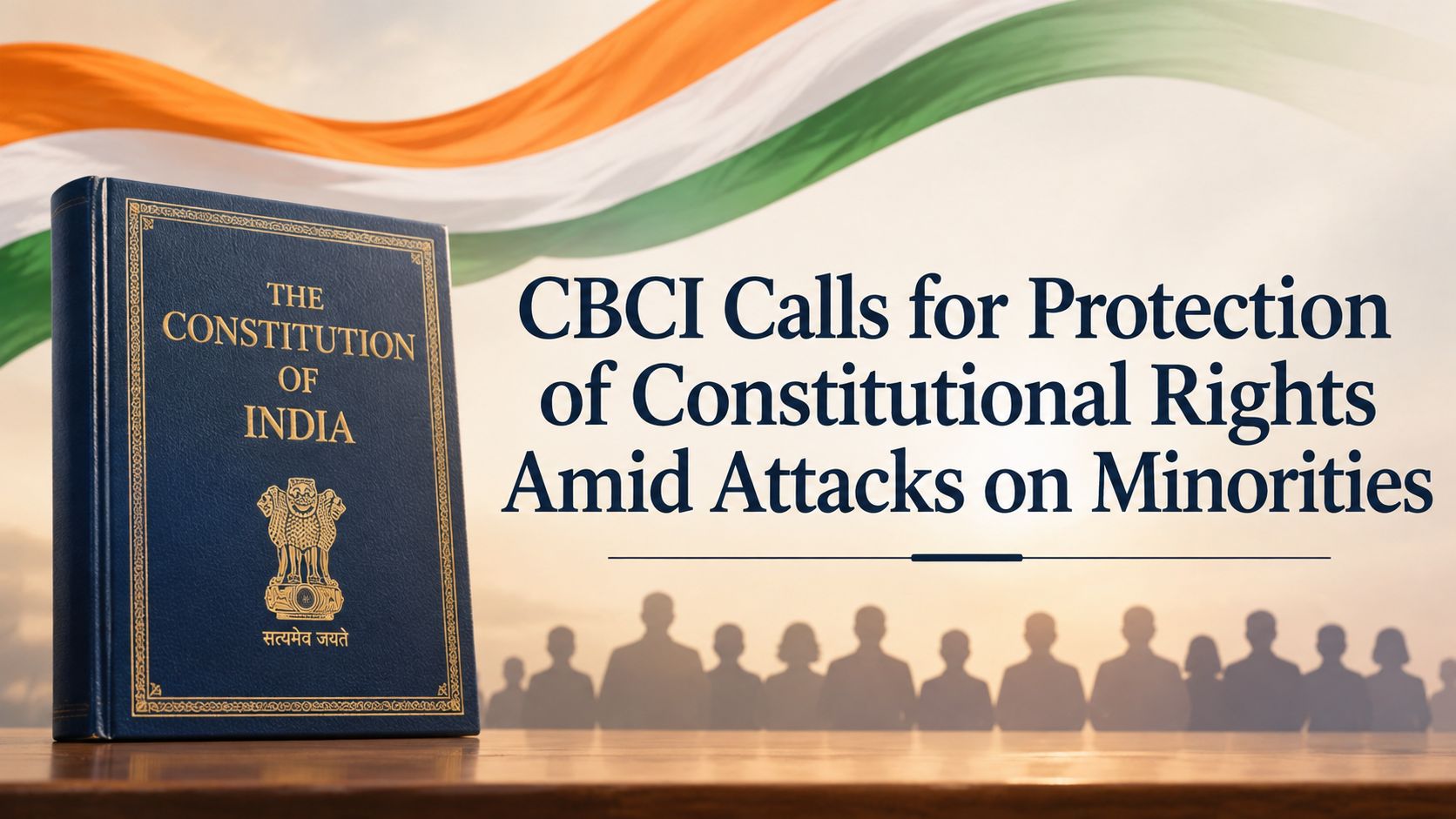
November 20, 2026: A sizable proportion of the Indian legal and political establishment has, for a very long time, been obsessed with the goal of stopping religious conversions in India, especially to Christianity. Even Mahatma Gandhi has reportedly gone on record saying that if he had the power, he would ban conversions. Today, significant parts of the administrative machinery, including people occupying positions of high constitutional authority in the Union Government and several state governments, are in overdrive to curb conversion to Christianity and, if possible, eradicate it altogether, identifying it as an evil to be done away with.

Anti-conversion laws in India have become so draconian that anyone who preaches the Christian Gospel can be rounded up and charge-sheeted and is presumed guilty until proven innocent. The burden of proof is on the accused rather than the accuser, unlike in ordinary jurisprudence. The legal process is reversed.
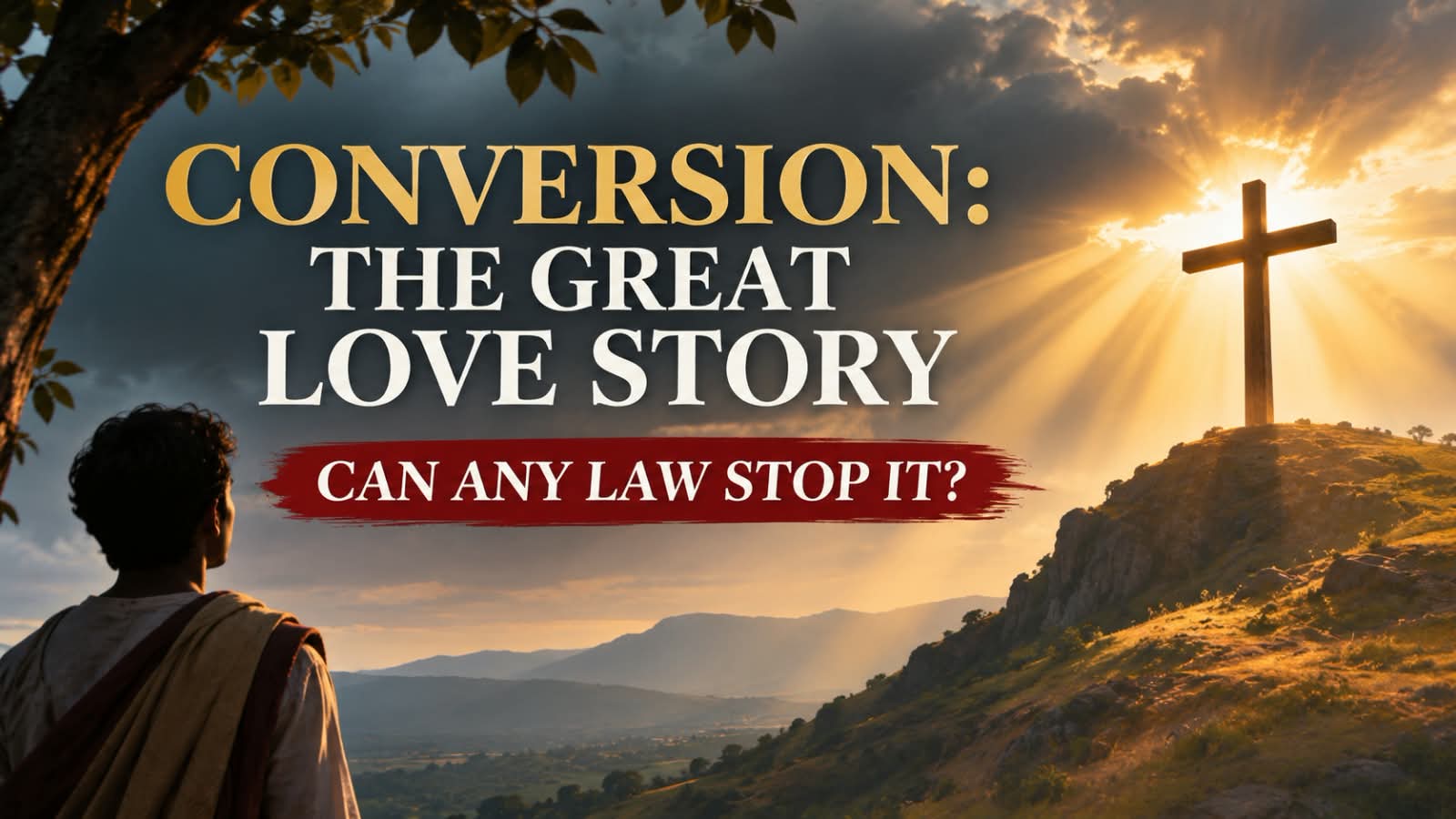
But what exactly is conversion? What does the law really say about it? Is conversion good for humanity? Who is losing and who is gaining by conversion? And why does this central Christian phenomenon, so dear to every Christian worth his or her name, persist despite the obvious danger to life, liberty and limb? This article argues why conversion by Christians is good and can never be stopped.
Basically, it is a question of the freedom to fall in love—with a way of life and a person, in this case, Jesus Christ, who lived, died and resurrected, and whose life was borne witness to unto death by a succession of Christian martyrs throughout history. Eleven of His twelve chosen apostles were martyred in different parts of the world for what they spoke and stood for about Him. Further, the number of great martyrs is so vast that one only has to examine the annals of ancient Rome to get a fair understanding of those who courted death and voluntary hardship for the love of Christ.
Why this madness, some would ask? That is the folly of love. Only one who has truly loved knows what it is to love unto death. It is for this reason that it is said that only the saints knew what it was to fall in love. But true love is rare today, celebrated as it is only in drama and poetry. Humanity is too afraid, or shall we say, too prudent to love like that. It is interesting here that the Bible says that God's foolishness is wiser than human wisdom (1 Cor. 1:25).
God Himself is the greatest lover, who says of Himself: “God so loved the world that He gave His only begotten Son, that whoever believes in Him may not perish but have eternal life” (Jn. 3:16). That should explain Jesus' death on the cross. He died to save us from certain damnation. This is the supreme love of a Father who handed over His own Son out of love for all of us, His children.
Conversion is a matter of the heart. God Himself is the great protagonist. What can any law do about it? Laws are for human and social order, and God is not bound by human or social laws. Neither can logic persuade against it, threats subdue it, nor money buy it. But misunderstanding or a lack of courage can quench its fervour. Such a person does not know what it is to love. A public entity that has taken upon itself the cause of snuffing out conversion, such as the Indian government machinery today, without understanding it properly, can do a lot of harm to humanity.
It is God who attracts a person to Himself, and those who have been called and touched, and have decided to respond, have made a decisive and radical turn in their lives. It requires an honest and courageous heart to measure up to God's call. The person is betrothed and is finally married by God. This marriage defies anything that comes in its way.
It is therefore naive of the government to think that it can direct matters of the heart. The human person is created in the image of what is true, good and beautiful and is attracted by the same categories throughout life. If someone finds these in Jesus Christ, how can that person be stopped? However, a government that banks on political polarisation has much to lose by conversion. It will find its numbers depleted by conversion. Such governments play the card of religious identity and want to instigate the religious majority against a religious minority, in this case, Christians, calling them foreigners with a faith alien to Indian culture. All this is done to garner anti-minority votes, which makes a lot of sense in a democracy, where the power to rule is determined solely by numbers.
The Christian community as a whole is targeted just as the Jews were in Nazi Germany, to create a communal mood that would translate into votes from the religious majority. Let us not forget history: the political dispensation of the Roman Empire, which tried to destroy Christianity through persecution, ultimately had to embrace Christianity. That is the power of the love for Christ shown by the early Christians, which transformed the world.
Every Christian has been handed a solemn mandate and office called the Great Commission to proclaim Christ. Anyone who understands the truth of Christ and His love, and who takes his or her faith seriously, will be impelled to act on this mandate. Pope Francis calls Christians missionary disciples. Everyone is called to work in the vineyard and build the Kingdom. That is why they take up pioneering work, suffering great hardship to make the Gospel heard, believed and its adherents nurtured.
The Indian Constitution guarantees the freedom to choose one's own religion, practise it and propagate it. A lot of hullabaloo is created around the claim that conversions are carried out mainly by force, inducement and coercion. The mood of the polity and the media is fed by such anti-Christian propaganda in the name of Indian culture, particularly in the present times.
The Catholic Church has an elaborate and long-drawn programme for anyone who wants to embrace Christianity: the Rite of Christian Initiation of Adults (RCIA). It does not prescribe anything that the anti-conversion brigade accuses it of. It is a slow and considered process, with the option to accept or reject Christ in total freedom. Yet, conversion is made out to be coerced, induced, hoodwinked, forced and manipulated—and this is the great lie. Nevertheless, the immortal words on the Ashoka Chakra give us hope in India: Satyameva Jayate, or “Truth Alone Triumphs”.
To conclude, we reiterate that conversion is God's work; we can do nothing about it. It is not only naive to stand in the way; it is futile. Once again, conversion is a matter of the heart, and matters of the heart are largely left to the individual to resolve because conversion is an invitation to become a better person. Becoming better is not only a moral question but also a spiritual one. The person who seeks it has come to experience a higher power who can direct his or her life in ways that ordinary moral dictates alone cannot.
This is why those who believe in someone with all their heart, in this case, Jesus, are willing to die for that faith. It was the spirit of the early Church, where the word martyr itself comes from the Greek for “witness”, and we believe it is being born again in our time. Conversion is metanoia, the Greek word meaning a change of heart, which is the need of every individual to proceed from a deficient and largely self-centred persona to one of greater and greater altruism. In that sense, we all need continual conversion, don't we?
So, conversion is not an act of a single moment alone. It begins with grace and calls for a lifelong response of repentance, faith and growth into the likeness of Christ (Rom. 12:2), carried out within a community of believers who support and strengthen one another. Scripture names this change as a new creation (2 Cor. 5:17) and as being “born again” (Jn. 3:3), a transformation that God works in the person rather than one the person achieves by effort alone. Ezekiel's promise of a “new heart” and a “new spirit” (Ez. 36:26) points to the same reality: conversion is not merely a change in behaviour but a renewal of the person's deepest desires and loyalties. Indeed, conversion is the great fruit of the mercy of God, our earnest response to grace and the prayers of our fellow mates, which we will need till the very end.
Let the Indian conscience be free to choose because what is born of freedom is true, good and beautiful. Conversion should be a free choice, and everyone is free to choose.
About the Writers
Dr. S. M. Michael SVD is Emeritus Professor of Anthropology and Sociology at the University of Mumbai and a founding member of the Bharatiya Christiya Neethi Sanghathan (BCNS).
Dr. Paul Mathulla is Chairman of the Governing Council of IMPACT Institutions, Bengaluru, and a founding member of BCNS.
Ms. Teresa Paul is a young sociologist and designer and a member of BCNS.
By Dr. S. M. Michael, Dr. Paul Mathulla and Ms. Teresa Paul
© 2026 CATHOLIC CONNECT POWERED BY ATCONLINE LLP