- 04 April, 2026

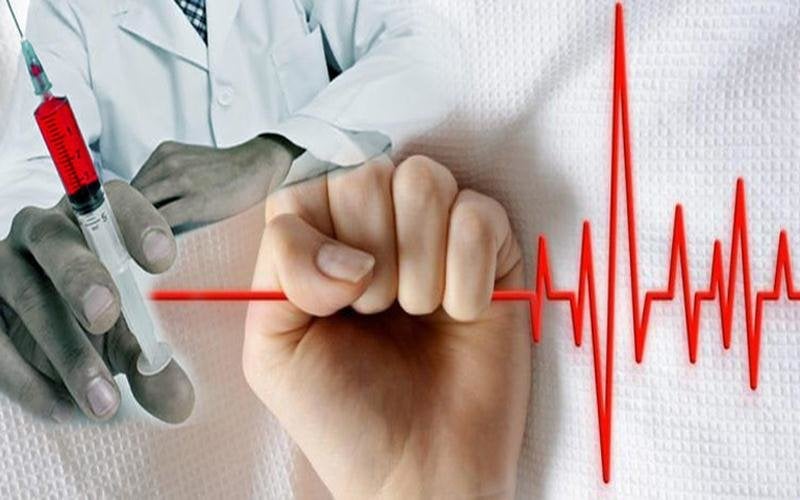
New Delhi, March 11, 2026: The recent judgment of the Harish Rana vs Union of India by the Supreme Court of India has drawn public attention to questions surrounding end-of-life care and the withdrawal of medical treatment. While the judgment has been widely reported in the media, some of the terminology used - particularly expressions such as “passive euthanasia” and “right to die”—can create confusion and may not accurately reflect the legal or ethical position.

Background of the Case
The case involved a young man who had lived for thirteen years in a chronic unconscious state following a severe brain injury. He remained in a condition sometimes described medically as wakefulness without awareness, where a person shows signs of wakefulness but has no conscious awareness. (Persistent Vegetative State - PVS)
The appeal to the Court was made by his parents, who requested permission to discontinue medical interventions because there was no reasonable possibility of improvement. In medical ethics, such situations are often described as futility of treatment, where continued medical intervention no longer provides meaningful benefit to the patient.


Euthanasia Remains Illegal in India
It is important to note the Supreme Court has maintained the legal position that euthanasia remains illegal in India.
However, the continued use of the expression “passive euthanasia” in some discussions and media reports can be misleading. Headlines suggesting that the Court has upheld a “right to die” are also problematic and can create unnecessary confusion for the patients’ families.
The teaching of the Church affirms that when there is no realistic hope of recovery, the artificial prolongation of life through highly burdensome medical technologies may be discontinued. However, the ordinary care owed to the sick—such as comfort care, basic nursing care, and pain management—must always continue.
Therefore, it can be legitimate to discontinue medical procedures that are burdensome, risky, extraordinary, or disproportionate to the expected benefit. This is not an attempt to cause death but a refusal of what is often called “over-zealous” or excessive treatment.
In such cases, the intention is not to end life but to recognise that death cannot be prevented. If the patient is capable of making decisions, the choice should be made by the patient. If the patient is unable to do so, the decision should be taken by those legally authorised to act on the patient’s behalf, always respecting the patient’s wishes and best interests.
Clarification from the Indian Council of Medical Research
The Indian Council of Medical Research (ICMR has clearly stated: “The term passive euthanasia is an obsolete terminology and should be avoided as euthanasia cannot be passive, and withholding or withdrawing a potentially inappropriate treatment in a patient dying with a terminal illness that only prolongs the dying process cannot be construed as an intention to kill.”
In other words, stopping medical treatments that are no longer beneficial should not be described as euthanasia.
Understanding Euthanasia
The Congregation for the Doctrine of the Faith defined euthanasia in its 1980 Declaration on Euthanasia as follows:
“By euthanasia is understood an action or an omission which of itself or by intention causes death in order that all suffering may in this way be eliminated. Euthanasia’s terms of reference, therefore, are to be found in the intention of the will and in the methods used.”
According to this definition, euthanasia occurs when death is deliberately intended in order to eliminate suffering.
In ethical discussions, euthanasia has sometimes been described as active or passive. Active euthanasia refers to deliberate actions taken to cause death, such as administering a lethal injection. The term “passive euthanasia” has been used in the past to describe situations where life-sustaining treatments - such as ventilators, dialysis, or antibiotics - are withheld or withdrawn. However, many ethicists and medical authorities now consider this terminology misleading.
Distinguishing Euthanasia from Withdrawal of Treatment
From a Catholic ethical perspective, stopping medical treatment that no longer offers a reasonable hope of benefit, or that places excessive burdens on the patient, should not be called “passive euthanasia.” Rather, it can be a morally acceptable decision to allow a person to die naturally while respecting the dignity of the patient and recognising the limits of medical treatment.
The teaching of the Church affirms that when there is no realistic hope of recovery, the artificial prolongation of life through highly burdensome medical technologies may be discontinued. However, the ordinary care owed to the sick- such as comfort care, basic nursing care, and pain management - must always continue.
By Dr. Olinda Timms and Fr. Christopher Vimalraj
Download Catholic Connect App for Daily News Updates:
Android: Click here to download
Continue Reading on Catholic Connect App
Get access to exclusive news articles & more.





© 2026 CATHOLIC CONNECT POWERED BY ATCONLINE LLP