- 19 September, 2026
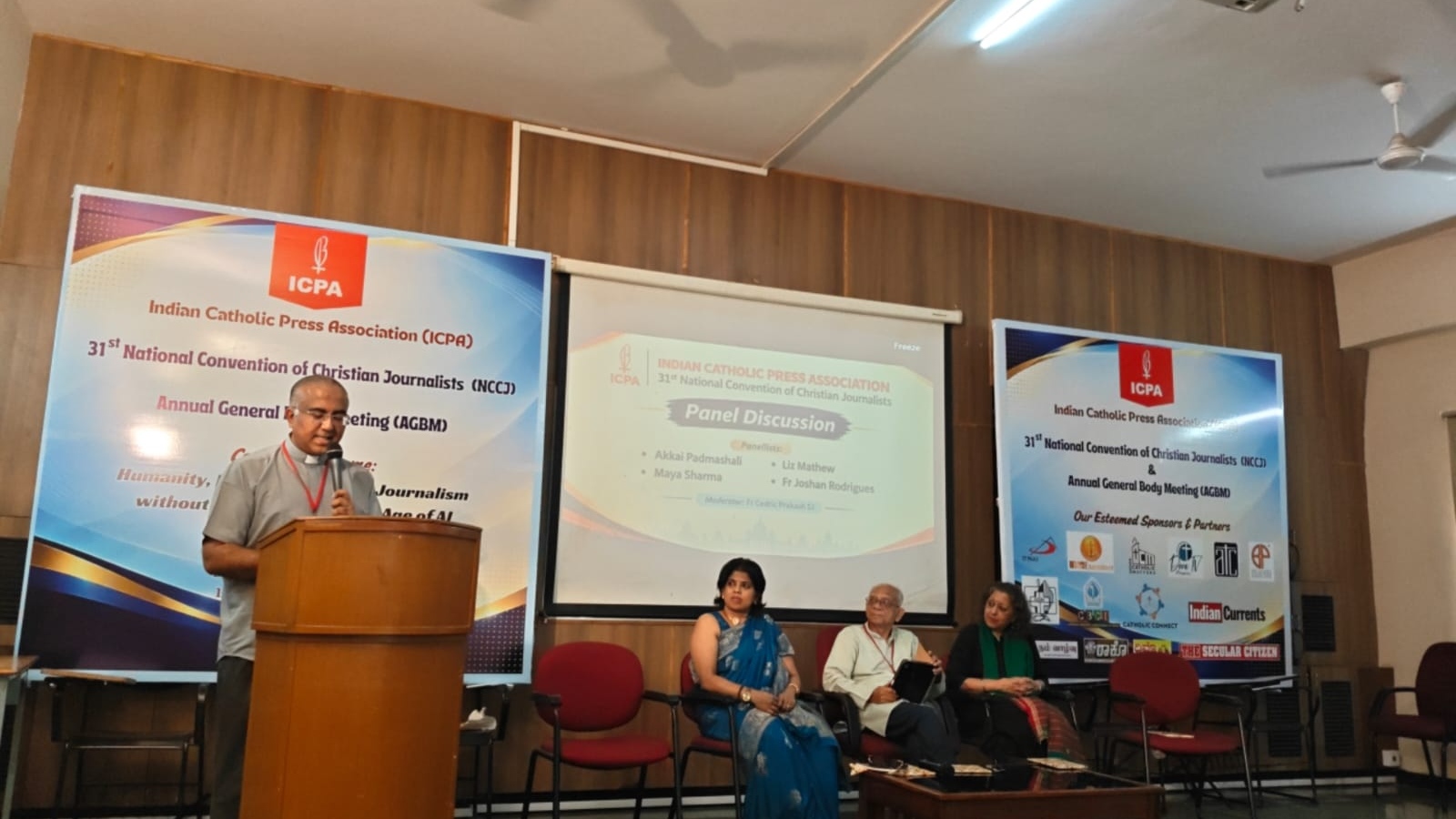
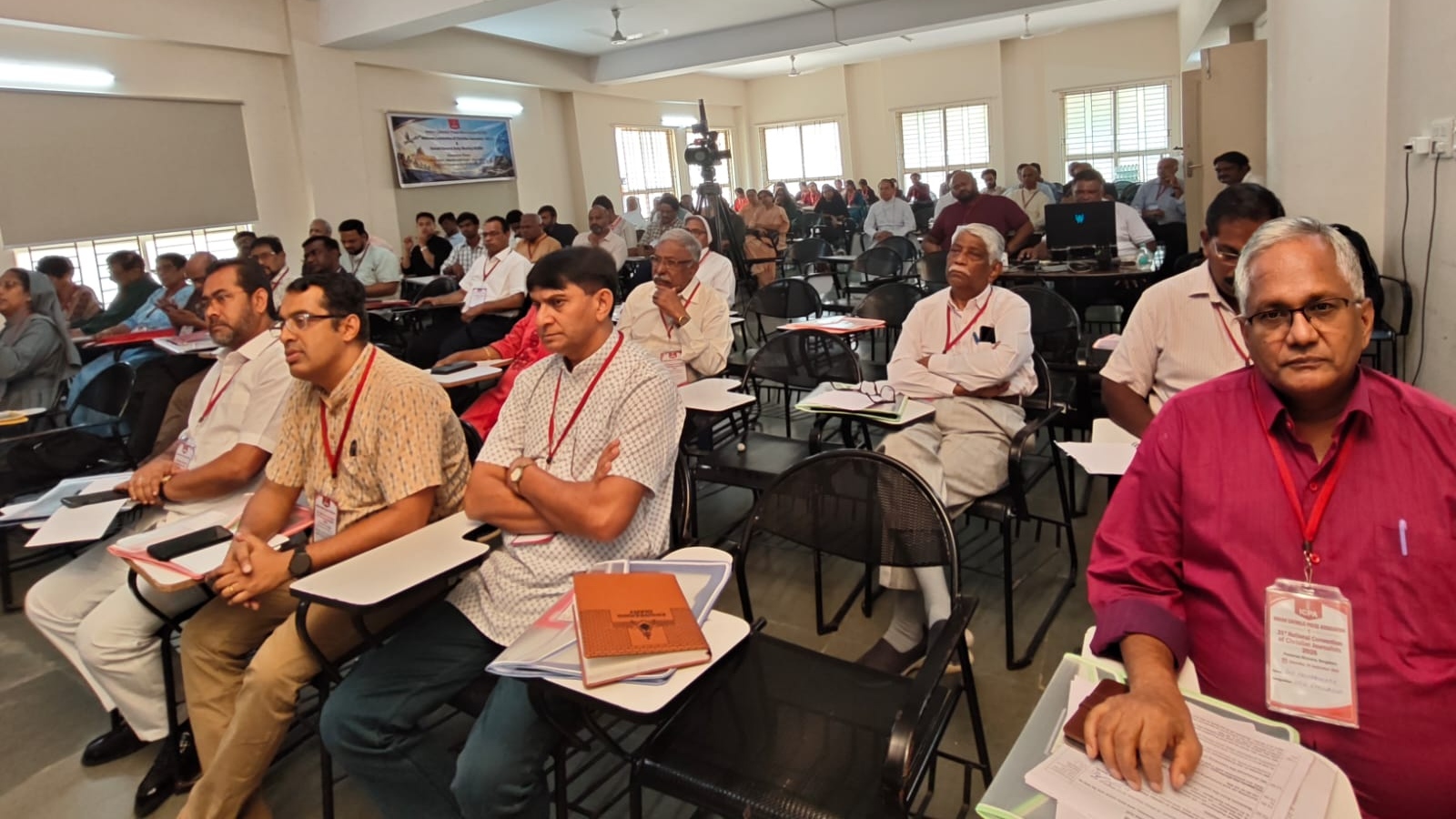
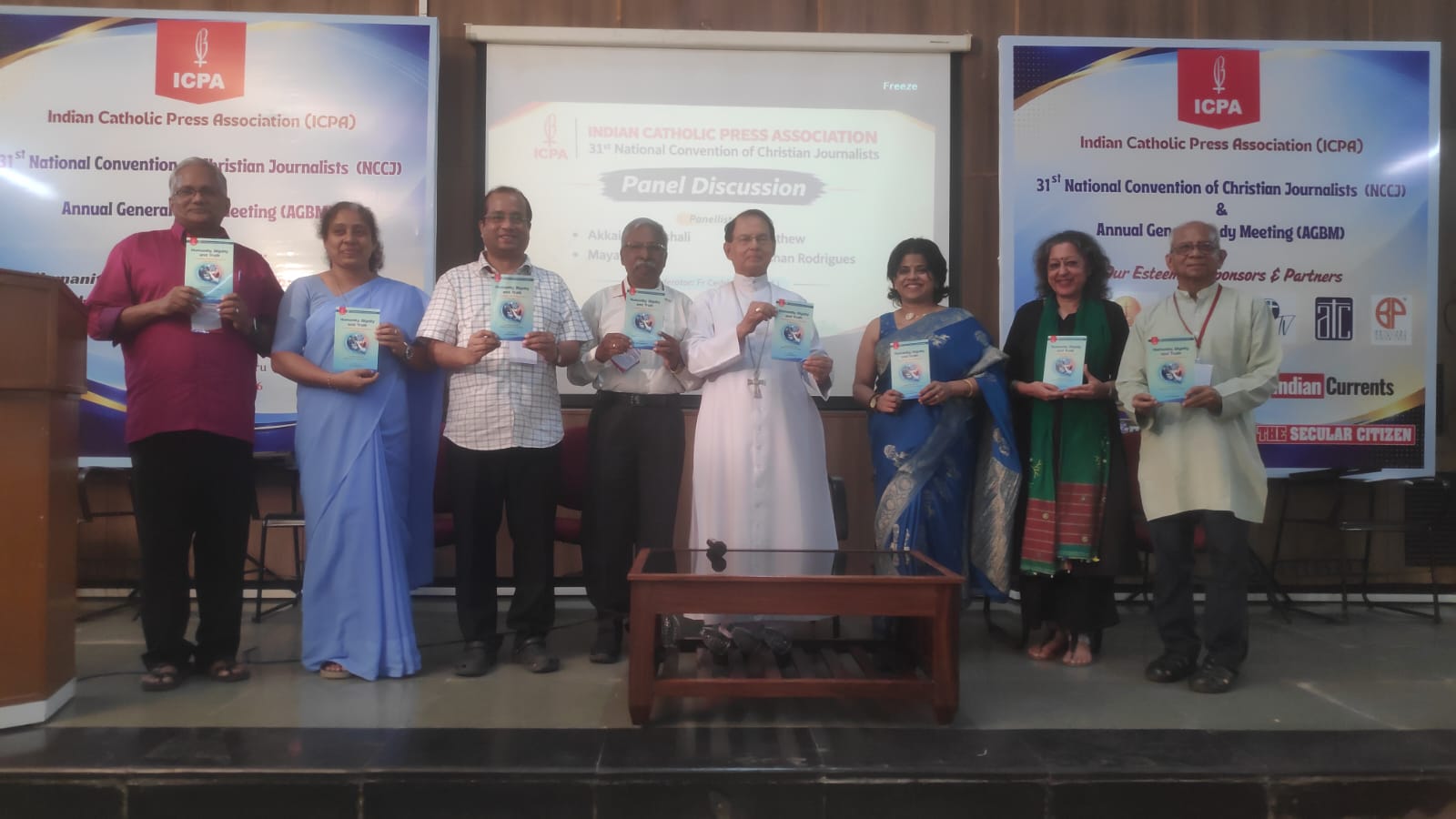
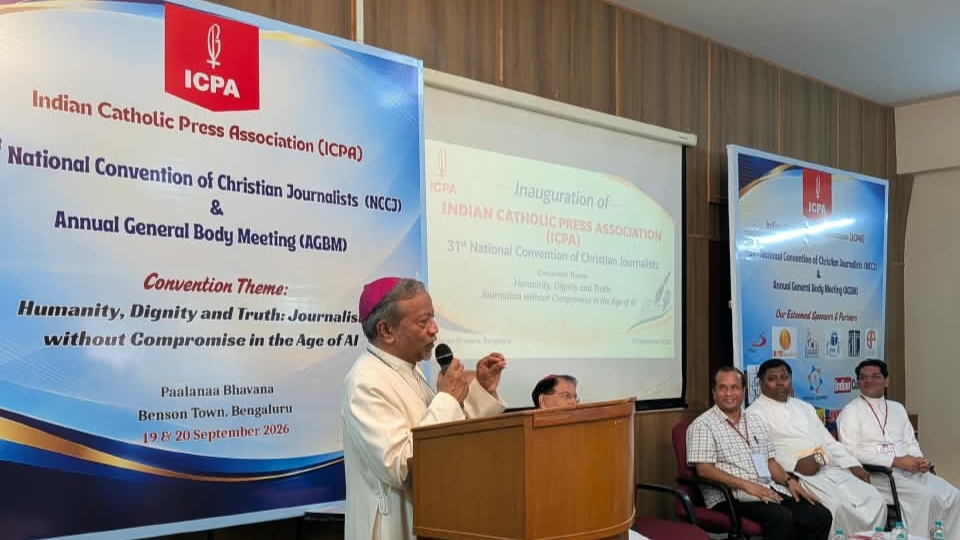
Bengaluru, September 19, 2026: Christian journalists must remain committed to truth, human dignity and the voices of the marginalised as artificial intelligence transforms the media landscape, speakers said at a panel discussion during the 31st National Convention of Christian Journalists here on September 19.


The discussion was part of the two-day convention and Annual General Body Meeting of the Indian Catholic Press Association (ICPA), being held at Paalana Bhavana, Bengaluru, under the theme “Humanity, Dignity and Truth: Journalism Without Compromise in the Age of AI.”
Moderated by Jesuit media professional Fr. Cedric Prakash, the panel brought together transgender rights activist Akkai Padmashali, NDTV journalist Maya Sharma, journalist Liz Mathew and Fr Joshan Rodrigues, editor of The Examiner, to examine the challenges and responsibilities of journalism in an AI-driven media environment.

Akkai Padmashali criticised the media for failing to adequately represent marginalised communities.
“Journalism is sold out,” she said, arguing that stories concerning backward and vulnerable communities often fail to receive adequate space in mainstream media.
She stressed that transgender persons have dignity and must be represented with fairness and sensitivity. Journalism, she said, has a responsibility to tell stories that otherwise remain unheard.
Maya Sharma of NDTV focused on the growing use of artificial intelligence in news production. She noted that human beings are driven by curiosity and awareness, while AI, despite its capacity to process information rapidly, does not possess human curiosity in the same way.
AI's ability to provide instant responses and process large amounts of information can be useful to journalists, she said. However, journalism requires qualities such as courage, compassion, patience and credibility that cannot be reduced to technological efficiency.
Human journalists also possess the ability to combine confidence with doubt and exercise judgment, Sharma said. AI, she added, does not have human feelings or lived experience.
She cautioned journalists against becoming so dependent on AI that they neglect their own language and ability to communicate.
Journalist Liz Mathew highlighted sensitivity and the human dimension of reporting. She stressed the importance of human-interest stories, which, she observed, are receiving less attention in contemporary media.
Journalism must continue to communicate the experiences, struggles and aspirations of ordinary people, she said.
Fr Joshan Rodrigues, editor of The Examiner, called on journalists to move beyond what he termed “institutional journalism”, in which news is frequently presented from the perspective of those in positions of power.
Journalists should listen to vulnerable communities and report “from the bottom up”, he said.
“First experience the story and then report,” Fr Rodrigues said, stressing the importance of encountering people and understanding their realities before reporting them.
AI, he noted, has never experienced war or grief. Such human experiences, he said, remain essential to journalism that seeks to understand reality beyond facts and data.
The panel discussion reinforced the central concerns of the convention theme: how journalists can use AI without compromising truth, human dignity and the ethical responsibilities of the profession.
Fr Cedric. concluded the session by recalling Pope Leo XIV's emphasis on truth, human dignity and responsible communication, urging Christian journalists to ensure that technological advancement remains at the service of humanity and does not replace human responsibility.
By Catholic Connect Reporter


© 2026 CATHOLIC CONNECT POWERED BY ATCONLINE LLP