- 12 October, 2026

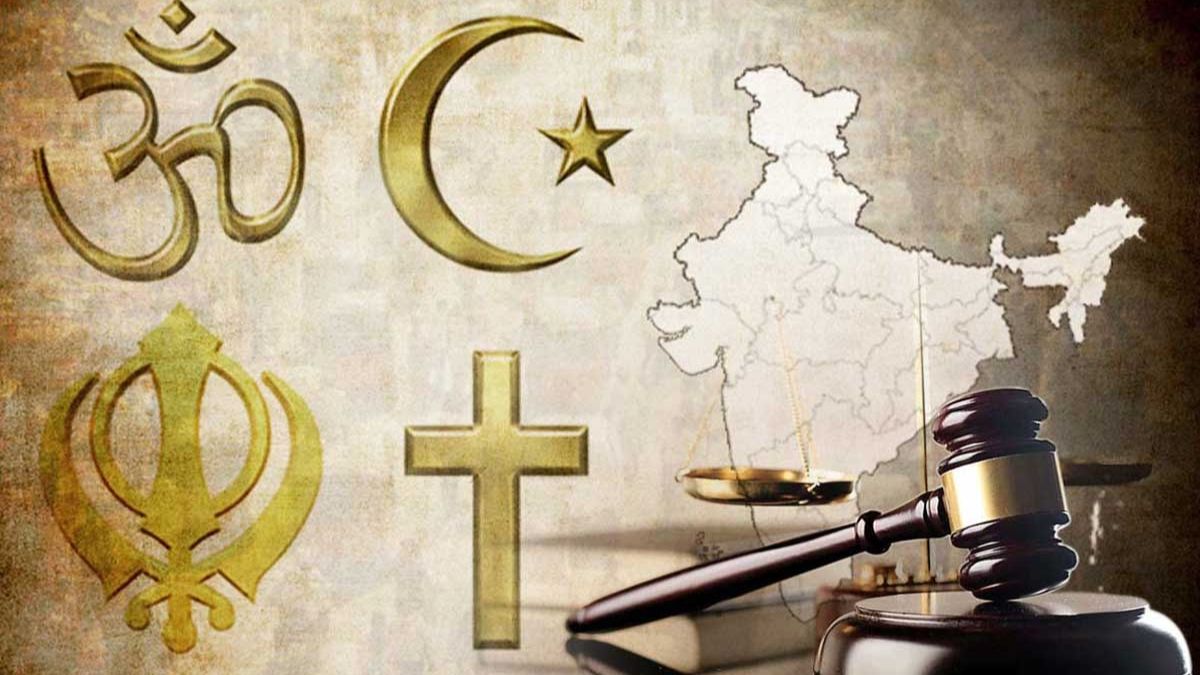
New Delhi, March 25, 2026: Chhattisgarh has enacted one of India’s toughest anti-conversion laws, though it stops short of adopting the death penalty proposed earlier by neighbouring Madhya Pradesh. The development reflects a broader trend of increasingly stringent “freedom of religion” laws across several BJP-ruled states.



According to a report by John Dayal published in The Quint, the Chhattisgarh Assembly on March 19, 2026 passed the Freedom of Religion Bill, 2026. The legislation replaces a 1968 law dating back to when the state was part of Madhya Pradesh. The Bill is currently awaiting the Governor’s assent.
The new law criminalises religious conversions carried out through force, fraud, allurement, undue influence, misrepresentation, or marriage. However, conversions to Hinduism are exempted. For the first time, the law also includes provisions covering online or digital conversions.
One of the key provisions mandates a 60-day prior notice to district authorities before any conversion, allowing officials, family members, and even neighbours to scrutinise the intent. Authorities are empowered to intervene, and police can make immediate arrests if violations are suspected. Cases will be handled by special courts.
The penalties under the Chhattisgarh law are among the harshest in the country. Standard offences carry imprisonment ranging from seven to ten years along with a minimum fine of ₹5 lakh. If the person converted belongs to vulnerable categories such as minors, women, individuals with mental illness, or members of Scheduled Castes, Scheduled Tribes, or Other Backward Classes, the punishment increases to ten to twenty years and a ₹10 lakh fine.
“Mass conversion,” defined as involving even two individuals, attracts a sentence of ten years to life imprisonment and a ₹25 lakh fine. Repeat offenders face life imprisonment. Notably, these penalties exceed those prescribed for certain crimes such as manslaughter and cow slaughter in some states.
The move follows similar legislation in Maharashtra, which passed its own Freedom of Religion Bill, 2026 days earlier. While penalties there are comparatively lighter, the framework remains similar. Maharashtra Chief Minister Devendra Fadnavis has stated that the law is not targeted at any specific community, though opposition parties have raised concerns about its potential misuse, particularly in cases of interfaith marriages.
The legislative trend comes amid ongoing scrutiny by the Supreme Court of India, which is currently examining petitions challenging similar laws enacted in multiple states. Petitioners argue that such laws violate Article 25 of the Constitution, which guarantees the right to freely profess, practise, and propagate religion. Legal experts have also raised concerns about provisions that shift the burden of proof onto the accused, potentially undermining fair trial rights.
The roots of such legislation trace back to 1956, when the Madhya Pradesh government led by Pandit Ravi Shankar Shukla established the Justice Niyogi Commission to investigate the activities of Christian missionaries. In 1967, Odisha enacted India’s first anti-conversion law, followed by Madhya Pradesh in 1968. Chhattisgarh retained this framework after becoming a separate state in 2000.
For decades, these laws remained largely dormant. However, after the Bharatiya Janata Party came to power at the Centre in 2014 under Prime Minister Narendra Modi, several BJP-ruled states introduced stricter versions. New provisions began to include marriage-related conversions, digital activities, and significantly enhanced penalties.
In March 2025, Madhya Pradesh Chief Minister Mohan Yadav proposed introducing the death penalty for forced religious conversions, equating them with severe crimes such as the rape of a minor. While this proposal has not been enacted, it reflects the intensifying political discourse surrounding the issue.
Supporters of these laws, including organisations linked to the BJP and the Rashtriya Swayamsevak Sangh (RSS), argue that they protect vulnerable populations from coercion and exploitation through inducements such as money, employment, or social services. They also cite concerns over “love jihad,” a term used to describe alleged cases of religious conversion through marriage.
Critics, however, contend that the laws are broadly worded and open to misuse. They argue that terms like “allurement” could include legitimate social services such as education or healthcare. Human rights advocates claim that the laws create an atmosphere of fear among minority communities, particularly Christians and Muslims, and can be weaponised through complaints by vigilante groups.
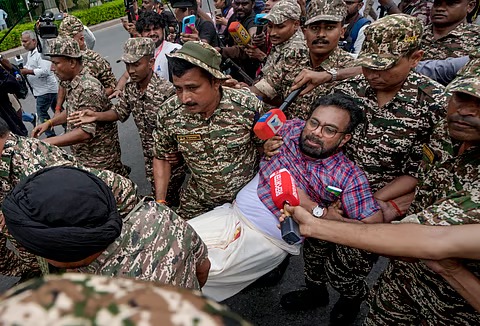
Instances of enforcement have raised further concerns. In July 2025, two Catholic nuns from Kerala were arrested in Chhattisgarh following allegations of trafficking and forced conversion, though the case remains unresolved.
Analysts note that while conviction rates remain low, the process itself—arrests, legal battles, and social stigma—can have lasting consequences. Interfaith couples, especially those involving Hindu women and Muslim or Christian men, are often subjected to scrutiny under these laws.
At the same time, large-scale reconversion events to Hinduism face little regulatory oversight, raising questions about the selective application of these laws.
As more states adopt similar legislation, observers see the emergence of a nationwide pattern. Critics argue that these developments, alongside other measures such as restrictions on foreign funding and debates around a uniform civil code, could further shrink the space for religious minorities in India.
By John Dayal



© 2026 CATHOLIC CONNECT POWERED BY ATCONLINE LLP