- 05 October, 2026

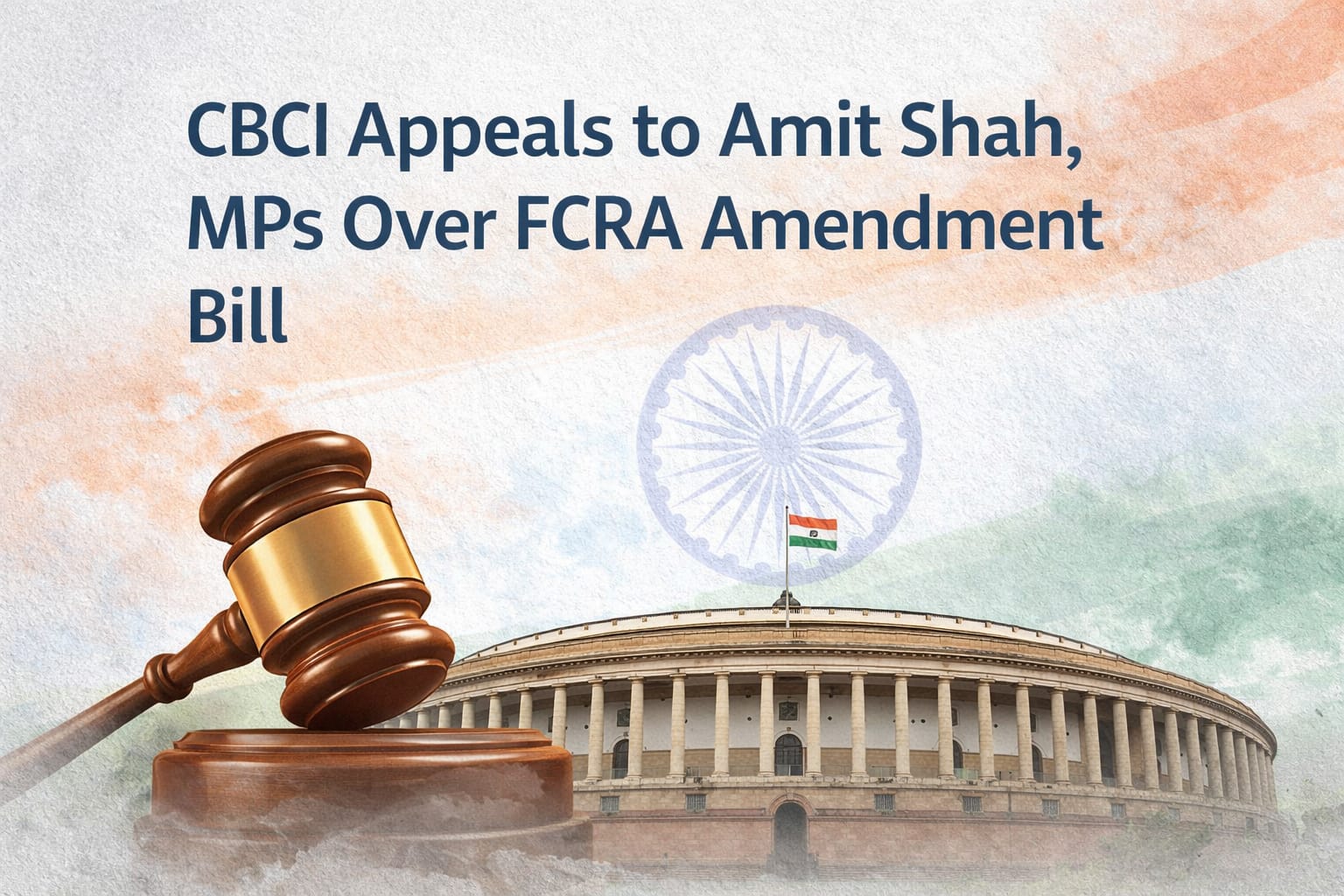
New Delhi, March 31, 2026: The Catholic Bishops’ Conference of India (CBCI) has submitted a detailed memorandum to Union Home Minister Amit Shah and Members of Parliament, raising serious concerns over the proposed Foreign Contribution (Regulation) Amendment Bill, 2026, and urging a broader consultative process before its passage. The memorandum, sent to both the Home Minister and MPs ahead of parliamentary discussions, highlights the potential implications of the proposed changes on civil society and charitable institutions across the country.



In its submission, the CBCI underscored India’s long-standing tradition of voluntary and faith-based service, noting that charitable institutions across religious communities have historically complemented the State in reaching the most vulnerable sections of society. These institutions, it stated, have played a vital role in education, healthcare, social outreach, and humanitarian assistance, particularly among the poor, marginalised, and those in remote regions.
Concerns Over New FCRA Provisions and Asset Vesting
While acknowledging the need for regulatory oversight, the CBCI expressed concern that the proposed amendments may disturb the constitutional balance and restrict the functioning of civil society organisations. It pointed out that the Bill introduces provisions that could significantly alter the framework governing foreign contributions, particularly through the concept of “deemed cessation” of FCRA registration. Under the proposed changes, registration may lapse not only due to cancellation or voluntary surrender but also in cases where renewal is not applied for, refused, or not granted before expiry.
A key concern highlighted in the memorandum is the expansion of provisions relating to the vesting of foreign contributions and assets. The Bill proposes the omission of the existing Section 15 and the introduction of a new framework under which all foreign contributions and assets created from such funds would vest in a designated authority in cases of cancellation, surrender, or deemed cessation. The CBCI cautioned that this would extend to assets built over decades through legitimate and lawful use of funds, including those partially created from domestic resources.
Constitutional and Procedural Issues Raised by CBCI
The memorandum further noted that FCRA registration is subject to renewal every five years, and each renewal implicitly acknowledges compliance with the law up to that point. However, the CBCI raised concerns that the renewal process remains entirely under the control of the authorities, with deficiencies often not communicated to organisations. This, it argued, deprives institutions of a fair opportunity to respond or rectify issues before adverse decisions are taken.
From a constitutional perspective, the CBCI warned that the proposed provisions could conflict with Article 300A, which protects the right to property, as well as Articles 25 and 26, which guarantee religious freedom and denominational autonomy. It emphasised that the absence of prior judicial determination and due process in the vesting of assets raises serious concerns regarding fairness, proportionality, and legal safeguards.
The bishops also highlighted the broader impact on civil society participation. The expansion of liability to “key functionaries,” including trustees and office bearers, was described as creating a presumption of culpability, potentially discouraging individuals from assuming leadership roles in charitable organisations. Such measures, the CBCI warned, could weaken the overall fabric of voluntary service in the country.
Call for Wider Consultation and Safeguards for Civil Society
Emphasising the real-world consequences, the memorandum stated that many organisations receiving foreign contributions are deeply engaged in essential services, particularly among disadvantaged communities such as Dalits and tribal populations. Any disruption to these institutions, it cautioned, would ultimately affect millions of beneficiaries who rely on them for education, healthcare, and social support.
In its appeal, the CBCI urged Members of Parliament to refer the Bill to a Parliamentary Standing Committee for wider consultation, introduce safeguards to ensure due process and judicial oversight, and prevent disproportionate penalties arising from administrative lapses. It also called for the protection of the autonomy of charitable, educational, and faith-based institutions, and recommended the establishment of an independent appellate authority to ensure fair and impartial grievance redressal.
Reaffirming that India’s strength lies in its pluralism, compassion, and spirit of service, the CBCI stressed that regulatory frameworks must enable and support civil society rather than hinder its contributions. The memorandum concluded with a call for a balanced approach that promotes transparency and accountability while safeguarding the vital role played by charitable organisations in nation-building.
By Catholic Connect Reporter




© 2026 CATHOLIC CONNECT POWERED BY ATCONLINE LLP