- 12 September, 2026

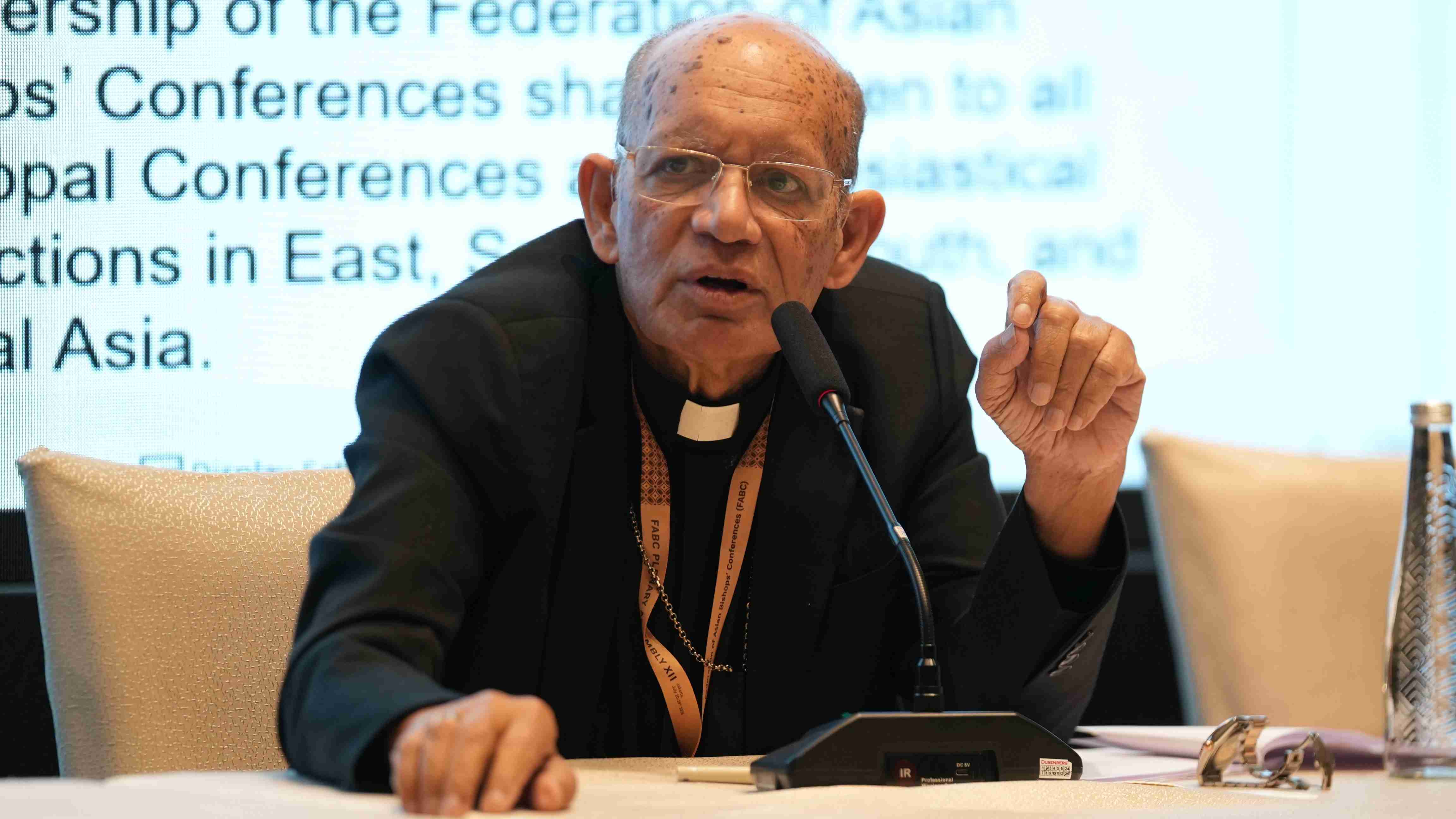
July 27, 2026: Cardinal Oswald Gracias, a former member of Pope Francis' Council of Cardinals, speaks about the legacy of Pope Francis, the leadership of Pope Leo XIV and the future of the Catholic Church in India. In an exclusive interview, he reflects on synodality, inter-ritual unity, the role of the laity and women, minority rights, anti-conversion laws and the challenges facing Christians, while urging the Church to remain hopeful, courageous and faithful to the Gospel.

How do you assess the current state of the Catholic Church in India, and what do you see as its greatest opportunities and challenges in the coming years?
The Catholic Church in India is strong and vibrant. India itself is a vibrant country, and although the situation varies from place to place, I would generally say that the Church is alive and doing well.
The greatest opportunity—and also the greatest challenge—is to maintain this vitality. There is always the danger of becoming complacent and not being dynamic enough to respond to new situations. The world is changing rapidly. People's mentality is changing, and they are searching for new ideas and new ways of thinking. While the Gospel remains the same, Church leadership must continually respond to these changing realities. The pace of change today is very fast, and leadership must be able to guide the Church with energy and vision.

The Church should also avoid developing a minority complex. We should not keep playing the minority card. We can contribute much to society while remaining faithful to the Gospel. The challenge is to adapt to changing circumstances without compromising the Gospel.
(Click here to follow Catholic Connect for regular News and Content)
Having served on Pope Francis' Council of Cardinals (C9), what were your most significant experiences, and what lessons from that global role can benefit the Church in India?
Serving on the Council of Cardinals throughout Pope Francis' pontificate was an immense privilege. It allowed me to see the Church from its very centre and understand how decisions are made. It deepened my love for the Church.
I saw the Church as both deeply human and deeply guided by the Holy Spirit. Time and again, in my conversations with Pope Francis, I sensed that there was a divine presence guiding the Church. Pope Francis was a very prayerful and holy man. Whenever I asked him about the reasons behind certain decisions, he would often say, "I think the Lord wants this." He made decisions in prayer and remained single-minded in seeking the good of the Church.
That experience strengthened my confidence that the Lord continues to guide the Church despite human weaknesses. We are only instruments; the Lord remains with His Church. The Gospel cannot be compromised or amended. This experience made me an even stronger Church person.
I met Pope Francis shortly before he was admitted to hospital and shook hands with him. He briefly returned to Santa Marta before passing away. That experience reminded me once again that while individuals come and go, the Lord remains with His Church.
How would you compare the leadership, vision and priorities of Pope Francis and Pope Leo XIV?
Many people have asked me this question. I knew Pope Francis very well, while I have met Pope Leo only a few times. I see clear continuity between them. They share the same vision of the Church, though every Pope expresses that vision according to his own personality and style.
I do not expect any dramatic reversal of what Pope Francis began. The priorities may differ because circumstances are different. Pope Francis was aware that he did not have unlimited time, while Pope Leo begins his ministry without that constraint.
Their backgrounds are also different. Pope Francis came to Rome as an outsider, whereas Pope Leo had already served in the Roman Curia, was Prefect of the Dicastery for Bishops, had missionary experience, and had travelled extensively around the world. Those experiences give him a different preparation for the papacy.
The transition was remarkably smooth. It almost seemed as though Pope Francis had been preparing Pope Leo for this responsibility. The conclave itself was quick, and I see the Holy Spirit guiding the Church through that process.
Synodality has been a major focus in recent years. How can the Church in India make it a lived reality?
Synodality was one of Pope Francis' major priorities. I remember one of his earliest major addresses, during the golden jubilee of the Synod of Bishops, where he offered a profound theological explanation of synodality. He always emphasised that its roots lie in the Second Vatican Council.
His vision was that the whole People of God walk together, listening to one another and moving together. He saw synodality as a way of renewing the Church.
In India, synodality must become a lived reality in parishes, dioceses and every aspect of Church life. If we truly understand it, synodality can also influence society. Different religions can walk together, work for the common good, fight corruption and uplift the poor. A genuinely synodal society leaves no room for corruption.
The Indian Church should deepen its understanding of synodality and promote it more widely.
The Church also has enormous potential to involve more lay people. We should not hesitate to learn from the secular world where appropriate, including in areas such as management and leadership. The Church is more than an organisation because Christ is with us, but it is also an organisation led by human beings. Therefore, we need good leadership, strategic thinking and sensitivity to the realities of today's world. Pope Francis helped make the Church more relevant by addressing issues such as peace, poverty and climate change while remaining faithful to the Gospel.
India is home to the Latin, Syro-Malabar and Syro-Malankara Churches. What more can be done to strengthen unity?
I believe inter-ritual collaboration is still limited, and that is our own fault. We are one Church with the same vision, yet we often function separately. We have not sufficiently broken down barriers to understand, love and support one another.
There were periods when greater efforts were made to work together, but that momentum has weakened. More dialogue, meetings and collaboration are needed. Even if solutions are not immediate, continued conversation itself is valuable.
Pope John Paul II encouraged the bishops of India to work together and avoid rivalry or competition. We share the same mission, and we should continually ask how we can achieve it together. We may not solve every problem immediately, but honest dialogue can provide direction.
Why do tensions sometimes arise between diocesan bishops and religious congregations?
It is unfortunate, but true. Both bishops and religious share the same mission, yet their priorities, structures and ways of functioning are often different.
I recognised this when I first became a bishop many years ago, and we are still trying to address the same issues today. Greater dialogue is essential because the more we speak, the better we understand one another.
Humility is equally important. We must acknowledge our own mistakes, understand the difficulties faced by others and be willing to change direction when necessary. I would welcome a permanent committee of bishops and religious dedicated to addressing these issues. Many misunderstandings could be resolved if we genuinely tried.
What is your assessment of anti-conversion laws in several Indian states?
When these laws first began appearing about 25 years ago, we largely viewed them as legal and administrative issues. Today, we have had more opportunity to study them in greater depth.
I believe these laws go against the Constitution because they interfere with a person's conscience, which the State has no right to control. The Catholic Church has clearly expressed its opposition.
Thousands of students have studied in Christian institutions without becoming Christians. Therefore, I believe these laws are political in nature and can easily be misused. They go against constitutional principles and human rights. We must continue challenging them through the courts, and some states are already doing so.
How serious is the situation regarding attacks and discrimination against Christians in India?
I have often been asked this question, both in India and abroad. I would not describe the situation as persecution. I can freely practise my faith in Mumbai and go about my daily life.
However, everything is not fine. A perception has been created that Christians are engaged in forced conversions and therefore must be stopped because they supposedly threaten society. I have told government authorities that if genuine cases exist, they should bring them to us because forced conversion through allurement is invalid both theologically and canonically.
Sometimes such perceptions serve political interests. I have conveyed to senior authorities that this is not good for the country. India's strength lies in its diversity of cultures, languages and traditions, and in our ability to live together. That harmony should be preserved.
These problems are created by fringe elements. The majority of people from other religious communities are understanding, accepting and friendly. I have personally enjoyed good relationships with Hindu, Muslim, Buddhist and Sikh leaders through years of interreligious dialogue. We must continue creating an atmosphere of understanding, tolerance and collaboration.
Is the Catholic Church doing enough to show solidarity with Protestant communities facing persecution?
We have been conscious to some extent. We should speak out whenever there is injustice, regardless of whether it affects Protestants, Catholics or followers of any other religion.
Ecumenism has unfortunately taken a back seat in India. We are occupied with many other concerns, but we should talk more, collaborate more and better understand one another's perspectives.
How do you assess the condition of minority rights in India today?
There is considerable debate about minority rights. Some argue that everyone should simply be treated equally. Yet democracies also recognise the need to protect minorities so that they are not overwhelmed by the majority, just as disadvantaged groups receive support in other ways.
At the same time, I discourage Christians from developing a minority complex. We should work confidently for our nation with dignity, honour and commitment. We should not overemphasise our minority status.
What greater role should the laity, especially young people and women, play in the Church?
This question flows directly from synodality and the Second Vatican Council. Pope Francis repeatedly reminded us that the laity are the Church. Even Canon Law was changed to reflect this understanding.
The primary sphere of the lay apostolate is the temporal order: promoting justice, truth, honesty and service to society. The Church has taken the initiative in dialogue and should now lead by example in working together.
One of the great obstacles to synodality, Pope Francis often said, is clericalism—the belief that clergy must do everything while the laity merely assist them. That is not authentic synodality. The laity have their own mission and responsibilities.
The Church already has structures such as parish councils and finance committees, but we have not fully implemented their true spirit. We have made progress, but much remains to be done.
Women also have an important role to play. Pope Francis promoted women in leadership positions within tribunals, the Roman Curia, Church institutions and parish structures. Women are competent and have much to contribute. I believe Pope Leo will continue moving in that direction.
Looking back on your decades of service to both the Indian and universal Church, what gives you hope for the future, and what message would you like to leave for the next generation of Catholic leaders?
Do not lose hope. Always remember that the Holy Spirit protects and guides the Church. We are His instruments.
Work with dedication, sincerity and courage. Be willing to try new methods. There will always be opposition, but we should never retreat because of it.
Remain optimistic and humble enough to admit mistakes. Even Popes have acknowledged mistakes made by the Church in history. We are a human institution, but we must always remain faithful to the Gospel.
The Church has passed through many different periods in history. We are neither living in its best times nor its worst. Despite every challenge it has faced, the Church has never given up. Neither should we.
How does Pope Leo XIV view the role of the Federation of Asian Bishops' Conferences (FABC)?
Having served as President of the FABC, I believe the Holy Father appreciates what the FABC has accomplished. I feel the FABC is listened to across the world.
India has much to contribute to Asia, and Asia has much to contribute to the universal Church. Ultimately, the Church exists to make the world a better place by serving society.
By Catholic Connect Reporter
Read More from Indian Church Leaders:
“The Church Must Learn to Listen Without Fear”: Cardinal Filipe Neri on Synodality in India
Archbishop Vincent Aind: The Tribal Church Can Guide India’s Synodal Journey
“The Church Cannot Remain Silent”: Archbishop Linus Neli on Healing and Hope in Manipur
“People Saw Christ Before They Heard His Name”: Bishop Benny on Arunachal’s Faith Journey



© 2026 CATHOLIC CONNECT POWERED BY ATCONLINE LLP