- 13 September, 2026

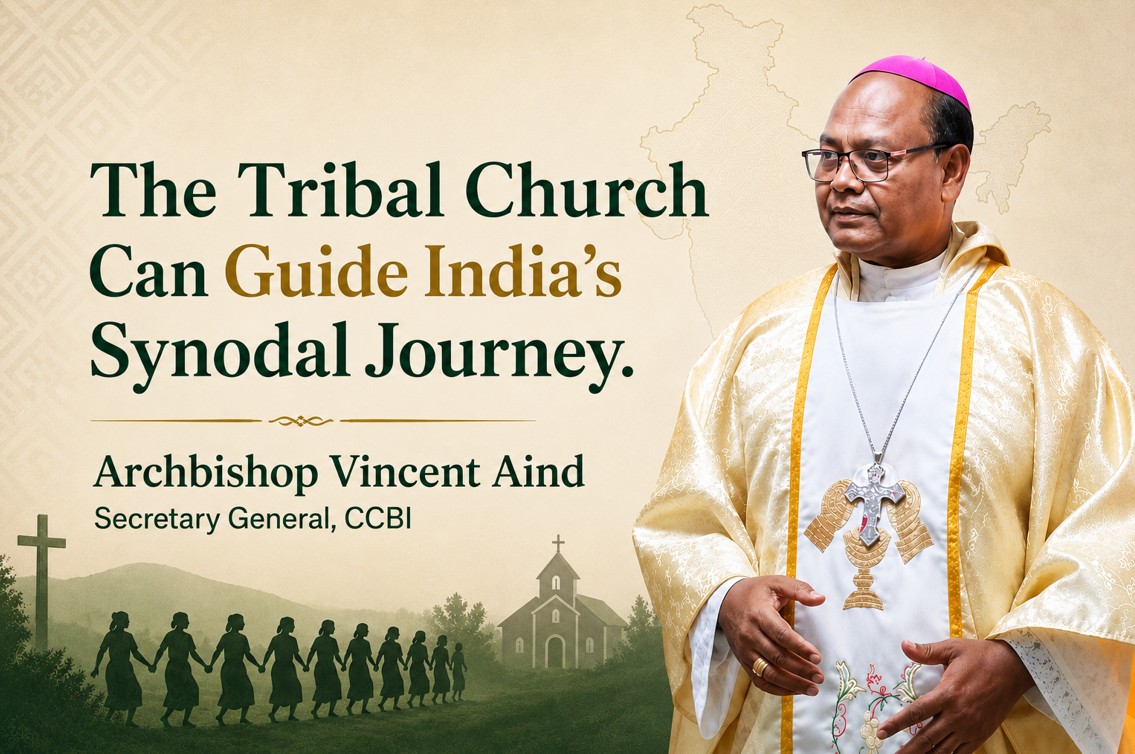
June 1, 2026: For generations, the tribal communities of Chota Nagpur have nurtured a vibrant and deeply rooted Catholic faith. Their journey is closely intertwined with the Church’s efforts to uphold dignity, protect land rights, and strengthen cultural identity. In this exclusive conversation with Catholic Connect, Archbishop Vincent Aind of Ranchi and Secretary General of the CCBI reflects on the enduring legacy of missionaries, the challenges facing tribal communities today, and the unique lessons the tribal Church offers the wider Church in India. He also shares a compelling message for young Catholics navigating an increasingly individualistic world.
Catholic Connect: The tribal communities have long been at the heart of the Church in your region. How do you see the tribal Church contributing uniquely to the mission, spirituality, and vitality of the Catholic Church in India today?
Archbishop Vincent Aind: In order to answer this question, I would like to begin by saying that the Church itself came to the tribal community and made its presence relevant and significant, with a lot of hope and assurance to the very identity of the tribals in Chota Nagpur. In fact, it literally saved them from the zamindars and all other powers of that time, who were treating the tribals almost like inhumans. The missionaries understood this plight and came to their help in as many ways as possible, even by fighting cases on behalf of the tribals and helping them recover their lost land.

Eventually, over a long period, they studied the entire system of land ownership in the tribal community and contributed to the creation of the Chota Nagpur Tenancy (CNT) Act. That became a safeguard for tribal land for many years to come. It is still in effect today.
In this way, tribal identity was regained through the efforts of the missionaries. Therefore, today the Church in Chota Nagpur is truly vibrant. One can see this in the large numbers who gather for Sunday Mass and even more so on major occasions. Churches are often overflowing, and the devotion and active participation of the faithful are clearly visible.
So it is truly the heart of the Church. The tribal Church can be considered the heart of the Church in India. It is therefore not surprising that many religious congregations from different parts of the country come there seeking vocations. Vocations continue to flourish because the faith remains very much alive and dynamic.
Catholic Connect: The tribal communities often face challenges related to land rights, displacement, cultural preservation, and socio-economic development. How is the Church accompanying tribal people in defending their dignity, identity, and fundamental rights?
Archbishop Vincent Aind: In answer to the first question, I mentioned with gratitude the role of the missionaries in helping us regain our identity and recover our land. However, the struggle continues because there are still efforts by different forces to take away tribal land, much of which is rich in minerals.
As a result, there is always the danger that land inhabited by tribal communities, especially those living near forests, may be acquired for mining or similar purposes. This concern remains ever present.
The Church therefore seeks to conscientize people. A few years ago, through the Church’s efforts, people were mobilized to protest on a large scale. Major rallies were held in Ranchi, and these proved effective in protecting their rights.
Such awareness-building efforts continue through the Church and various NGOs, ensuring that people remain vigilant. The Church plays its role both openly and, at times, discreetly.
Catholic Connect: In the context of synodality and evangelization, what message would you like to share with the wider Church in India about learning from the traditions, faith, and community-centered values of the tribal Church?
Archbishop Vincent Aind: The second part of the question already contains the answer. The tribal Church in Chota Nagpur is fundamentally community-oriented. Community is given the highest value, and the individual is understood within the context of the community.
At every stage and in every relationship, there is a strong sense of community. Therefore, the principles of synodality and communion fit very naturally within tribal culture. For the tribal community, living the three dimensions of synodality—communion, participation, and mission—is particularly meaningful.
In that sense, synodality is simply an affirmation of what tribal communities have traditionally lived for generations. The Church in Chota Nagpur can therefore serve as an ideal example of the synodal way of being Church in India.
Catholic Connect: And to conclude, what is your advice to the future Catholic India, the youth of India?
Archbishop Vincent Aind: The youth of India should understand synodality properly and adapt it to their way of being Church in today’s context, especially at a time when many forces are encouraging greater individualism, materialism, and self-interest.
In that context, synodality offers an alternative response. The youth of the Indian Church should recognize its value and compare the synodal way of life with the values promoted by materialism and consumerism, which often encourage selfishness.
The synodal way is the better path. It will not only strengthen us as a Church community but also serve as a powerful example for the nation. Despite differences in culture, tradition, language, and faith, we can remain united. We can walk together and contribute to building a truly diverse and united nation.
(CLICK HERE to follow Catholic Connect and to stay connected with the Church)
By Catholic Connect Reporter


© 2026 CATHOLIC CONNECT POWERED BY ATCONLINE LLP