- 23 October, 2026
DHAKA, October 23, 2026 — A seminar on Christian-Muslim relations in Bangladesh has called on Catholic Church leaders to strengthen their understanding of Islam and equip local communities to engage Muslim neighbours with greater confidence, mutual respect and sensitivity to the challenges facing religious minorities.


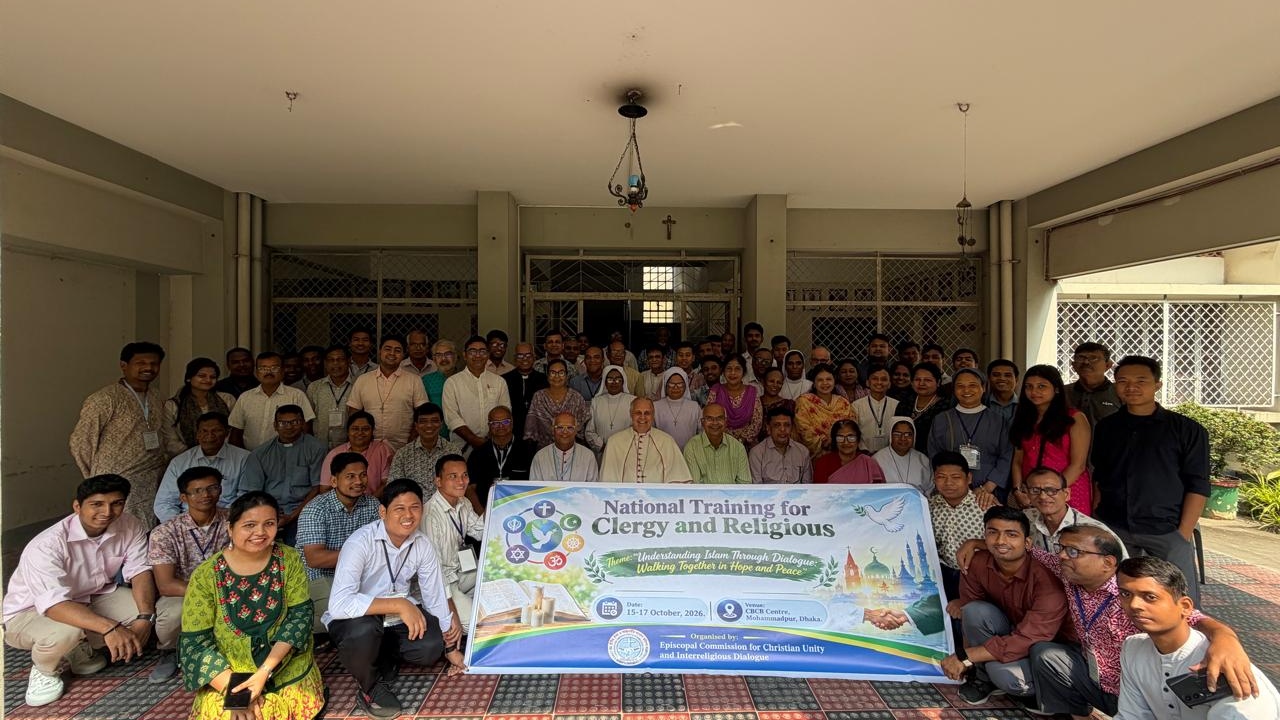
The three-day seminar, titled “Understanding Islam Through Dialogue: Walking Together in Hope and Peace,” was organised by the Catholic Bishops’ Conference of Bangladesh (CBCB), with support from the Holy See and in collaboration with the Henry Martyn Institute, Hyderabad. Held from October 15 to 18 at the CBCB Centre in Muhammadpur, Dhaka, it brought together approximately 90 clergy, religious sisters and lay leaders serving on diocesan commissions for interreligious dialogue and ecumenism.
The central outcome was a call for a more informed and context-sensitive approach to Christian-Muslim relations—one that combines a firm grounding in Christian faith with an authentic understanding of Islam and a commitment to peaceful engagement, particularly where religious minorities face insecurity or discrimination.
Archbishop Kevin Stuart Randall, Apostolic Nuncio to Bangladesh, and Archbishop Lawrence Subrata Howlader of Chattogram, chairperson of the Episcopal Commission for Christian Unity and Interreligious Dialogue in Bangladesh, invited Jesuit priest and scholar Joseph Victor Edwin and Muslim scholar Professor Waheedulla to serve as resource persons.
Across eight sessions, each lasting 90 minutes, the speakers explored Islam as a lived religious tradition shaped by faith, beliefs and practices across cultures. Drawing on scholar Shahab Ahmed’s book What Is Islam? The Importance of Being Islamic, they examined the spiritual dimensions of Muslim life, particularly the relationship between Islam (outward religious practices), Iman (interior faith) and Ihsan (striving to shape one’s life according to the Qur’an and the example of the Prophet Muhammad).
The two resource persons brought complementary perspectives. Edwin shared insights from his experience as a Catholic priest specialising in Islam and Christian-Muslim relations, while Waheedulla explained the Islamic tradition from within his own faith.
Turning understanding into practice
Drawing on the Second Vatican Council’s declaration Nostra Aetate and the Church documents Dialogue and Mission and Dialogue and Proclamation, Edwin urged participants to translate theological understanding into practical engagement with Muslim neighbours.
He emphasised that Christian mission calls for a witness to Christ’s love marked by courage, peace and respect, rather than fear or misunderstanding of other religious traditions.
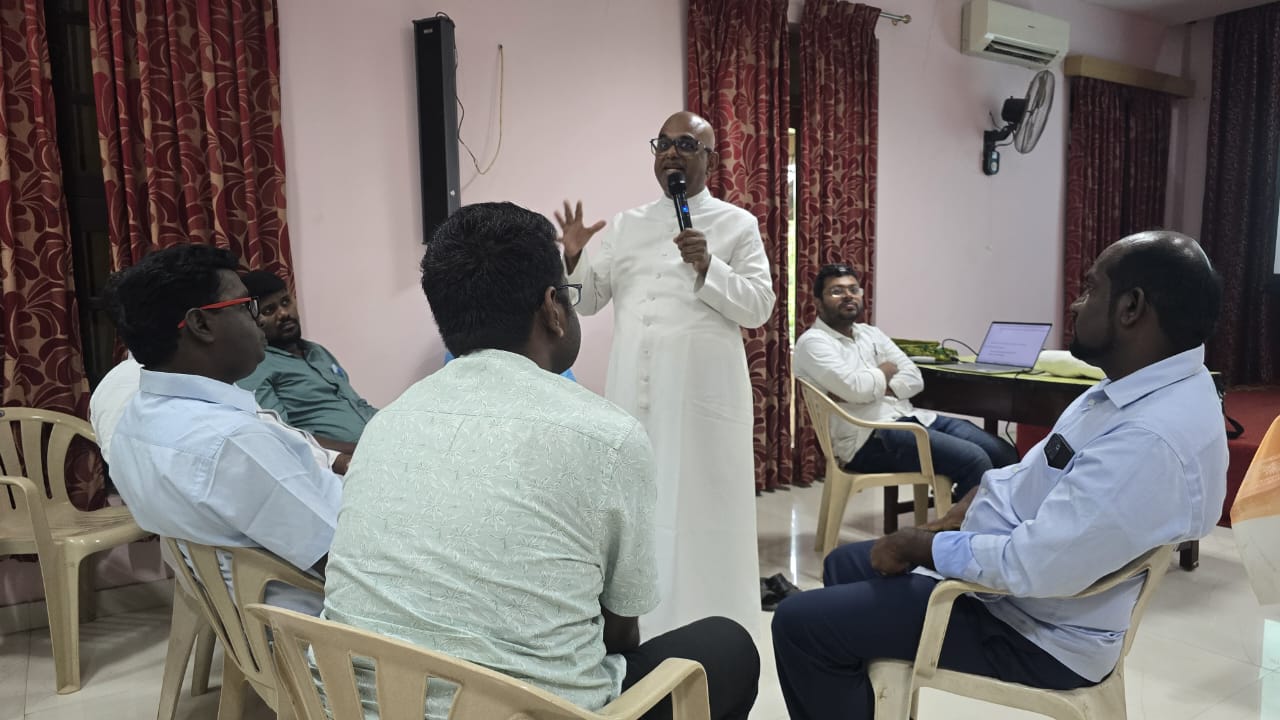
Waheedulla presented the Qur’anic perspective on religious coexistence, stressing that people should remain faithful to their own revelation while respecting the beliefs of others. Group discussions and plenary presentations enabled participants to examine how these principles could be applied in their respective dioceses and communities.
Minority concerns enter the discussion
Participants also raised concerns about the situation of religious minorities in Bangladesh, particularly in contexts involving individuals and groups influenced by the ideology of Jamaat-e-Islami (JI).
Founded by Abul A’la Maududi in 1941, Jamaat-e-Islami advances an understanding of Islam that extends beyond personal belief and religious observance to encompass political, economic, legal and cultural life.
In Maududi’s framework, practices such as Salah (prayer), Sawm (fasting) and Zakat (almsgiving) contribute to preparing believers for the establishment of an Islamic social order, known as Iqamat-e-Deen. The movement’s political vision includes a state in which governmental and legal institutions implement Islamic principles and Sharia.
Critics of theocratic models argue that enforcing religious law through state power can undermine the rights of religious minorities and of Muslims who oppose religious government. The seminar discussions highlighted the importance of understanding these political and social realities when addressing relations among religious communities.
A shared responsibility for peace
The seminar’s concluding reflection was that effective engagement across religious boundaries requires both a deep understanding of one’s own faith and a genuine appreciation of others’ religious convictions. Participants connected this commitment to the Christian belief that every human being is created in the image of God and therefore deserves dignity, compassion and respect.
One female participant observed that, despite the difficulties it can present in certain sociocultural settings, interreligious dialogue is an endeavour desired by God. Edwin said her remark deeply affected him because it echoed the emphasis on interreligious dialogue in the Society of Jesus’ 34th General Congregation.
The seminar’s broader message was that understanding Islam must lead to practical action: preparing Church leaders to build relationships across religious boundaries, bear credible witness to their Christian faith and stand for the dignity of vulnerable communities. Rather than treating interreligious engagement as an abstract theological exercise, participants were challenged to make it an integral part of the Church’s mission and its contribution to peace in Bangladesh.
By Catholic Connect Reporter
© 2026 CATHOLIC CONNECT POWERED BY ATCONLINE LLP