- 29 June, 2026

Turkey, June 29, 2026: A discovery beneath the soil of southern Turkey has brought an extraordinary piece of early Christian history back to life.


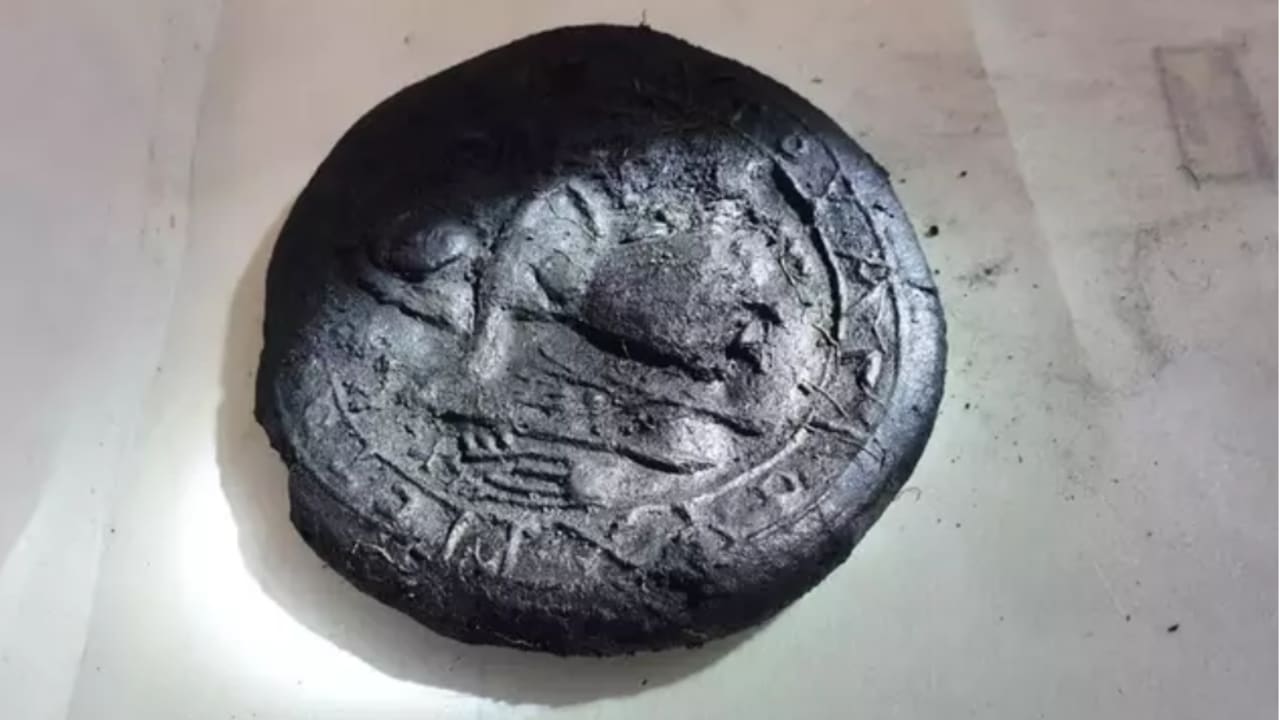
Archaeologists at Topraktepe, the site of the ancient city of Eirenopolis in modern-day Karaman Province, uncovered five carbonised bread loaves believed to be around 1,300 years old.
Preserved after an ancient fire and buried for centuries, these fragile remains have offered a rare glimpse into the faith, traditions and daily lives of Byzantine-era Christians.
Among the remarkable findings, one loaf has captured global attention because it carries an image of Jesus Christ as a sower scattering seeds — a deeply meaningful symbol connecting faith, agriculture and everyday life.


The most significant discovery from the excavation is a bread loaf stamped with an unusual image of Jesus.
Unlike the more familiar Byzantine portrayal of Christ as Pantokrator, showing Jesus as a powerful ruler and heavenly king, this loaf presents Him as a humble sower spreading seeds. Archaeologists believe this representation reflected the importance of farming and harvests within the local community.
The image of Jesus scattering seeds carried a powerful message for people whose lives depended on agriculture. It symbolised nourishment, growth, fertility and the belief that God provided both physical and spiritual sustenance.
The bread also contained a Greek inscription around its edges that read: “With gratitude to the Blessed Jesus.”
Researchers believe the words may have represented an expression of thanksgiving, showing the devotion of the Christian community that produced the bread.
The discovery was not limited to a single loaf.
Archaeologists found four additional carbonised breads bearing impressions of the Maltese cross. These markings suggest that the loaves were likely prepared for religious purposes, possibly as liturgical or communion bread rather than ordinary food.
Bread has always held a central place in Christian tradition. From the earliest centuries of the Church, it became closely connected with the Eucharist and the belief in Christ as the “Bread of Life”.
The markings found on these ancient loaves provide evidence that early Christians used everyday objects to express their faith. The bread was not simply a source of nourishment but also a symbol of prayer, gratitude and spiritual connection.
The survival of these loaves for more than a millennium is considered highly unusual.
Normally, bread would disappear over time due to decay. However, experts believe the loaves were caught in an ancient fire that carbonised them before they were quickly buried beneath layers of soil.
This process helped preserve the shape, markings and details of the bread, allowing archaeologists to study them centuries later.
The discovery has provided researchers with valuable information about food production, religious practices and community life in Anatolia during the Byzantine period.
The ancient bread from Topraktepe offers more than an archaeological discovery — it provides a personal connection to Christians who lived more than a thousand years ago.
The image of Jesus as a sower reflects a faith deeply connected to ordinary life. For these communities, farming, food and spirituality were closely linked. The seeds planted in the fields represented not only survival but also hope, renewal and God’s blessings.
The discovery also highlights how early Christians expressed their beliefs through art and symbols. While grand churches and ancient manuscripts often dominate historical studies, small objects like these loaves reveal the daily faith of ordinary people.
The 1,300-year-old bread found in Turkey has transformed a simple food item into a powerful historical testimony.
From the image of Jesus spreading seeds to the words of gratitude carved into the loaf, the discovery tells a story of devotion, thanksgiving and hope.
Hidden beneath the earth for centuries, these ancient loaves have reminded the modern world that even the smallest remains can carry the deepest stories.
The bread of Topraktepe is not just a piece of history — it is a lasting connection to a Christian community that placed faith at the centre of everyday life.
Courtesy Jerusalem Post
Photo Courtesy : Karaman Governorate
© 2026 CATHOLIC CONNECT POWERED BY ATCONLINE LLP