- 15 September, 2026
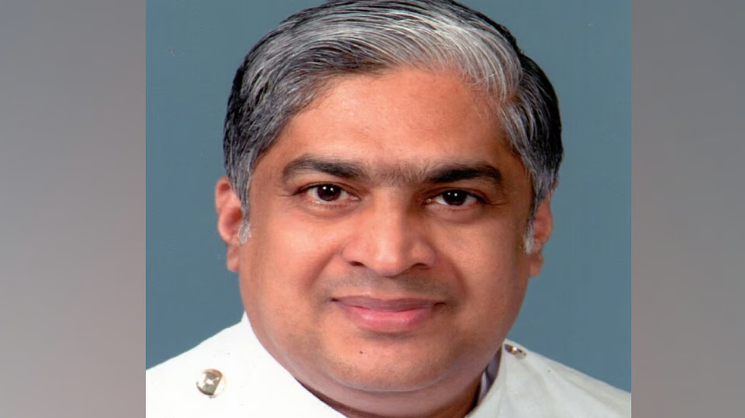
THIRUVANANTHAPURAM, September 15, 2026 — The idea was born in an ordinary house visit. An elderly man, returning to Kerala after years in Singapore, was bedridden and living without his wife, who had died. A home nurse was looking after him, but the care did not appear adequate to the visiting priest.

Rev Samuel T Varghese, a priest of the Mar Thoma Church, left the house troubled.
The encounter forced him to think beyond the immediate needs of one sick man. What about the thousands of elderly people who were living alone, spending long hours in empty homes, or receiving physical care without companionship?

His answer was radical for its time: create a place where elderly people could come during the day, spend time with one another, receive care and return home in the evening.
“I thought of a Pakal Veedu, where elderly people could come and spend the whole day, just like children go to kindergarten,” Rev Samuel recalls.
In 1996, the idea became reality.
The first Pakal Veedu, or day-care centre for senior citizens, was established at Pongumoodu in Thiruvananthapuram. Nearly three decades later, as Kerala faces the consequences of one of India’s most rapid demographic transitions, that pioneering idea is acquiring renewed significance.
«“Most of them are lonely, and we need to ensure their psychological and mental well-being too.”
— Rev Samuel T Varghese»
An idea born from loneliness
Rev Samuel’s vision did not emerge from a policy document. It came from pastoral experience.
During his house visits in Thiruvananthapuram, he encountered elderly people whose needs extended well beyond medicine and nursing. The man who prompted the idea had spent years abroad and returned to Kerala after his wife’s death. Confined to bed, he depended on a home nurse for daily care.
For Rev Samuel, the situation raised a larger concern: Who cares for the emotional and social needs of an elderly person when the family is no longer able to provide constant companionship?
He discussed his concern with his wife and the then bishop. Soon, government officials, volunteers and political leaders were brought together to explore the proposal.
The result was the first Pakal Veedu.
Its philosophy was straightforward but ahead of its time. Elderly people would not be treated simply as patients or dependants. They would have a place where they could spend their day among people of their own generation, participate in activities and remain connected to the community.
The first member
The centre at Pongumoodu gradually began to attract attention.
Media reports about the initiative brought people to Rev Samuel’s door. Among them was Thankamma George, a native of Kesavadasapuram. She became the first member of the Pakal Veedu.
From that modest beginning, the concept slowly spread.
Private organisations and NGOs began establishing similar day-care centres, recognising the need for spaces where senior citizens could find companionship and support without necessarily moving into residential institutions.
The idea eventually found recognition in Kerala’s revised policy for older persons in 2003.
What had begun as a pastoral response to one elderly man had evolved into a model with implications for public policy.
Kerala’s demographic warning
The timing of the renewed interest could hardly be more significant.
When Rev Samuel established the first Pakal Veedu in 1996, elderly people constituted roughly eight per cent of Kerala’s population.
Today, the proportion is around 17 per cent.
It is expected to rise to about 20 per cent.
The numbers point to a profound transformation in Kerala’s social landscape.
Longer life expectancy is a remarkable achievement. But it also brings new responsibilities. As the proportion of older people increases, families, communities and governments must rethink how care is organised.
The challenge is particularly complex because Kerala’s traditional family structures are changing. Younger people increasingly move to other cities and countries for education and employment. Families are becoming smaller, while the number of elderly people living alone or with limited support is growing.
The result is a paradox: people may live longer, but they can also become more isolated.
Loneliness is also a health issue
This is where Rev Samuel’s original insight remains particularly relevant.
Healthcare is an essential part of ageing, but it cannot address every consequence of growing old.
An elderly person may have access to medication and still experience loneliness. A person may have a roof over their head but lack someone with whom to share a conversation. Someone may receive nursing assistance but have no opportunity for friendship or meaningful social interaction.
“Most of them are lonely,” Rev Samuel says.
His emphasis on psychological and mental well-being challenges the tendency to view elderly welfare primarily through the lens of physical health.
The Pakal Veedu model recognises that companionship itself can be a form of care.
A conversation over tea, a shared activity, a familiar face or simply knowing that someone is waiting for you can help restore a sense of belonging.
More than a building
The real significance of the Pakal Veedu, therefore, lies not in the building itself.
It lies in the community it creates.
The elderly person is not merely someone to be looked after. He or she is a person who still has something to contribute — memories to share, relationships to nurture, skills to offer and wisdom to pass on.
This approach also resonates with the Christian understanding of human dignity.
The value of a person does not depend on age, productivity, income or physical strength. The elderly remain members of the human family whose dignity demands respect, companionship and care.
Rev Samuel’s initiative illustrates how pastoral ministry can sometimes become a catalyst for wider social change. A priest responding to an individual need ended up identifying a problem that governments and civil society would increasingly have to confront.
The affordability question
As Kerala ages, however, another question becomes unavoidable: Who will pay for care?
Specialised geriatric services can be expensive. Elderly people from economically vulnerable families may struggle to access appropriate medical and support services.
Rev Samuel has stressed the need for better geriatric care as well as greater assistance for elderly people facing financial difficulties.
This makes ageing not simply a healthcare issue but also an issue of equity.
A humane system must ensure that quality care is not available only to those who can afford it.
Day-care centres can potentially provide one practical part of the answer by allowing elderly people to receive support during the day while continuing to live in their own homes.
They can also offer relief to families who may be unable to provide constant supervision because of work or other responsibilities.
From a church initiative to public policy
The journey of Pakal Veedu is significant because it demonstrates how social innovation can emerge from the grassroots.
There was no elaborate infrastructure when the first centre began. There was simply an observation, a concern and a willingness to act.
The model’s subsequent inclusion in Kerala’s policy for older persons in 2003 marked an important recognition of the principle behind it.
Now, with the country itself confronting the implications of population ageing, the day-care approach is again receiving attention.
The policy conversation has moved considerably since 1996. Yet the fundamental question remains the same: how can society enable elderly people to live with dignity while remaining connected to their families and communities?
Growing old without growing alone
Perhaps the most powerful aspect of Rev Samuel’s vision is its simplicity.
He did not imagine an institution where the elderly would simply be housed.
He imagined a place where they could spend the day together.
That distinction matters.
Ageing should not automatically mean withdrawal from society. Nor should the elderly be seen merely as dependants whose lives have little purpose once they stop working.
A day-care centre can offer something that neither medicine nor money can easily provide: belonging.
As Kerala moves towards a future in which one in every five people may be elderly, such belonging will become increasingly important.
The story that began with one bedridden man in Thiruvananthapuram in 1996 has therefore become much bigger than Rev Samuel himself.
It is a story about how a pastoral encounter can uncover a social reality.
It is a story about loneliness in an ageing society.
And it is a reminder that the measure of a society is not only how long its people live, but how they are allowed to live those later years — with dignity, companionship, purpose and care.
“Growing old should never mean growing alone.”
That may be the enduring message of the Pakal Veedu — a simple idea, born nearly 30 years ago, that now speaks directly to Kerala’s future.
Courtesy : The New Indian Express


© 2026 CATHOLIC CONNECT POWERED BY ATCONLINE LLP