- 09 July, 2026

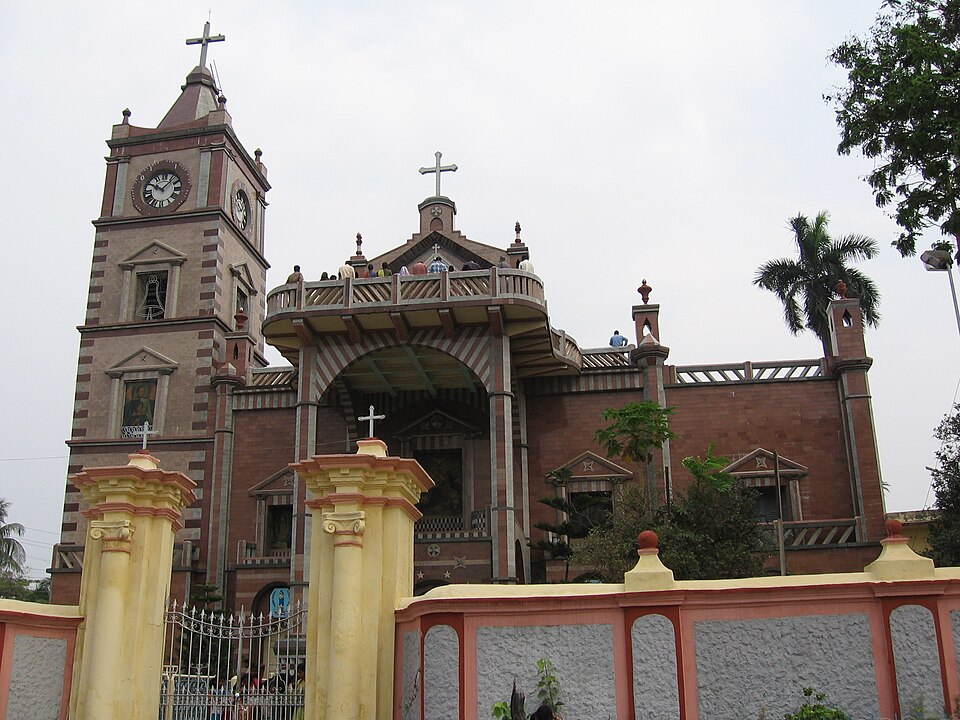
Bandel, July 9, 2026: Beneath the soaring spire of the Basilica of the Holy Rosary, Bandel, the steady flow of pilgrims never seems to cease. Along the banks of the Hooghly River, devotees arrive carrying flowers, candles and whispered prayers. Many make the sign of the cross before the statue of the Virgin Mary. Others fold their hands in the traditional Hindu gesture of reverence. Some quietly recite prayers from the Islamic tradition. In this 16th-century Catholic shrine, faith often transcends religious identity.


Known simply as Bandel Church, the basilica has become one of India's most compelling symbols of interreligious harmony. While it remains a cherished Marian shrine for Catholics, it is equally a destination for thousands of Hindus and Muslims who seek healing, protection and hope through the intercession of Mary. In an era marked by religious polarisation, the shrine offers a striking witness to the possibility of peaceful coexistence.
A Legacy Rooted in Faith
Situated about 80 kilometres north of Kolkata, Bandel Church traces its origins to 1599, when Portuguese traders and Augustinian missionaries established one of the earliest Christian settlements in eastern India. It is among the oldest surviving churches in the country.


Its history has been shaped by both triumph and tragedy. The original church was destroyed during the Mughal assault on the Portuguese settlement in 1632 and later suffered damage from an earthquake. Yet the shrine endured, rebuilt through the determination of the Christian community.
At the heart of its enduring appeal is the cherished tradition of Our Lady of Happy Voyage. According to local belief, the statue of the Virgin Mary was miraculously recovered from the Hooghly River after the church's destruction. Ever since, generations of pilgrims have invoked Mary as the protector of travellers, sailors and all who seek divine assistance.
The Vatican recognised the shrine's significance in 1988 when Pope John Paul II elevated it to the status of a Minor Basilica.
Mary: A Mother Beyond Boundaries
What distinguishes Bandel Church from many pilgrimage centres is the remarkable diversity of its visitors.
For countless Hindu devotees, Mary's maternal compassion resonates with Bengal's rich tradition of honouring the divine feminine through figures such as Durga and Kali. Many see in the Blessed Virgin another loving mother who consoles the afflicted and intercedes for those in need.
Muslim pilgrims, too, find spiritual comfort at the shrine. Revered in Islam as Maryam, the mother of Prophet Isa (Jesus), Mary occupies a place of profound honour in the Qur'an. Many Muslim visitors come to seek blessings, healing and protection, finding in the basilica a peaceful place for prayer.
The result is an extraordinary sight: Christians, Hindus and Muslims standing quietly together before the same statue, united not by doctrine but by hope.
A Parish Built on Dialogue
According to parish priest Fr. John Chalil, the church has long embodied the conviction that God's grace is not confined by religious labels. He believes Bengal's deep appreciation for motherhood and feminine spirituality enables many people, irrespective of faith, to relate naturally to Marian devotion.
The surrounding villages further reflect this shared heritage. Several neighbourhoods bear names inspired by Marian titles, including Our Lady of Fatima and Our Lady of Velankanni, highlighting how devotion to Mary has become woven into the cultural fabric of the region.
For generations, Catholics, Hindus and Muslims have celebrated festivals, supported one another during times of hardship and built relationships that have withstood social and political change.
Sisters at the Heart of the Mission
The shrine's ministry extends well beyond its historic walls.
Since the 1950s, women religious from several congregations have served the surrounding communities through education, healthcare and pastoral outreach. Their work reaches families of every religious background.
The sisters regularly visit homes, offering counselling to grieving families, accompanying the sick and extending practical assistance to those facing economic hardship. They have also promoted women's empowerment, literacy and welfare initiatives among tribal communities.
Among the congregations serving the area are the Missionaries of Charity, who continue the legacy of charitable service begun by St. Teresa of Calcutta. Other religious communities organise retreats, provide spiritual accompaniment and operate educational institutions for underprivileged children.
Through these ministries, the Church's witness becomes tangible—not only proclaiming the Gospel but expressing it through compassionate service to all.
Hope Amid Uncertainty
The witness of Bandel Church carries particular significance at a time when Christians in several parts of India have reported increasing incidents of hostility, including attacks on churches, disruptions of worship and allegations of forced conversions.
Although West Bengal has generally remained more peaceful than many other regions, recent incidents targeting Christian institutions have prompted concern among Church leaders.
Yet at Bandel, the response has been one of quiet perseverance rather than confrontation. Clergy and religious continue to welcome visitors of every faith, convinced that decades of mutual trust remain stronger than the forces of division.
A Shrine of Shared Hope
Perhaps nowhere is the shrine's spirit more visible than beside the wish box placed before the statue of Our Lady of Happy Voyage.
Pilgrims carefully write petitions on small slips of paper—prayers for healing, employment, examinations, marriages, family reconciliation or safe journeys—and place them before Mary with quiet confidence.
During the annual feast and winter pilgrimages, thousands arrive, many on foot, returning in gratitude for prayers they believe have been answered.
The diversity of those gathered reflects the unique vocation of Bandel Church: a place where religious identity gives way to shared humanity and where every pilgrim is received as a child seeking a mother's care.
A Living Witness to Harmony
More than four centuries after its foundation, Bandel Church continues to offer a compelling lesson for modern India.
Its Portuguese architecture and rich Catholic heritage tell only part of its story. Its deeper significance lies in the relationships nurtured across generations—relationships rooted in respect, hospitality and service.
For many pilgrims, Mary is not viewed as belonging exclusively to Christianity but as a compassionate mother whose embrace knows no boundaries.
In a nation where religious differences often dominate public discourse, the Basilica of the Holy Rosary stands as a quiet yet powerful reminder that dialogue, charity and shared devotion can build bridges where divisions might otherwise prevail.
For thousands who continue to visit each year, Bandel remains not simply a historic church, but a living sanctuary of hope, reconciliation and faith that welcomes all.
Courtesy Religion News Service (Priyadarshini Sen)
Picture Courtesy Wikipedia
© 2026 CATHOLIC CONNECT POWERED BY ATCONLINE LLP