- 26 November, 2026
November 26, 2026: On Christmas Eve 1914, along the Western Front, the guns briefly fell silent. Soldiers placed candlelit trees on their trenches, sang carols across no man's land, exchanged cigarettes, buried the dead together and, in some sectors, played football. Within days, the war resumed. It would continue for another four years.


The truce did not end the war. But it exposed a truth that power prefers to forget: enmity is not natural. It is organised, taught, repeated and rewarded. And what can be manufactured can also be resisted.
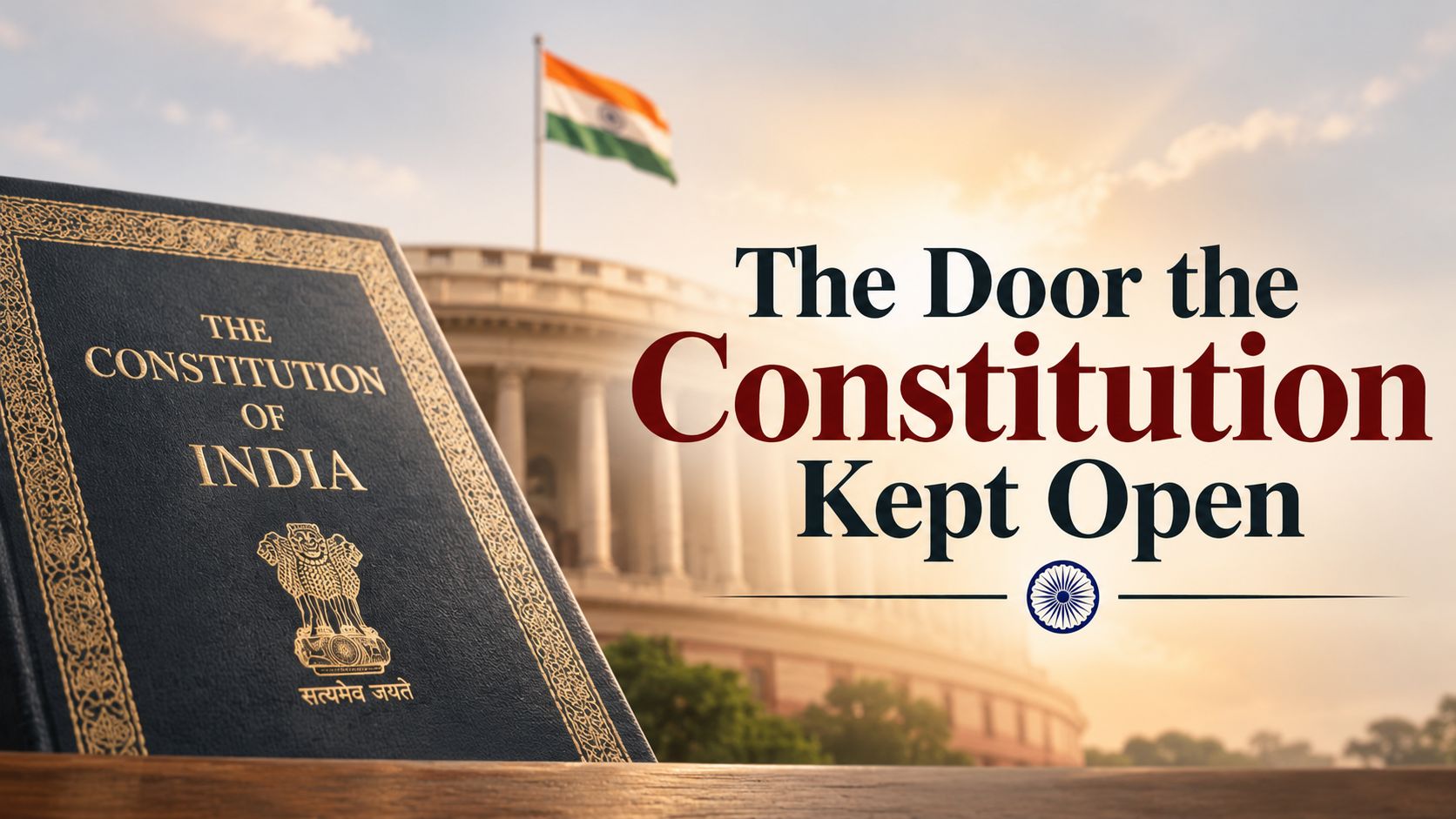
In India, that resistance has a foundation older than any political slogan: the Constitution.
We, the People
The Constitution does not begin with the state, the majority or any single faith. It begins with the words, “We, the People of India.” Its Preamble promises justice—social, economic and political; liberty of thought, expression, belief, faith and worship; equality of status and opportunity; and fraternity, assuring the dignity of the individual and the unity and integrity of the nation.
Fraternity is not a decorative word. It is the Constitution's answer to every force that asks Indians to see one another primarily as Hindu, Muslim, Christian, Sikh, Buddhist, Jain, Parsi, Dalit, Adivasi, migrant, insider or outsider. A republic cannot be held together by law alone if its citizens are taught to fear one another.
Equality Is Not Charity
Article 14 guarantees equality before the law and equal protection of the laws. Article 15 prohibits discrimination by the State on grounds only of religion, race, caste, sex or place of birth. Article 21 protects life and personal liberty. These are not favours granted by a majority to minorities. They are enforceable guarantees that the Republic makes to every person.
That distinction is crucial. Citizenship cannot depend on social approval. A person's dignity cannot be made conditional on wearing the right clothes, praying in the right way, speaking the right language or belonging to the right community.
Secularism Is Not Anti-Religion
Indian secularism is often falsely portrayed as hostility towards religion. In reality, it is a constitutional framework designed to protect citizens from religious coercion and prevent the state from favouring one religion over another.
The Supreme Court has repeatedly recognised secularism as a basic feature of the Constitution. In S. R. Bommai v. Union of India (1994), the Court affirmed its central place in Indian constitutionalism. In Kesavananda Bharati v. State of Kerala (1973), it established that Parliament cannot use its amending power to destroy the Constitution's basic structure. In 2024, the Court reaffirmed that secularism reflects India's commitment to treating people of all faiths equally and without discrimination.
Articles 25 to 28 protect freedom of conscience and the right to profess, practise and propagate religion, subject to reasonable restrictions relating to public order, morality and health. The test is practical: Can every community worship without fear? Can a child enter a classroom without being made to feel like an outsider? Can a place of worship remain secure without having to seek special protection?
Fraternity Is a Duty
The Constitution demands more than peaceful coexistence. It calls for solidarity.
That means refusing to forward rumours that turn a neighbour into a suspect. It means speaking out when hate speech is dismissed as “just words”. It means recognising caste discrimination as a constitutional violation rather than a private family matter. Article 15 expressly prohibits caste-based discrimination, while Article 17 abolishes untouchability. India's promise of equality remains hollow if it protects religious pluralism while allowing caste, gender, class, language or region to determine who belongs.
Hate speech is not merely offensive language. It attacks the constitutional bond between citizens. Freedom of expression under Article 19(1)(a) is vital, but Article 19(2) permits reasonable restrictions in the interests of public order, among other constitutionally recognised grounds. A democracy that tolerates organised dehumanisation does not become freer; it becomes more fragile.
Peace Requires Justice
“Goodwill to all” cannot coexist comfortably with hunger, insecure wages, inaccessible healthcare, homelessness and discrimination. Charity is necessary, but constitutional justice demands a more fundamental question: Why do so many people need charity in the first place?
The Preamble does not promise merely legal equality. It promises social and economic justice. A nation may hold elections, sing anthems and display flags, yet betray its Constitution if dignity is denied in the workplace, the classroom, the police station, the ration queue or the housing colony.
What Citizens Can Do
Few people can end wars or transform institutions single-handedly. But constitutional democracy is sustained by ordinary acts of courage.
- Verify information before forwarding claims about any religious or caste community.
- Learn about the history behind another community's festivals, language and grievances.
- Speak out when a minority is demeaned, especially when silence is easier.
- Support schools that teach India's plural heritage honestly.
- Demand that the police, courts and administrative authorities apply the law equally.
- Treat fraternity as a daily civic responsibility, not merely a ceremonial slogan.
The Door Remains Open
The Christmas Truce ended because the structures that sent men into the trenches remained untouched. Goodwill opened a door, but it could not dismantle the machinery of war.
India's Constitution is meant to be more enduring than a truce. It is a door deliberately kept open—to the poor, the displaced, minorities, dissenting citizens, Dalit children, Adivasi communities, migrant workers, believers and non-believers alike.
The task of every generation is not merely to admire that door. It is to keep it open, defend it when it comes under attack and build, through justice, liberty, equality and fraternity, the republic that the Constitution promises.
By John Singarayar SVD
© 2026 CATHOLIC CONNECT POWERED BY ATCONLINE LLP