- 02 July, 2026

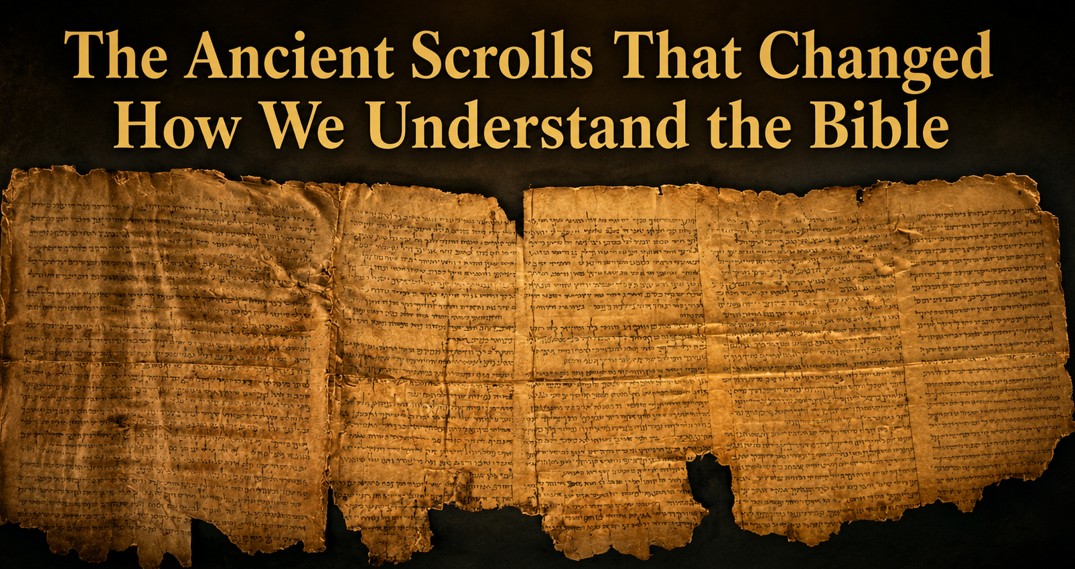
July 2, 2026: Deep inside the dry caves near the Dead Sea, one of the most remarkable archaeological discoveries of the modern era revealed a connection between ancient Scripture and the Bible read by millions today.


The discovery of the Dead Sea Scrolls in the mid-20th century uncovered thousands of fragments of ancient Jewish writings, including copies of many books from the Old Testament. Hidden away for more than 2,000 years, these fragile manuscripts provided historians and biblical scholars with an extraordinary opportunity to study how sacred texts were preserved across generations.
Among the most significant findings were scrolls containing biblical books, including the famous Great Isaiah Scroll, one of the oldest complete copies of a biblical book ever discovered.
The discovery transformed understanding of the history of the Bible and offered important evidence about the careful transmission of ancient Scripture.


The Dead Sea Scrolls were discovered between 1947 and 1956 in caves around Qumran, near the western shore of the Dead Sea. The manuscripts date mainly from the third century BC to the first century AD and include biblical texts, religious writings and community documents.
The scrolls contained portions of almost every book of the Old Testament, with the exception of the Book of Esther. Their discovery gave researchers a rare glimpse into the religious life, traditions and writings of ancient Jewish communities.
One of the most important manuscripts was the Great Isaiah Scroll, which contains the complete text of the Book of Isaiah. Written centuries before many later biblical manuscripts, it allowed scholars to compare ancient versions of Scripture with texts preserved through later Jewish and Christian traditions.
(CLICK HERE to follow Catholic Connect for regular News and Content)
For centuries, questions have been raised about how accurately biblical texts were transmitted over thousands of years. The discovery of the Dead Sea Scrolls provided scholars with valuable evidence for examining these questions.
When the ancient manuscripts were compared with later versions of the Hebrew Bible, researchers found a striking level of agreement. Many passages remained remarkably similar, with differences often involving spelling variations, word order or small textual details.
The findings demonstrated that ancient communities placed great importance on carefully copying and preserving sacred writings.
While scholars continue to study differences between manuscripts and the complex history of biblical transmission, the Dead Sea Scrolls remain one of the strongest examples of how ancient religious texts survived through time.
Beyond their connection to the Bible, the Dead Sea Scrolls provide valuable information about the society that produced and preserved them.
The writings reveal details about religious practices, beliefs, community life and debates that existed during the Second Temple period. They help historians understand the environment in which Judaism developed and the world in which early Christianity emerged.
The scrolls also show the importance of written tradition in preserving religious identity. In an age without modern printing or digital technology, scribes dedicated their lives to carefully copying important texts for future generations.
The Dead Sea Scrolls continue to inspire interest among historians, archaeologists, religious scholars and millions of people of faith around the world.
Their discovery does not simply represent an archaeological achievement; it represents a connection between the ancient world and the present day. The scrolls demonstrate how writings created thousands of years ago can continue to influence faith, culture and history.
The survival of these manuscripts through centuries of change, conflict and uncertainty remains a remarkable story of preservation.
The caves near the Dead Sea once held secrets buried beneath the desert landscape. Today, the Dead Sea Scrolls stand as a powerful reminder of the endurance of ancient writings and the dedication of those who preserved them.
For believers, the discovery strengthened confidence in the continuity of biblical tradition. For historians, it provided an invaluable record of the past and a deeper understanding of how sacred texts developed.
More than two thousand years after they were hidden away, the scrolls continue to tell a story of faith, history and preservation — showing how words written in the ancient world can continue to speak to generations today.
Courtesy : CBN
Picture Courtesy : National Geographic


© 2026 CATHOLIC CONNECT POWERED BY ATCONLINE LLP