- 04 April, 2026

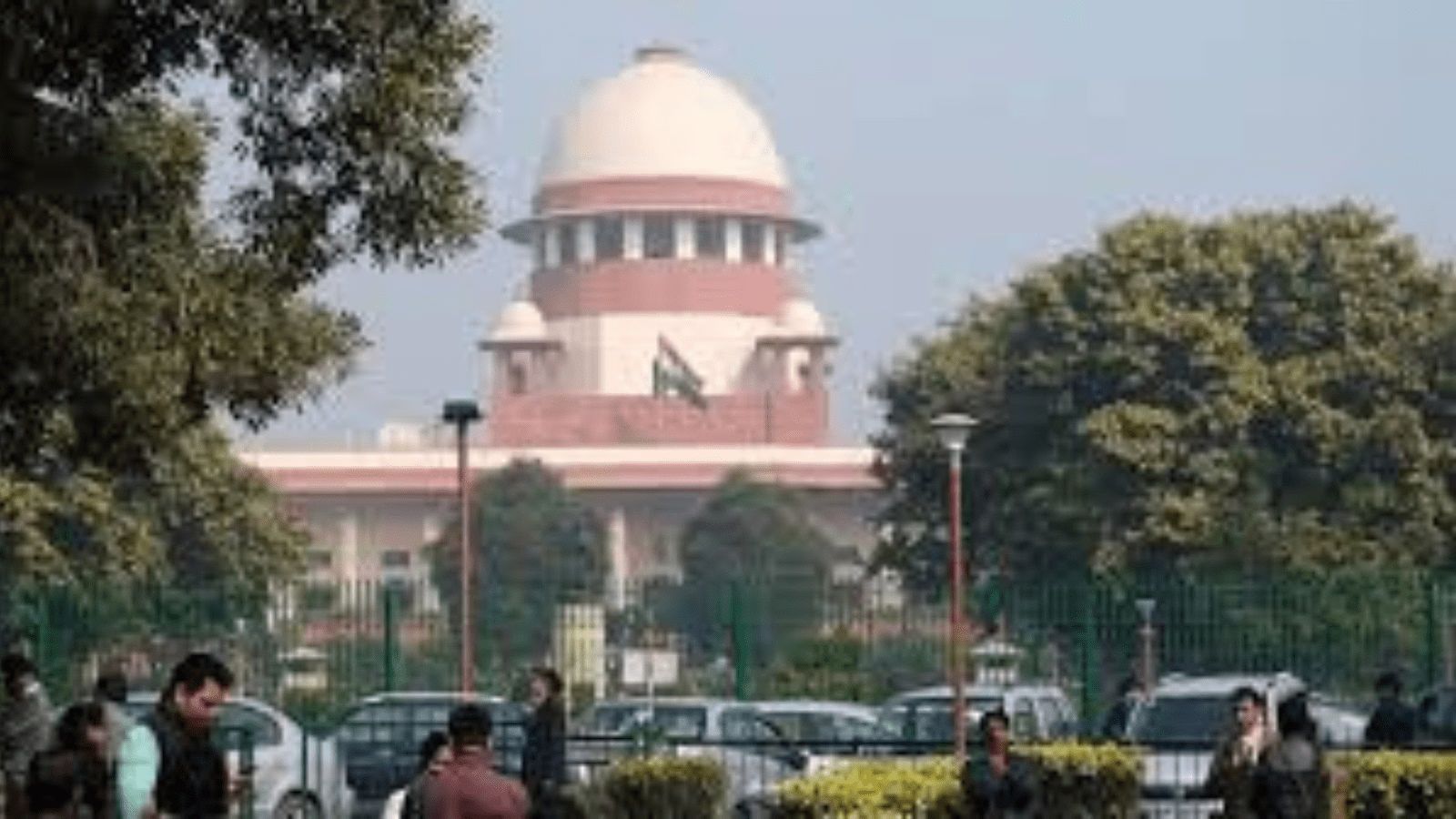
Kanker, Chattisgarh, February 16, 2026: The Supreme Court on Monday dismissed a petition challenging a Chhattisgarh High Court order that directed petitioners opposing village hoardings barring the entry of Christian pastors and priests to approach the statutory authority under the Panchayat (Extension to Scheduled Areas) Rules, commonly known as the PESA Rules.

A Bench comprising Justices Vikram Nath and Sandeep Mehta noted that the High Court, in its October 28, 2025 judgment, had already granted liberty to the petitioners to seek remedies before the appropriate authority under the PESA framework.
Appearing for the state, Solicitor General Tushar Mehta submitted that the plea before the High Court was limited in scope, but the appeal before the Supreme Court introduced new facts, documents and dimensions that had not been raised earlier.


Senior Advocate Colin Gonsalves, representing the appellants, argued that a general cautionary hoarding aimed at preventing illegal religious conversion could not, by itself, be termed unconstitutional.
Mehta countered by referring to a Constitution Bench ruling of the Supreme Court, apparently citing the 1977 judgment in Rev Stainislaus vs State of Madhya Pradesh, which held that the fundamental right to propagate religion under Article 25 of the Constitution does not include the right to convert another person through force, inducement or fraudulent means.
Justice Nath observed that the petitioners ought to have approached the statutory authority under the PESA Rules, which would have examined the matter based on available material.
Arguments before the High Court
Before the Chhattisgarh High Court, the petitioners had contended that the hoardings were erected by respective Gram Sabhas exercising powers under the PESA Act. They referred to a circular issued on August 14, 2025, by the Director (Panchayat), directing chief executive officers of Zila Panchayats in Scheduled Areas to circulate an oath resolution committing Gram Sabha members to protect jal, jangal and jameen (water, forest and land), along with indigenous culture, festivals, worship practices and faith.
The petitioners alleged that even before the circular was issued, members of the ruling party had instigated tribal villagers to erect such hoardings, misusing the provisions of the PESA Act to spread religious hatred against the Christian community.
High Court observations on conversion
In its judgment, the High Court examined the broader issue of religious conversion, describing it as a sensitive matter in India’s socio-political landscape. It noted that while the Constitution guarantees freedom of religion, conversions achieved through coercion, inducement or deception pose serious concerns.
The court observed that missionary activities, which initially focused on education, healthcare and social welfare, were, in some cases, later used as platforms for proselytisation, particularly among economically and socially marginalised tribal and rural populations.
According to the High Court, such practices had led to social divisions, cultural disruption and polarisation within tribal communities. It emphasised that while voluntary and spiritual conversion remains a legitimate exercise of conscience, conversion driven by exploitation undermines social harmony and cultural continuity.
The court concluded that the remedy lies not in intolerance, but in ensuring that faith remains a matter of conviction rather than compulsion.
Source: The Indian express
Download Catholic Connect App for Daily News Updates:
Android: Click here to download
Continue Reading on Catholic Connect App
Get access to exclusive news articles & more.





© 2026 CATHOLIC CONNECT POWERED BY ATCONLINE LLP