- 02 September, 2026

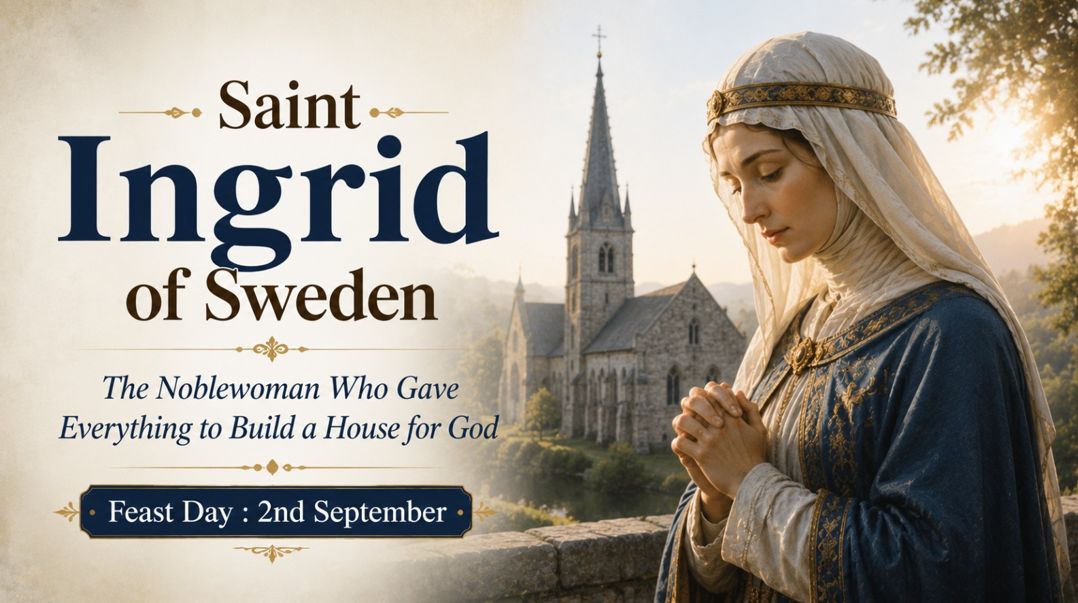
September 2, 2026: Why is Saint Ingrid of Sweden remembered as a pioneer of Dominican religious life in her country? Discover the inspiring story of the Swedish noblewoman who, after becoming a widow, dedicated her life and resources to God, helped establish the first Dominican convent for women in Sweden, and became a lasting witness to prayer and religious devotion.


Feast Day: 2 September
Born: c. 1220, Sweden
Died: 1282, Skänninge, Sweden
Birth Name: Ingrid Elovsdotter


Religious Order: Order of Preachers (Dominicans)
Known For: Founding the first Dominican convent for women in Sweden
Religious Role: Prioress
Major Foundation: Saint Martin's Dominican Convent, Skänninge
Venerated As: Blessed/Saint Ingrid of Skänninge
Saint Ingrid of Sweden was born into a noble family in thirteenth-century Sweden. Although she enjoyed the privileges of wealth and social standing, her heart was drawn towards prayer, charity and the things of God.
(CLICK HERE to follow Catholic Connect and to stay updated with Catholic News & Content)
After the death of her husband, Ingrid chose to devote herself more completely to religious life. Rather than using her wealth for personal comfort, she dedicated her resources to establishing a community where women could live a life centred on prayer and service to God.
Ingrid lived under the spiritual guidance of Peter of Dacia, a Dominican priest who played an important role in the development of Dominican spirituality in Sweden.
Inspired by the Dominican tradition, Ingrid and other women embraced the religious life. She became associated with the first community of Dominican nuns in Sweden and worked tirelessly to establish a permanent convent.
Ingrid's great achievement was the establishment of Saint Martin's Dominican convent at Skänninge.
With the support of members of her family and other benefactors, she gave her property and resources to the foundation. The convent was formally established in 1281, and Ingrid became its first prioress.
Her efforts helped create an important centre of prayer and religious life in medieval Sweden.
Despite her noble background, Ingrid sought a life of humility.
She devoted herself to prayer and encouraged others to place God at the centre of their lives. Her religious community became a place where women could dedicate themselves to contemplation and service.
According to accounts of her life, Ingrid died in 1282 surrounded by a reputation for holiness. Soon after her death, people began to seek her intercession, and reports of favours and miracles contributed to her growing reputation among the faithful.
In later centuries, efforts were made to obtain official recognition of Ingrid's sanctity.
Her cause was presented to Church authorities, and her relics were solemnly translated in 1507. Although a formal canonisation was never completed before the Reformation, devotion to Ingrid remained an important part of Sweden's Catholic heritage.
Saint Ingrid teaches that worldly advantages can be transformed into opportunities for serving God and others.
She reminds Catholics that wealth, influence and ability become truly meaningful when they are used generously.
Her life also demonstrates the importance of building communities of faith that can continue to inspire future generations.
Saint Ingrid remains a powerful example of generosity and religious dedication.
The noblewoman who could have chosen a life of comfort instead chose to build a lasting home for prayer and Christian community.
Her message remains inspiring: Give generously, remain faithful in prayer, and use the gifts God has given you to build something that brings others closer to Him.
To know about more saints please visit the spiritual section.
By Catholic Connect Reporter
Saint Ingrid of Sweden, Saint Ingrid of Skänninge, Ingrid Elovsdotter, Saint Ingrid feast day, September 2 feast day, Swedish saints, Dominican saints, Catholic saints of Sweden, Dominican nuns, Saint Martin's Convent, Skänninge Abbey, Peter of Dacia, Catholic religious women, medieval saints, Catholic feast days, saints of Scandinavia.


© 2026 CATHOLIC CONNECT POWERED BY ATCONLINE LLP
