- 13 October, 2026
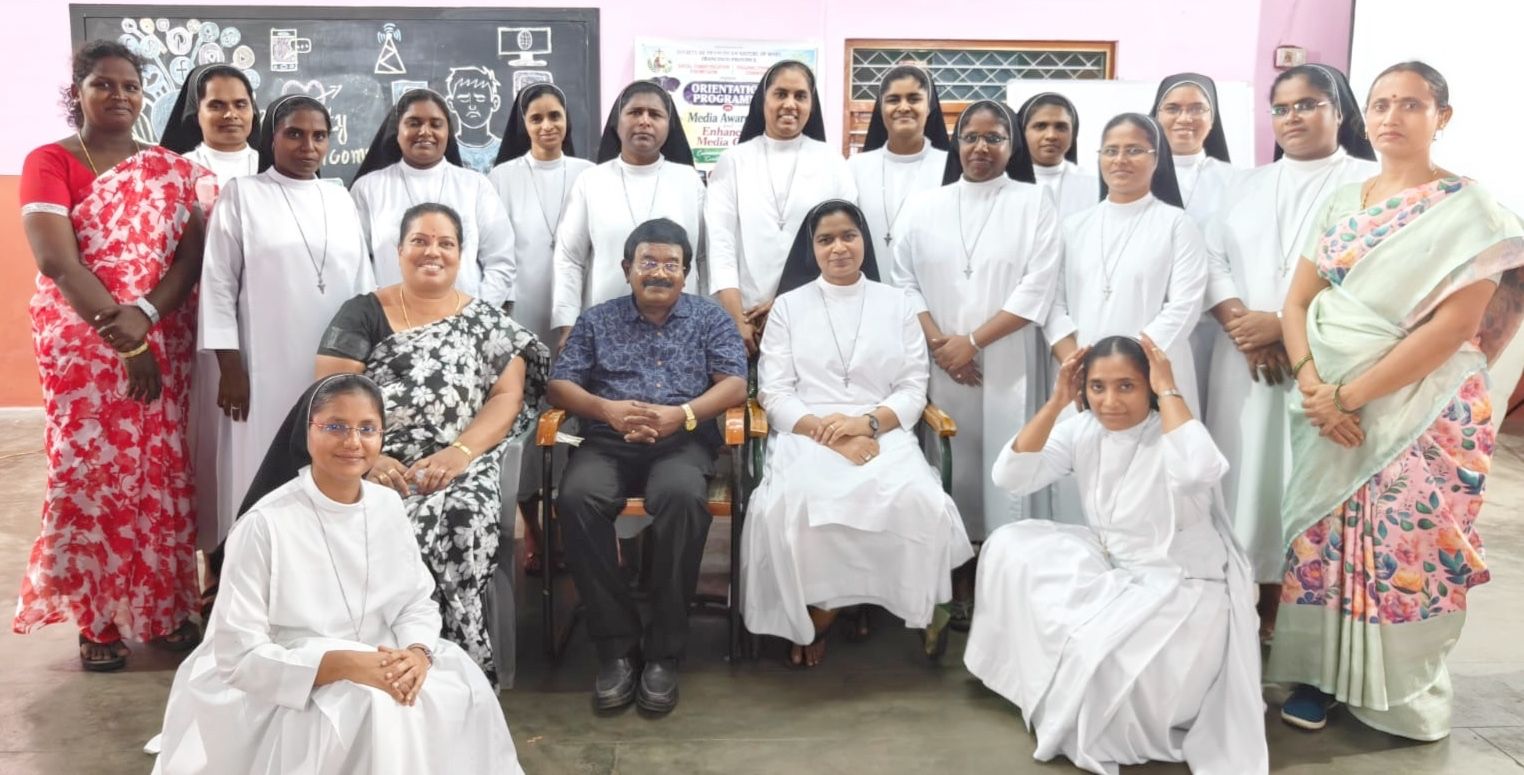
KARUR, October 13, 2026: The Franciscan Sisters of the Presentation of Our Lady, Francisco Province, have organised a training programme to strengthen media education across their schools, equipping teachers to help students navigate the growing influence of artificial intelligence (AI), cinema, television and social media.

Held at St. Theresa’s Higher Secondary School in Karur, Tamil Nadu, the workshop brought together nearly 20 senior sisters and teachers from across the state who serve as media coordinators in their respective institutions.
The programme examined how emerging technologies and media content shape children’s learning, behaviour, values and social engagement. Discussions highlighted the educational opportunities offered by AI while cautioning against its uncritical use, which can weaken independent thinking, creativity and decision-making.
The discussions also explored the influence of cinema, television and social media on young people, drawing on the Church’s emphasis on integral human development and responsible engagement with contemporary realities, as outlined in Pope Leo XIV’s letter Magnifica Humanitas.
The Presentation Sisters are among the pioneering congregations in India to introduce media education and establish media clubs in their schools. Through the initiative, they seek to develop practical approaches that enable students to critically assess media content and participate creatively and responsibly in the digital world.
Dr. Magimai Pragasam, vice-president of SIGNIS World, and Sr. Paul Mary, province coordinator of the Communication Commission, facilitated the training.
Sessions covered the impact of social media on children, photography and short videos as tools for social advocacy, and film analysis. Participants undertook practical photography exercises, applying the techniques taught during the workshop. Their work was assessed, and prizes were awarded. Reels and PowerPoint presentations prepared before the programme were also reviewed, with facilitators offering feedback to improve content and production skills.
Group discussions and interactive exercises on mass media and AI encouraged participants to identify practical ways of engaging young people. The facilitators also presented media education models developed by the Philippine Association for Media Education (PAME), Manila, and the SIGNIS Asia Media Education Desk, highlighting approaches that could be adapted to the schools’ needs.
Participants said the workshop helped them better understand the challenges children face in an increasingly media-driven environment and gave them practical tools to address these concerns.
One participant said the sessions offered insights into why children were becoming more attracted to social media while showing less interest in their studies and values. The training, the participant added, would help educators guide students towards more discerning media use.
Another participant said the programme had strengthened teachers’ confidence in responding to changes in young people’s behaviour through appropriate tools and methods.
A third teacher stressed that, as parents increasingly struggle to address behavioural challenges among children, teachers have an important role in combining academic instruction with value formation. The workshop, the teacher said, would help educators contribute more effectively to this responsibility.
Sr. Paul Mary, who also teaches at a teacher-training college, proposed the vote of thanks, acknowledging the facilitators, participating teachers and others who contributed to the programme.
The initiative marks a renewed effort by the Presentation Sisters to integrate media education into school life and prepare teachers to guide students towards a more critical, creative and responsible use of media and emerging technologies.
By Catholic Connect Reporter
© 2026 CATHOLIC CONNECT POWERED BY ATCONLINE LLP