- 15 September, 2026

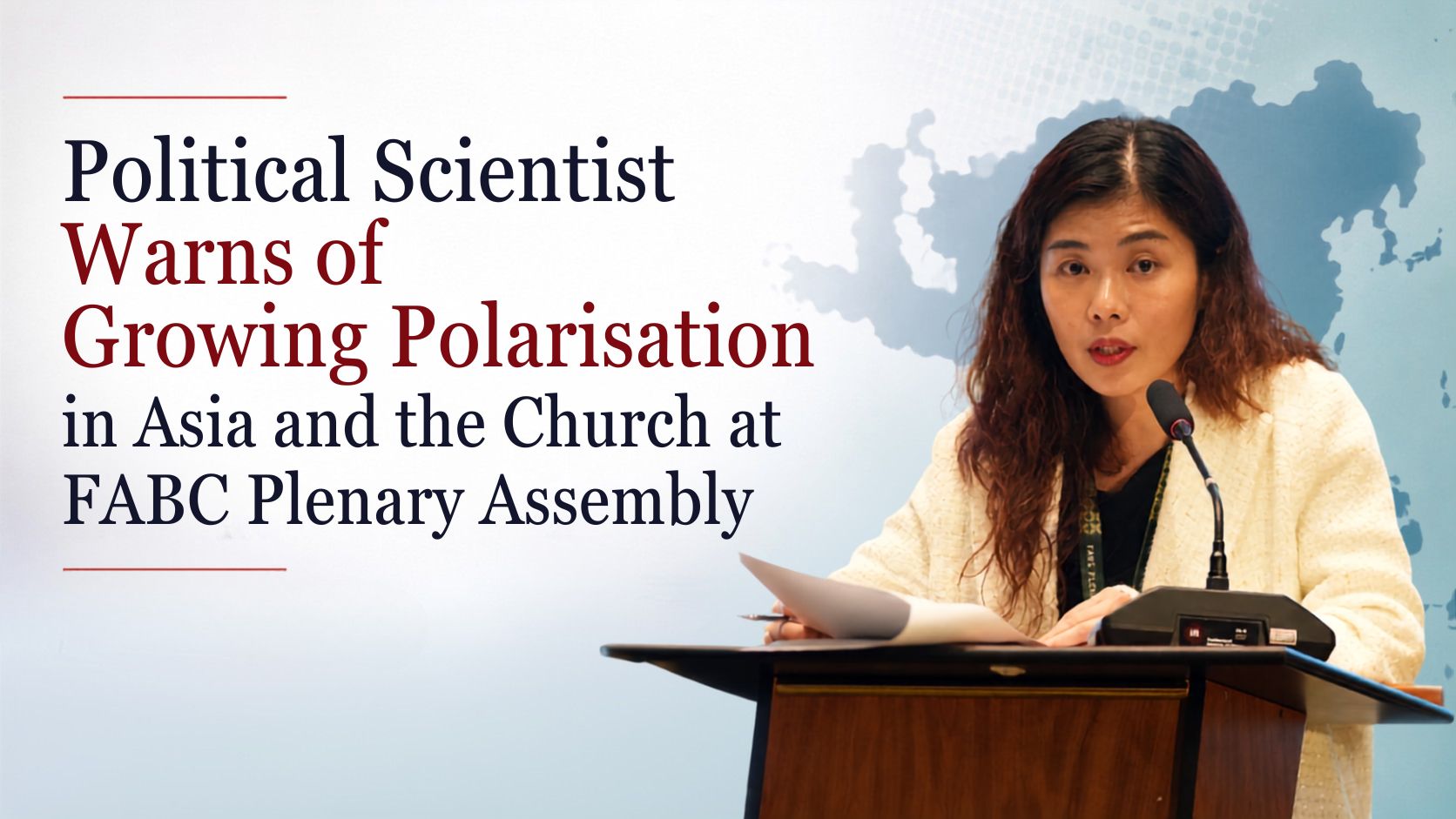
Jakarta, July 23, 2026: Polarisation, rather than persecution or secularisation, is emerging as one of the greatest threats facing the Church in Asia, according to Dr. Choong Pui Yee, senior lecturer in the Department of Southeast Asian Studies at the University of Malaya in Kuala Lumpur, Malaysia.

Addressing delegates at the 12th Plenary Assembly of the Federation of Asian Bishops' Conferences (FABC) in Jakarta on July 23, Dr. Choong warned that deepening political, ethnic and ideological divisions across Asia are increasingly finding their way into the life of the Church.
Her presentation, 'The Changing Context of Asia and Concrete Ways for a Missionary Synodal Church to Be Bridges and Bridge-Builders', examined the social and political realities shaping the continent and their implications for the Church's synodal mission.

(CLICK HERE to follow Catholic Connect for regular News and Content)
"Political, ethnic, and social divisions do not stop at the Church door," she said, summarising the central message of her reflection.
Dr. Choong, whose research focuses on social movements, identity politics, religion and public life in Southeast Asia, said Asia is undergoing profound social transformation driven by migration, religious nationalism, shrinking democratic space and rapid digital communication. While these trends appear different, she said they increasingly contribute to one common reality: growing polarisation.
She drew particular attention to what scholars describe as "affective polarisation", in which people no longer view those with different opinions as legitimate opponents but as enemies.
"When this happens, dialogue becomes difficult because people stop listening to one another," she said.
According to Dr. Choong, social media and digital platforms have accelerated this trend by creating information bubbles that reinforce existing beliefs while deepening distrust of those with different perspectives.
She cautioned that Christians are not immune to these social dynamics. As members of society, they can easily bring political, ethnic and ideological divisions into parish life and Church communities. As a result, identities based on politics, ethnicity or culture can overshadow the shared identity of believers as followers of Christ.
For the Church in Asia, she said, the challenge is not simply surviving as a minority in many countries but remaining a credible sign of unity in societies marked by increasing division.
"The Church should demonstrate that disagreement does not have to lead to hostility," she said.
Rather than mirroring the conflicts of society, Dr. Choong urged the Church to become a place where dialogue, reconciliation and mutual respect flourish. In a continent as culturally, religiously and politically diverse as Asia, she said, this witness is essential.
She also warned against allowing religious nationalism or identity politics to define the Church's mission. While acknowledging the importance of cultural and national identities, she stressed that the Church must always place its identity in Christ above political, ethnic or national loyalties.
"The Church is called to affirm its identity as a community united in Christ," she said.
Returning to the theme of the FABC Plenary Assembly, which calls the Church in Asia to become "bridges and bridge-builders", Dr. Choong noted that bridges are needed only where divisions exist, making reconciliation one of the Church's most urgent responsibilities today.
She concluded that the Church's response to polarisation cannot be rooted in political power or ideological victory. Instead, she said, its distinctive contribution is the Gospel's call to love, mercy, forgiveness and reconciliation.
Her reflection challenged the bishops and delegates gathered in Jakarta to ensure that synodality is lived not only through structures and processes but also by cultivating communities where differences do not become divisions and where communion remains stronger than conflict.
By Catholic Connect Reporter
Read More from the FABC 2026 Plenary Assembly:
Cardinal Tagle: Synodality Begins by Learning How to Walk Together
Cardinal Gracias Urges Asian Church to Become ‘Bridge Builders’ for Peace


© 2026 CATHOLIC CONNECT POWERED BY ATCONLINE LLP