- 21 October, 2026

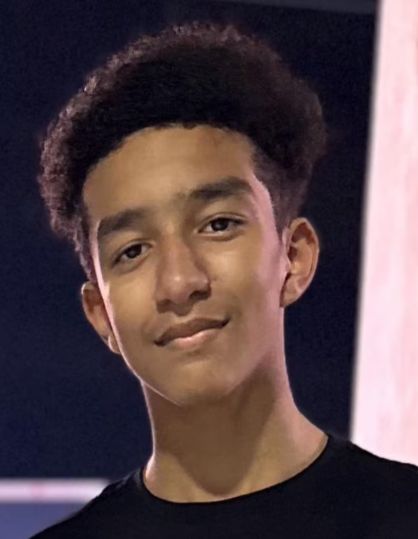
Nashville, Tennessee, September 5, 2026: Megan Garcia’s journey from grieving mother to child-safety advocate is becoming part of a wider Catholic conversation about the risks and responsibilities surrounding artificial intelligence. Garcia, whose 14-year-old son Sewell Setzer III died by suicide following his involvement with an AI companion chatbot, will address Catholic families in Nashville, Tennessee, on 17 September. Her presentation, titled “A Catholic Family’s Guide to AI Safety”, is being organised by the Diocese of Nashville’s Catholic Schools Office.

The talk will focus on the growing dangers associated with AI chatbots and practical ways families can protect children in an increasingly digital world.
According to the diocese, Garcia has transformed her grief into a mission to protect other children and families. An attorney and child-safety advocate, she also serves as chair of the Blessed Mother Mary Foundation.
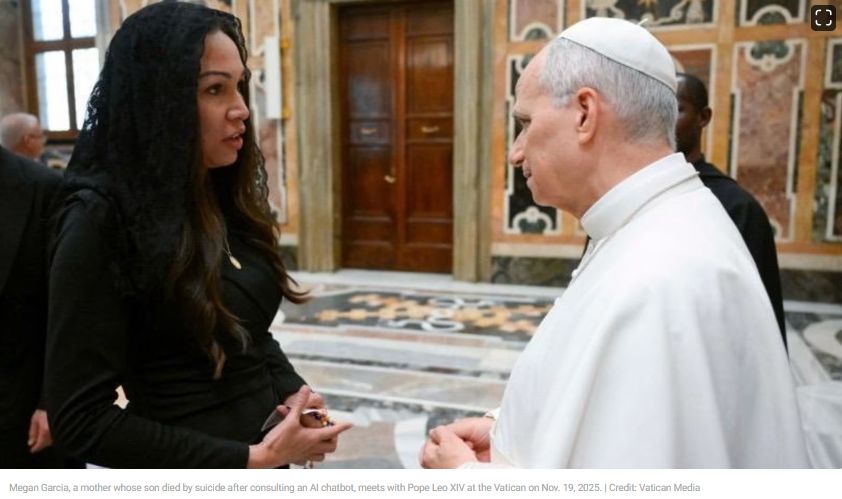
Her advocacy has taken her to the Vatican. In November 2025, Garcia met Pope Leo XIV during an audience connected with a conference examining child dignity and AI ethics.
Her story places a deeply personal face on an increasingly urgent question: how can parents, schools and the Church respond when technologies designed to engage and assist children can also expose them to serious risks?
The Nashville initiative comes as Catholic institutions elsewhere continue to examine how technology, ethics and human responsibility should shape education.
DePaul University in Chicago has announced that it will become the Chicago-based partner of the Vatican’s Laudato si’ Center for Higher Education. The university also plans to establish the DePaul Institute for a Sustainable Future to strengthen collaboration on integral ecology and human development.
The partnership will connect DePaul with more than 60 research and higher-education institutions across 35 countries through the Global Alliance for Laudato si’.
University president Robert L. Manuel said the Catholic and Vincentian institution sees care for the environment as inseparable from care for people, particularly communities most vulnerable to environmental change.
The National Catholic Bioethics Center has also announced a new partnership with The Catholic University of America for a master's degree in moral theology and ethics.
Beginning in the 2026–27 academic year, students completing the NCBC's National Catholic Certification Programme in Health Care Ethics will be able to transfer six credits towards CUA's master's degree.
The arrangement is intended to provide a pathway for students seeking advanced education rooted in Catholic moral teaching.
Meanwhile, new research from St Mary's University in San Antonio suggests that graduates of Catholic colleges may feel better prepared to navigate artificial intelligence than their peers from secular institutions.
The university's third Holistic Impact Report, conducted with YouGov, found that 44 per cent of Catholic college graduates reported using AI at least daily, compared with 36 per cent of secular college graduates.
Some 33 per cent said their college had prepared them moderately or better to use AI, compared with 23 per cent among graduates of secular institutions.
The findings point to an emerging Catholic approach in which technological confidence is paired with questions of meaning, responsibility and human dignity.
For Garcia, however, the debate is far more than academic. Her campaign is rooted in a family's devastating experience and a determination that other parents should not face the same tragedy without warning or guidance.
As AI becomes increasingly woven into children's lives, her message to Catholic families is both simple and urgent: technology must never replace the protection, wisdom and human presence that children need most.
Courtesy : EWTN News ( Madalaine Elhabbal)
© 2026 CATHOLIC CONNECT POWERED BY ATCONLINE LLP