- 22 October, 2026

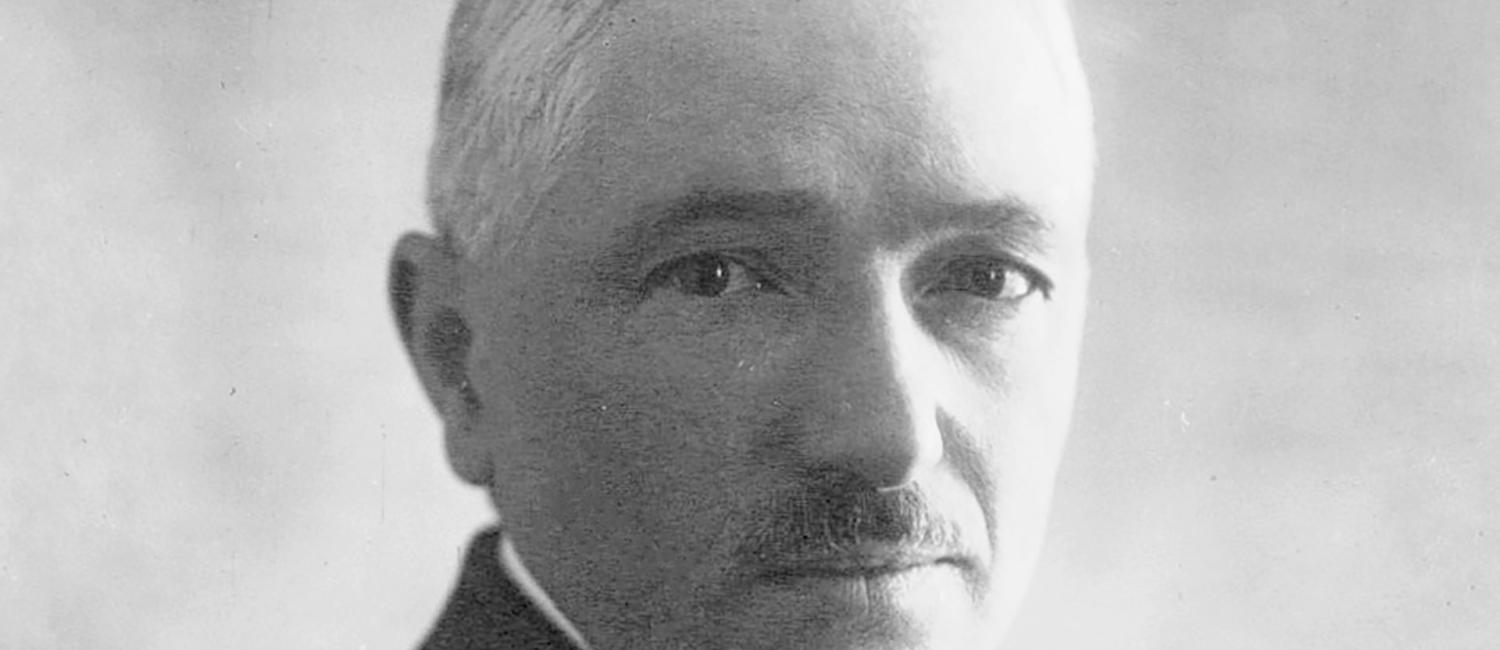
France, June 9, 2026: As the world prepares for the 2026 FIFA World Cup—running from 11 June to 19 July across Canada, Mexico and the United States—billions of fans will cheer for their nations in what has become the planet's most watched sporting event.

Yet few realise that the tournament traces its origins not merely to a love of football, but to the vision of a devout Catholic Frenchman inspired by the teachings of the Church.
His name was Jules Rimet.
More than a football administrator, Rimet was a humanitarian, a social reformer and a man convinced that sport could help heal a fractured world. At a time when Europe was divided by class struggles, nationalism and war, he dreamed of bringing nations together on the football field rather than the battlefield.
That dream became the FIFA World Cup.
Jules Rimet was born on 14 October 1873 in the small French village of Theuley into a deeply Catholic family.
His formative years coincided with dramatic social upheaval across Europe. The Industrial Revolution had transformed society, but it had also produced widespread poverty, worker exploitation and social inequality.
(CLICK HERE to follow Catholic Connect for regular Catholic News & Content)
A defining moment came in 1891 when Pope Leo XIII issued the landmark encyclical Rerum Novarum. The document called for justice for workers, respect for human dignity and solidarity among all people.
The encyclical profoundly influenced the young Rimet.
At just seventeen years old, he became involved in charitable initiatives aimed at helping the poor through social and medical assistance. The principles of Catholic social teaching—human dignity, solidarity and the common good—would remain central to his life's mission.
While passionate about social reform, Rimet was equally passionate about sport.
Unlike many clubs of his era, which catered primarily to the wealthy, he believed football should be accessible to everyone regardless of class, background or social status.
In 1897, at the age of twenty-four, he founded the Red Star football club in Paris.
The club was revolutionary for its time. Players from different social classes were welcomed equally. For Rimet, football was more than recreation; it was a tool for fraternity.
He believed that when people played together, barriers of wealth, race and status could disappear.
This conviction would eventually shape the future of world sport.
In 1904, Rimet played a key role in the establishment of the Fédération Internationale de Football Association—better known as FIFA.
The organisation was created to govern international football and encourage cooperation between nations through sport.
However, Rimet's greatest challenge still lay ahead.
The outbreak of the First World War devastated Europe. Millions died, and nations that had once cooperated found themselves consumed by hatred and conflict.
Rimet himself served in the French Army during the war.
The horrors he witnessed strengthened his belief that international understanding was desperately needed.
When Rimet became FIFA President in 1921, he brought with him an ambitious vision.
The Olympic football tournament already existed, but he believed the sport deserved its own global championship.
More importantly, he saw such a tournament as an opportunity to foster friendship among nations.
His goal was not simply sporting excellence. It was peace.
After years of lobbying and negotiation, the first FIFA World Cup was held in Uruguay in 1930.
Thirteen nations participated in what would become one of the most influential sporting events in human history.
The tournament was a triumph, proving that nations from different continents, cultures and political systems could gather peacefully around a shared passion.
Throughout history, football has often reflected political tensions, but it has also created remarkable moments of reconciliation.
One notable example occurred during the 1998 FIFA World Cup in France. The French national team, made up of players from diverse ethnic and religious backgrounds, became a powerful symbol of unity in a country grappling with questions of identity and integration.
Another famous example came in 2002 when Japan and South Korea jointly hosted the World Cup. Despite a complicated history marked by political tensions, the tournament demonstrated how sporting cooperation could build goodwill between neighbouring nations.
Even during periods of international conflict, World Cups have provided opportunities for dialogue, cultural exchange and mutual respect. Fans who might otherwise never meet share stadiums, celebrations and friendships.
These are precisely the kinds of moments Rimet envisioned.
Rimet served as FIFA President for an extraordinary thirty-three years, from 1921 to 1954.
Under his leadership, the World Cup grew from a bold experiment into a global institution.
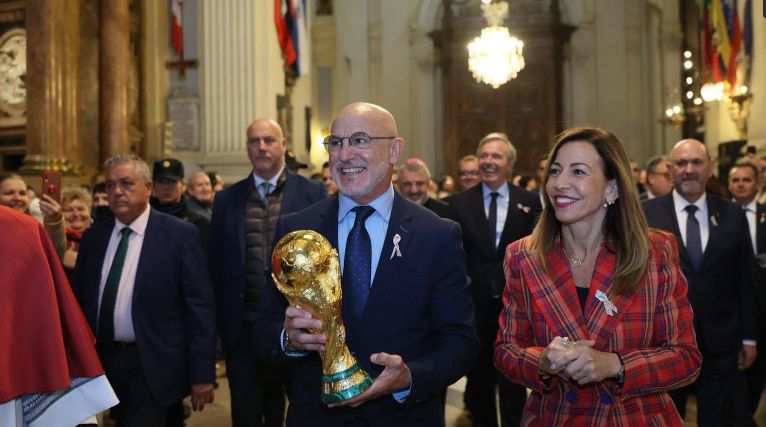
The original World Cup trophy was named the Jules Rimet Trophy in his honour, recognising the immense role he played in transforming football into a universal language.
By the time he stepped down, the competition had become the pinnacle of international sport.
His influence extended far beyond football administration. He had helped create a platform where nations could compete fiercely while respecting one another.
Jules Rimet passed away in 1956 at the age of eighty-three.
His contribution to global harmony through sport was so significant that he was nominated for the Nobel Peace Prize.
Today, historians continue to recognise that the World Cup was never solely about football. It was rooted in a vision of human fraternity inspired by Catholic social teaching and a belief in the dignity of every person.
Rimet understood something that remains relevant today: people who play together, celebrate together and dream together are less likely to become enemies.
The modern world faces significant challenges—wars, political tensions, cultural divisions and growing distrust between nations.
While football cannot solve every conflict, it can create spaces where humanity's shared values become visible.
Every World Cup reminds us that beneath different languages, flags and traditions, people often desire the same things: joy, belonging, peace and hope.
That was Jules Rimet's dream nearly a century ago, and it remains just as powerful today.
As the 2026 FIFA World Cup begins , it will feature an expanded format of 48 teams competing in 104 matches across North America.
For millions of supporters, it will be a celebration of sporting excellence. Yet it is also an opportunity to remember the Catholic visionary who believed football could unite the world.
May the tournament inspire friendship, respect and peaceful collaboration among nations.
And to football fans everywhere: enjoy every moment, cherish the beautiful game, and all the very best as you cheer on your teams during the 2026 FIFA World Cup.
By Catholic Connect Reporter
Picture Courtesy Sky History

© 2026 CATHOLIC CONNECT POWERED BY ATCONLINE LLP