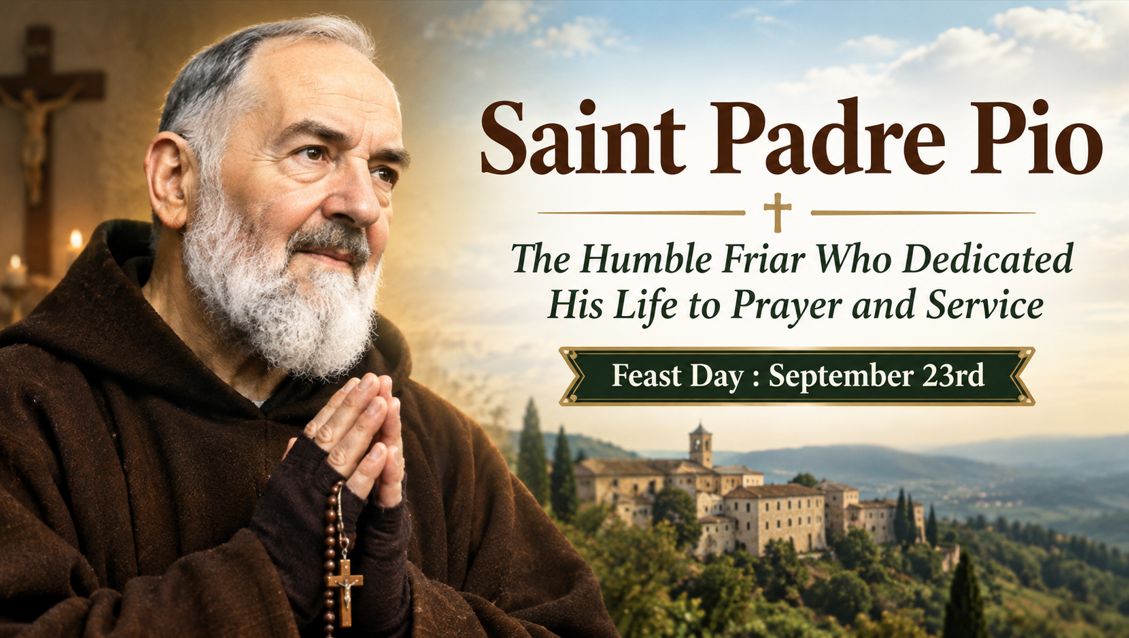
- 23 September, 2026

June 07, 2026: For Catholics, the Eucharist is the heart of the faith—the belief that bread and wine become the Body and Blood of Christ during Mass. Throughout history, reports of Eucharistic miracles have emerged from different parts of the world, often during moments of doubt or crisis. While many accounts remain matters of faith, a handful have attracted scientific scrutiny due to unusual physical phenomena that appeared difficult to explain.


Among the most famous are the miracles of Lanciano in Italy and Buenos Aires in Argentina. Both cases have been examined by medical experts and continue to spark discussion among believers, scientists, and skeptics alike.
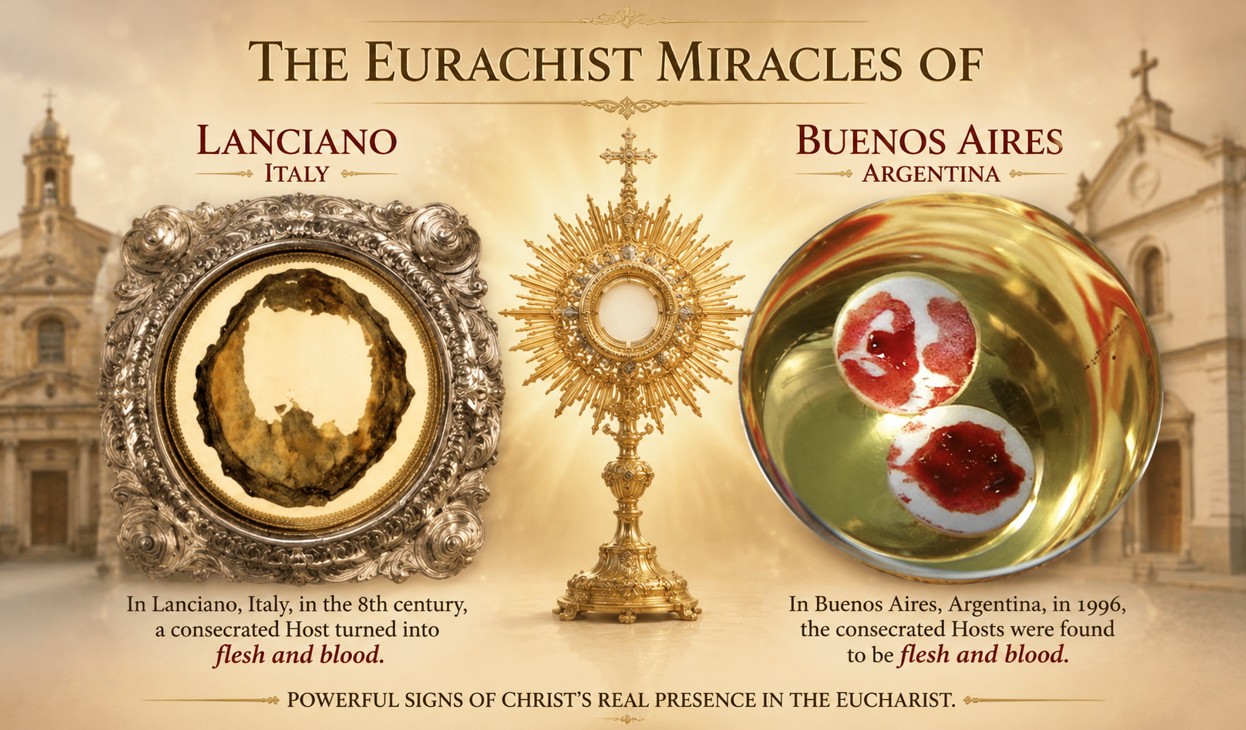
The Eucharistic Miracle of Lanciano, dating back to the eighth century, is perhaps the most well-known and extensively studied case in Catholic history.
According to tradition, a Basilian monk celebrating Mass struggled with doubts about Christ’s Real Presence in the Eucharist. During the consecration, the host reportedly transformed into visible flesh, and the wine became blood.

More than a thousand years later, scientific examinations were conducted on the relics. In 1970, Italian physician and professor Dr. Odoardo Linoli carried out a detailed analysis. His findings concluded that the flesh was human heart tissue—specifically myocardium—and that the blood belonged to the AB blood group.
Supporters of the miracle point to the remarkable preservation of the tissue and blood despite the passage of centuries. They argue that no evidence of artificial preservation was found, making the case extraordinary.
Skeptics, however, note that modern scientific standards require rigorous chain-of-custody procedures and repeatable testing. They caution that while the findings are intriguing, definitive conclusions remain difficult because the event itself occurred centuries before scientific documentation existed.
A more recent and widely discussed case occurred in Buenos Aires during the 1990s.
In 1996, a consecrated host was reportedly discovered on the floor of a parish church. Following Church protocol, it was placed in water to dissolve. Instead, witnesses reported that the host gradually transformed into what appeared to be a fragment of bloody flesh.
The investigation gained particular attention because it took place under the authority of then-Archbishop Jorge Mario Bergoglio, who would later become Pope Francis.
Samples were eventually sent for scientific examination. Among the experts involved was renowned cardiologist and forensic pathologist Dr. Frederick Zugibe. According to reports, the tissue was identified as human heart muscle from the left ventricle. Researchers also documented the presence of white blood cells, which are typically associated with living tissue.
For believers, these findings are compelling evidence supporting the Church’s teaching on the Eucharist. Critics, however, emphasize that alternative explanations—including contamination, biological growth, and incomplete documentation—cannot be entirely ruled out. Some scientists have also argued that independent replication and unrestricted access to samples would be necessary to satisfy broader scientific standards.
The stories of Lanciano and Buenos Aires continue to fascinate because they exist at the intersection of faith and science. Neither case has produced a universally accepted scientific explanation, nor have they compelled belief.
The Catholic Church itself approaches such claims cautiously, relying on expert commissions to rule out fraud, contamination, or natural causes before recognizing a phenomenon as worthy of belief.
Whether viewed as miraculous signs or unresolved mysteries, these events invite deeper reflection on one of Christianity’s most profound questions: what truly happens in the Eucharist? For millions of believers around the world, the answer remains a matter not only of evidence, but of faith.
By Catholic Connect Reporter


© 2026 CATHOLIC CONNECT POWERED BY ATCONLINE LLP