- 02 April, 2026

Vatican, Jan 8, 2025: At the end of the first day of the Extraordinary Consistory, the Director of the Holy See Press Office told journalists that the approximately 170 Cardinals taking part chose synodality and mission as the themes for reflection. He also recalled that Pope Leo XIV told the Cardinals that he needs “to be able to count on you.”
By a “clear majority,” the nearly 170 Cardinals gathered for the Extraordinary Consistory convened by Pope Leo XIV—the first of his pontificate—voted to focus on “Synod and synodality” and “Evangelization and mission in the Church in the light of Evangelii gaudium” during the two days of discussions.
Because of time constraints, the Cardinals selected these two themes from among four proposed topics. The other options included the liturgy and the apostolic constitution Praedicate Evangelium, which addresses the Roman Curia and its service to the local Churches.


“One theme does not exclude another,” explained Matteo Bruni, Director of the Holy See Press Office, during an evening briefing with reporters. “The Pope received indications of an urgency, or the perceived need, for certain themes. A way will be found to address them within the others.”
Synodal methodology
As they reflect on synodality, the Cardinals are also putting the Synod’s methodology into practice through dialogue and listening. They are seated at round tables and divided into 20 groups according to language, with each intervention lasting about three minutes.
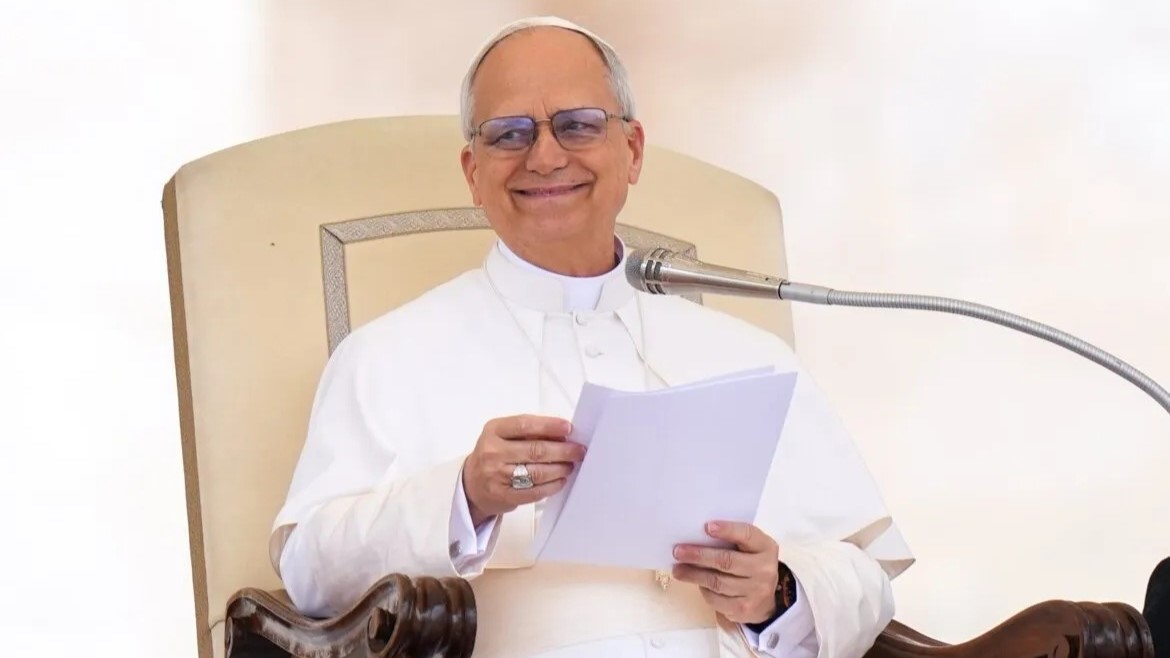
“Synodality is the path God expects of the Church in the third millennium,” the Pope told the Cardinals, adding at the end of the day: “I feel the need to be able to count on you.”
Group work
The first part of the Consistory took place in the Synod Hall and was presided over by Cardinal Ángel Fernández Artime, Pro-Prefect of the Dicastery for Institutes of Consecrated Life.
The Cardinals sang the Veni Creator, listened to a reading from Chapter 6 of the Gospel of Mark, and heard a brief greeting from Cardinal Giovanni Battista Re, Dean of the College of Cardinals. This was followed by a meditation delivered by Dominican Cardinal Timothy Radcliffe.
The Cardinals then moved to the Paul VI Hall for group discussions. At the conclusion of the session, Pope Leo listened to the reports from the groups.
Only the secretaries of the first nine groups—made up of Cardinals from local Churches—presented summaries of the work carried out and explained the reasons for choosing two of the four themes. The secretaries of the remaining 11 tables provided only the titles of the themes they had selected.
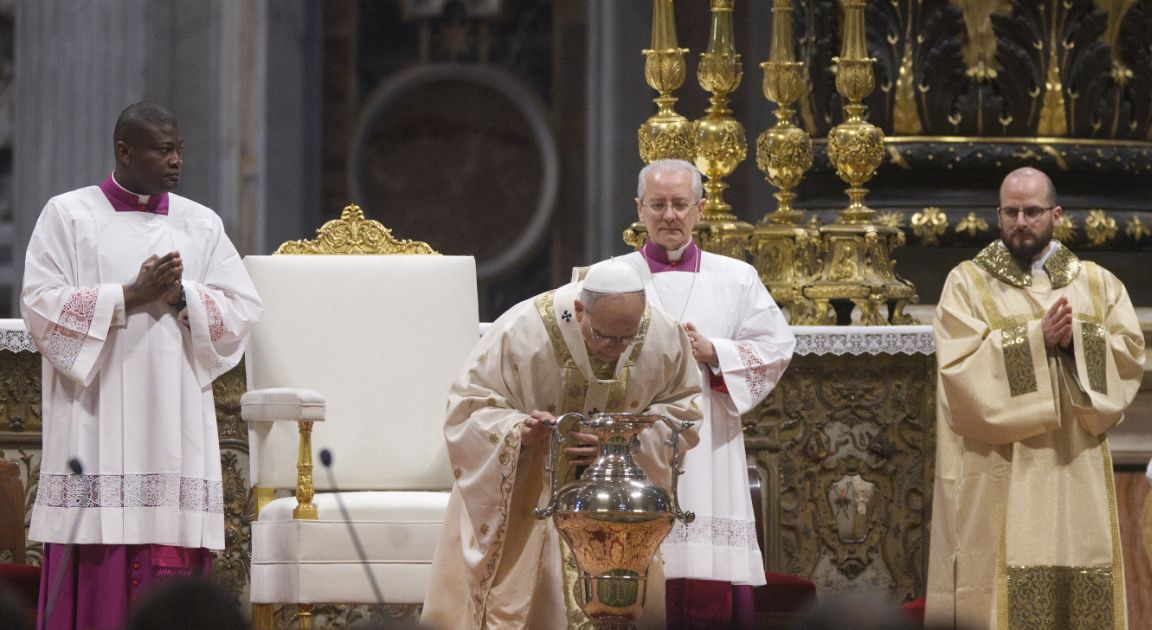
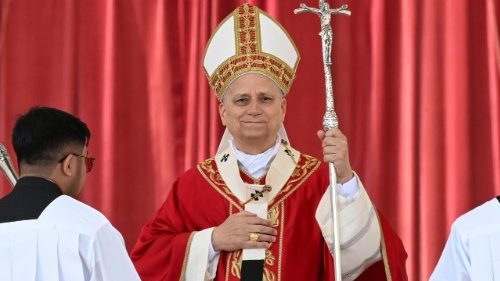
On Thursday, discussion and reflection will continue, beginning with Mass at the Altar of the Chair in St. Peter’s Basilica, concelebrated by the Pope together with the Cardinals.
As Pope Leo explained in his address, no final document is expected, since the purpose is to learn and practice a collegial and synodal style—one marked by “working together” and “creating something new.”
Pope Leo’s concluding words
“The journey is as important as the conclusion,” Pope Leo XIV reiterated in his closing remarks in the Paul VI Hall, once again highlighting the importance of the “experience of collegiality” in discerning together what the Holy Spirit desires for the Church today and tomorrow.
“Time is very short,” he said, but it is significant. “I feel the need to be able to count on you. You have called this servant to this mission; it is important that we discern together.”
Cardinal Radcliffe’s meditation
In his meditation, Cardinal Radcliffe began with a question: “We are gathered in this Consistory to offer our help to the Holy Father in the exercise of his ministry in service of the universal Church. But in what way can we do so?”
He responded by pointing to love and peace, paraphrasing the Gospel of John. “If Peter’s boat were full of disciples who quarrel among themselves, we would be of no use to the Holy Father. If instead we live among ourselves in peace and love, even when differences emerge, God will truly be present, even when he seems absent.”
Cardinal Radcliffe spoke of times of “terrible storms,” marked by “growing violence, from armed crime to war,” by a rich–poor divide that “widens more and more,” by the gradual breakdown of the global order born after the Second World War, and by Artificial Intelligence, whose effects remain unknown.
“If we are not already uneasy, we should be,” he said. In the face of these challenges, people may feel “alone, worn down, exhausted,” but “we must not be afraid,” he said. “Jesus watches over us and will draw nearer to us than ever.”
He added that the same is true for the Church, which is also “shaken” by the “storms” of “sexual abuse and ideological divisions.” “The Lord calls us to sail through these storms and to face them with truth and courage, without timidly waiting on the shore. If we do this in this Consistory, we will see him coming toward us. If, on the other hand, we remain hidden on the shore, we will not meet him.”
Courtesy: Vatican News
© 2026 CATHOLIC CONNECT POWERED BY ATCONLINE LLP