- 25 October, 2026

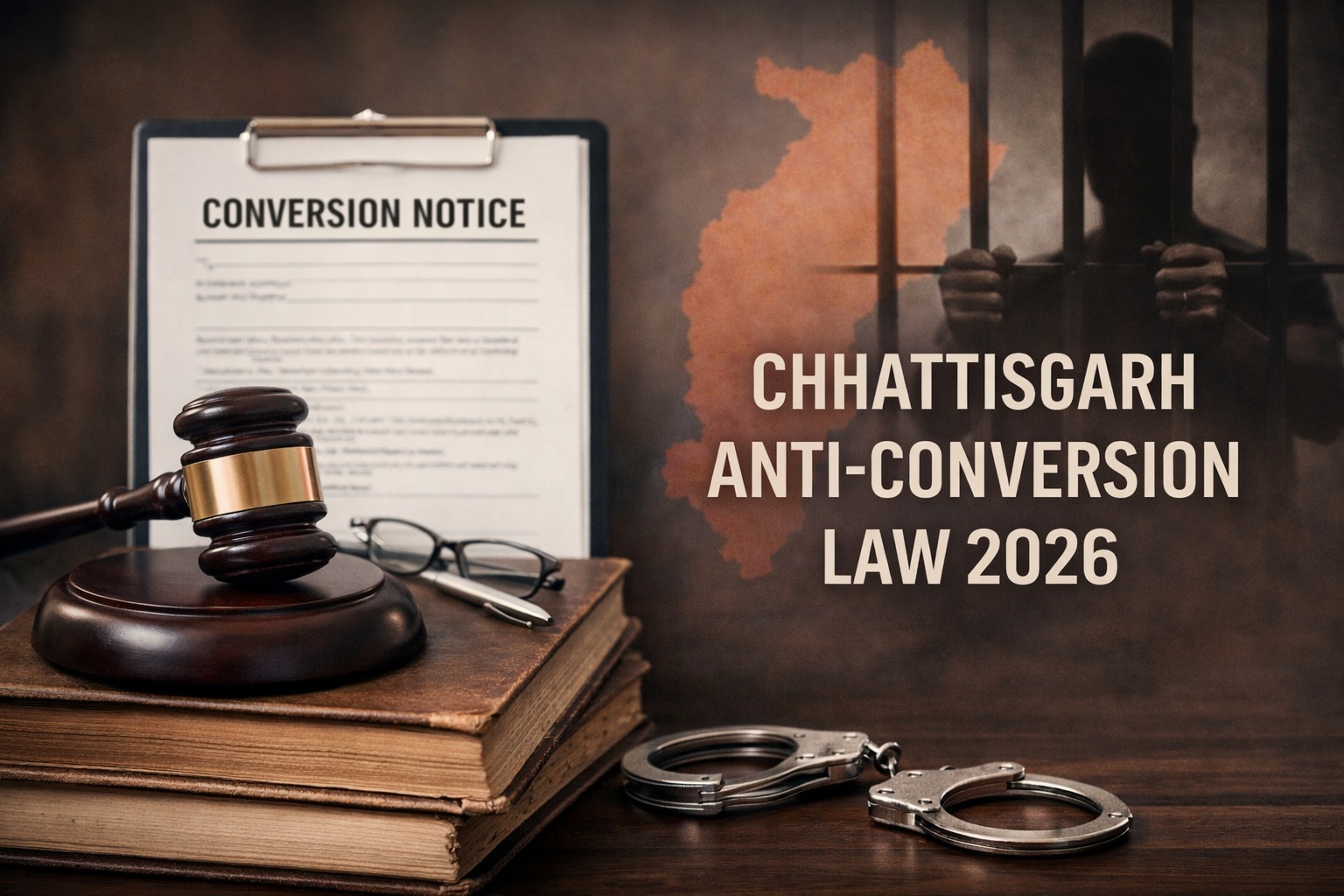
RAIPUR, March 20, 2026: The Chhattisgarh Assembly passed the Chhattisgarh Freedom of Religion Bill, 2026 on Thursday amid intense political confrontation, marking a significant overhaul of the state’s decades-old anti-conversion law .



The bill was introduced in the House by Deputy Chief Minister and Home Minister Vijay Sharma, triggering strong opposition protests. Congress legislators staged a walkout, objecting to both the timing and content of the legislation. Leader of Opposition Charandas Mahant urged that the bill be referred to a Select Committee, citing similar laws in other states currently under judicial review. However, the Speaker rejected the demand, leading to protests outside the Assembly.
The Bill seeks to replace the Chhattisgarh Dharm Swatantraya Adhiniyam (Freedom of Religion Act), 1968, adopted from Madhya Pradesh when the state was carved out in 2000 . It introduces stricter provisions and a more structured framework to regulate religious conversions, expanding definitions of unlawful practices and strengthening enforcement.
However, concerns have been raised in several parts of India over the alleged misuse of similar laws, with reports of harassment and legal action against individuals despite claims of voluntary faith practices. Legal experts have cautioned that such provisions could affect genuine religious freedom if not carefully implemented.
Stricter Framework to Regulate Religious Conversions
The legislation seeks to establish a more stringent legal framework to prevent religious conversions carried out through force, fraud, allurement, or misrepresentation. It also expands the scope of “allurement” to include modern forms such as digital and economic inducements.
Chief Minister Vishnu Deo Sai described the bill’s passage as a crucial step towards preserving cultural identity and maintaining social balance. Echoing this, Home Minister Sharma stated that inducements are no longer limited to physical means but increasingly take digital forms.
The bill introduces a structured process for conversions, making prior declaration to district authorities mandatory. Individuals intending to convert, as well as those conducting the conversion ceremony, must inform authorities in advance. Post-conversion declarations and official verification have also been made compulsory, reinforcing administrative oversight.
Severe Penalties and Legal Provisions
Under the new law, illegal conversions have been classified as cognizable and non-bailable offences, allowing police to act without a warrant and restricting immediate bail for the accused. Those convicted will also be required to provide financial compensation to victims.
Any attempt to convert a person through coercion, inducement, or misrepresentation—whether physical or digital—will attract imprisonment ranging from seven to ten years along with a fine of ₹5 lakh.
The strictest punishment is reserved for mass conversions. Individuals found organising or facilitating large-scale conversions may face imprisonment from ten years up to life imprisonment, along with a minimum fine of ₹25 lakh.
The law also clarifies that reconversion to one’s original or ancestral religion will not be considered a violation under its provisions.
To ensure speedy trials, the government has proposed the establishment of special courts in every district and the appointment of Special Public Prosecutors to handle such cases.
Conversion Process: Declaration, Publication and Validity
The proposed law requires individuals intending to convert to submit a declaration to the competent authority, while religious functionaries conducting the conversion must also provide prior intimation. The Bill defines the “Competent Authority” as the district magistrate or any specially authorised officer not below the rank of an additional district magistrate.
Within seven days of receiving a complete application in the prescribed format, the competent authority must publish details of the proposed conversion on its official website and display them at the offices of the tehsildar, gram panchayat, and local police station.
The law further clarifies that conversion certificates issued under its provisions will not serve as proof of citizenship or identity. It also states that applications will lapse if the conversion is not carried out within 90 days of approval.
The Chhattisgarh Cabinet had approved the draft legislation earlier this month. With the Assembly now passing the bill, political tensions in the state are expected to intensify further as debates continue over its legal and social implications.
By Catholic Connect Reporter




© 2026 CATHOLIC CONNECT POWERED BY ATCONLINE LLP