- 10 July, 2026

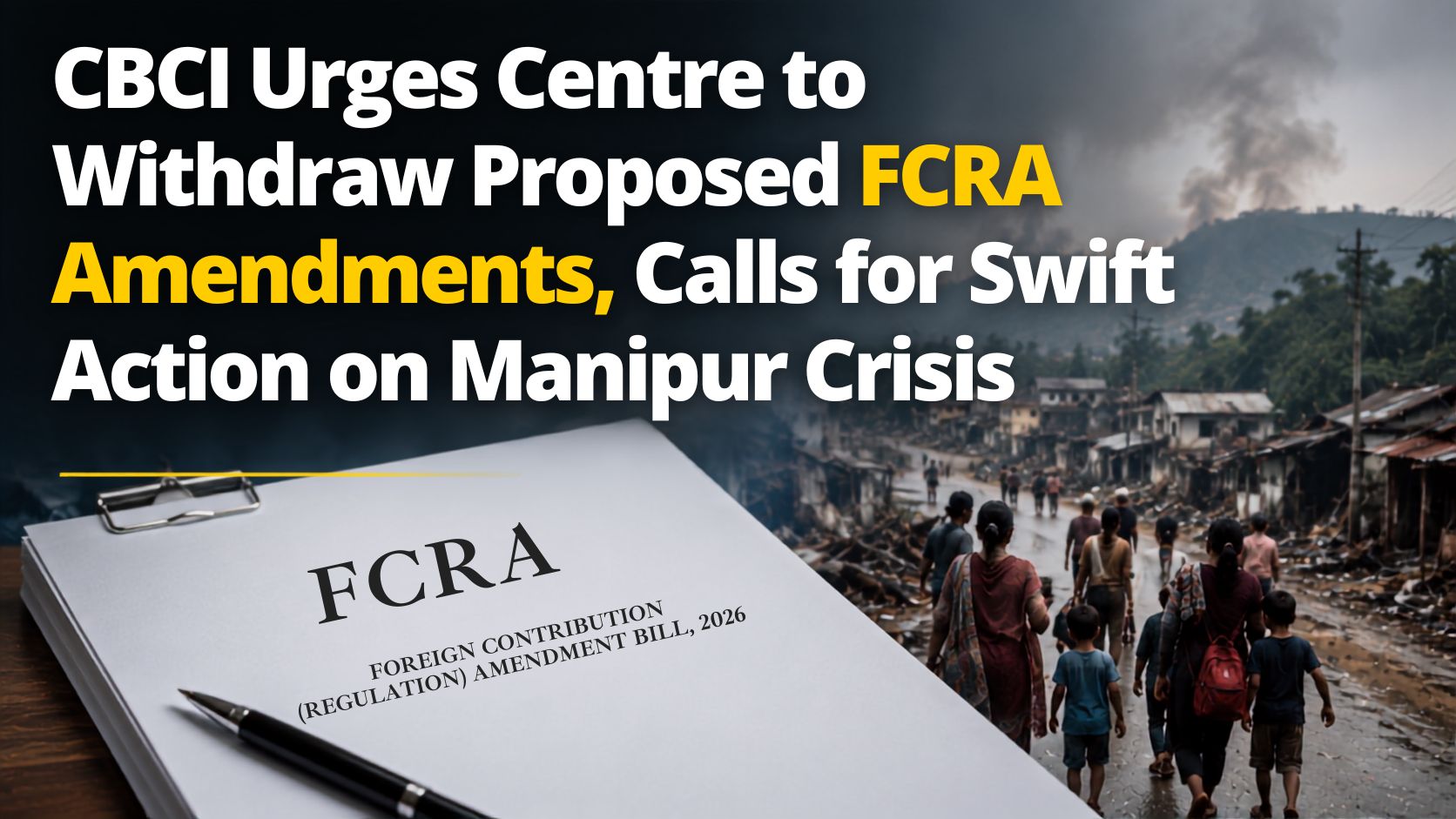
NEW DELHI, July 10, 2026: The Catholic Bishops' Conference of India (CBCI) has urged the Central Government to withdraw the proposed amendments to the Foreign Contribution (Regulation) Act (FCRA), warning that the changes could adversely affect charitable and humanitarian institutions across the country. In a memorandum submitted to Union Home Minister Amit Shah on July 10, the bishops also sought urgent intervention to address the continuing humanitarian crisis in Manipur and raised concerns over religious freedom and the rights of Scheduled Castes and Scheduled Tribes.


The memorandum states that the Catholic Church in India has, for centuries, served the nation through educational, healthcare, social development, disaster relief, rural development and tribal welfare institutions without discrimination. While acknowledging the Government's responsibility to ensure transparency, accountability and national security, the CBCI expressed concern that recent legislative and administrative measures undermine India's secular character and constitutional guarantees of equality.
(CLICK HERE to follow Catholic Connect for regular News and Content)


Expressing strong reservations over the proposed Foreign Contribution (Regulation) Amendment Bill, 2026, and the Foreign Contribution (Regulation) Amendment Rules, 2026, the bishops said several provisions would adversely impact registered charitable organisations that provide essential services to vulnerable communities. They argued that the proposed changes run contrary to constitutional principles of compassion and social welfare and requested that both the Bill and the Rules be withdrawn.
The CBCI recommended that any future amendments should apply only prospectively and include adequate constitutional safeguards and fair procedural protections. It also proposed that adjudication under the Act be entrusted to judicial officers under the supervisory jurisdiction of the respective High Courts. Other recommendations included safeguards governing the transfer of charitable assets, distinguishing between minor and major violations, protecting donors' intentions, removing the term "proselytization" from the Rules, and limiting the definition of "key functionary" to trustees and members of governing bodies.
The memorandum also addressed concerns over religious freedom and the Constitution (Scheduled Castes) Order, 1950. It stated that anti-conversion laws enacted by several states have contributed to increased allegations, intimidation and hostility against Christians. The bishops noted that both the Freedom of Religion laws and the constitutional provision denying Scheduled Caste status to Dalit converts to Christianity and Islam are currently under challenge before the Supreme Court. They urged the Government to facilitate the expeditious hearing and final adjudication of these cases to ensure constitutional protections and legal clarity.
Drawing attention to the situation in Manipur, the CBCI described the ongoing conflict as one of the country's gravest humanitarian crises. The memorandum said thousands of farming families remain displaced from their agricultural lands, education has been severely disrupted for children and young people, and many families have migrated to other states in search of safety and livelihoods. It also highlighted the psychological, emotional and spiritual trauma suffered by children, women, the elderly, priests and religious, adding that the situation has recently deteriorated further.
The bishops appealed to the Ministry of Home Affairs to take all necessary measures to restore lasting peace, harmony and normalcy in the violence-hit state.
Concluding the memorandum, the CBCI reaffirmed the Catholic Church's commitment to India's unity, integrity and constitutional values. It also pledged continued cooperation with the Government in promoting peace, reconciliation, humanitarian assistance, communal harmony and nation-building in accordance with the Constitution.
By Catholic Connect Reporter
© 2026 CATHOLIC CONNECT POWERED BY ATCONLINE LLP