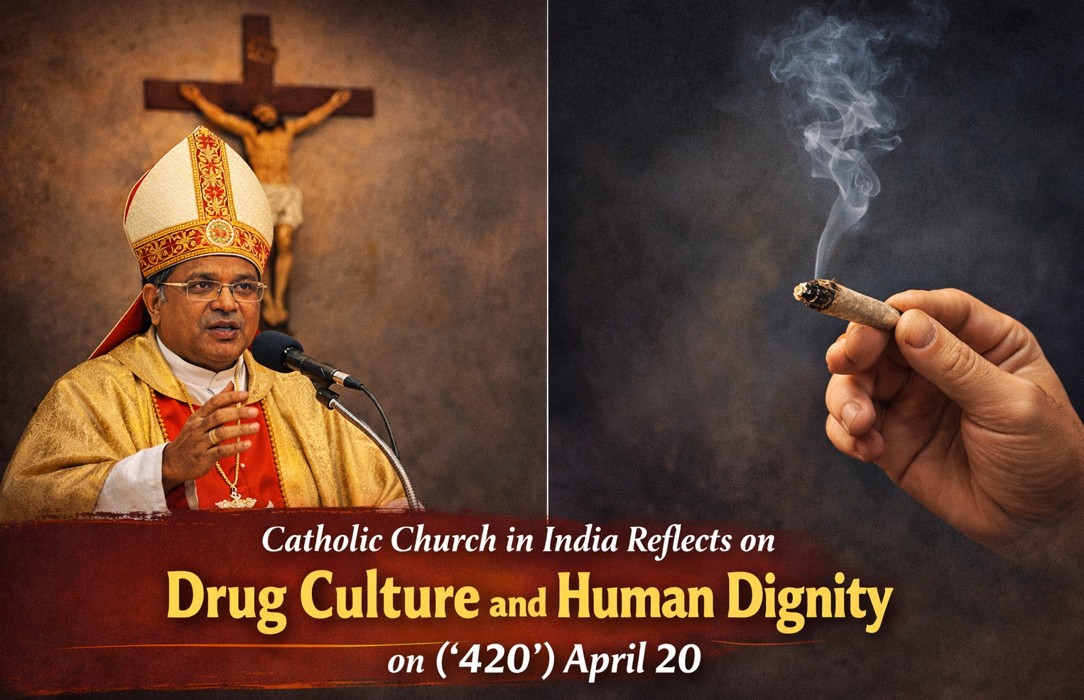
New Delhi, April 20, 2026: Popularly associated in global culture with cannabis use, April 20 presents a unique pastoral moment for reflection within the Indian Catholic context. While this date may be unfamiliar or even surprising within ecclesial settings, it offers an opportunity to reaffirm the Church’s teaching on human dignity, moral responsibility, and the proper use of created goods.

The Catholic Church consistently teaches, as found in the Catechism of the Catholic Church (CCC 2291), that the use of drugs—except on strictly therapeutic grounds—is a grave offense. This teaching is rooted in concern for the integrity of the human person: body, mind, and soul. Recreational cannabis use, even where legalized, is morally problematic because it diminishes reason, weakens the will, and may foster dependency or escapism.
At the same time, the Church responds pastorally—with compassion, clarity, and a call to deeper freedom in Christ.
The Conference of Catholic Bishops of India or commonly called CCBI helps counter this challenge with the below:

The various commissions of the CCBI provide a holistic framework to address this issue:
- Bible Commission: Highlights scriptural calls to sobriety, self-control, and stewardship of the body as a temple of the Holy Spirit.
- Catechetics Commission: Forms the faithful, especially youth, in understanding why drug misuse contradicts Christian moral life.
- Liturgy Commission: Encourages prayerful intercessions for those struggling with addiction and promotes healing services.
- Family Commission: Supports families affected by substance abuse and promotes healthy domestic environments.
- Youth Commission: Engages young people in dialogue, helping them discern cultural trends like “420” in the light of faith.
- Laity Commission: Empowers lay faithful to witness to responsible living and moral clarity in society.
- Vocations & Seminaries Commissions: Ensure future clergy are formed to address such pastoral issues with wisdom and compassion.
- Clergy and Religious Commission: Guides priests and religious in offering sound pastoral counsel, especially in confession and spiritual direction.
- Canon Law and Legislative Texts Commission: Clarifies that legality does not equal morality.
- Theology and Doctrine Commission: Deepens understanding of why intoxication that impairs reason is morally harmful.
- Proclamation Commission: Frames the response evangelically—calling people not just away from harm, but toward Christ.
- Ecumenism Commission: Encourages shared Christian witness on dignity and responsible living.
- Women Commission: Addresses the impact of substance abuse on women and families.
- Migrants Commission: Recognizes vulnerabilities among migrant populations who may turn to substances due to isolation.
- Basic Ecclesial Communities (BEC): Provides grassroots support, accountability, and accompaniment.
The departments of the CCBI support coordinated responses:
- General Secretariat: Ensures unified pastoral messaging across dioceses.
- Public Relations Office: Engages with civil authorities and society, articulating the Church’s stance respectfully.
- Legal Cell: Helps interpret civil laws in light of moral teaching.
- Publication Department: Produces catechetical materials explaining Church teaching on substance use.
- Communio: Supports rural and mission areas where awareness and resources may be limited.
- Bioethics Forum: Examines the ethical implications of medical marijuana, ensuring clarity between therapeutic use and misuse.
- Catholic Connect: Uses digital platforms to educate especially youth about responsible choices and faith-based living.
The four apostolates established in 2021 offer direct engagement:
- Education Apostolate: Forms students in values of discipline, dignity, and moral responsibility.
- Health Apostolate: Provides care, rehabilitation support, and awareness on the physical and psychological harms of drug use.
- Social Service Apostolate: Reaches out to those affected by addiction with compassion and rehabilitation initiatives.
- Media Apostolate: Counters cultural narratives that normalize drug use by promoting truth, hope, and human dignity.
Pastoral Reflection: A Word to the Faithful
A recurring pastoral concern arises when individuals justify cannabis use on the basis of legality. The Church gently but firmly reminds us: legality does not determine morality. The deeper question is not “Is it allowed?” but “Does it lead me toward truth, freedom, and God?”
As seen in pastoral experiences, including confessional guidance, the issue often touches the conscience. If something troubles the heart enough to be confessed, it deserves reflection. The comparison with alcohol also requires nuance: while moderate use of alcohol can be morally acceptable, intentional intoxication—whether through alcohol or drugs—is not.
The Church’s concern is not condemnation, but salvation. Priests, in offering counsel, seek the good of the person—body and soul. As Cardinal Joseph Ratzinger once reflected, drugs can become a false attempt to satisfy the deeper thirst of the human soul.
Conclusion
April 20, though culturally associated with cannabis, can become for the Church a day of renewed commitment:
- To truth, in clearly teaching moral principles
- To compassion, in accompanying those who struggle
- To hope, in pointing all people toward the fullness of life in Christ
The Christian path does not deny human struggles but offers something greater: not escape, but transformation; not intoxication, but true joy.
By Catholic Connect Reporter