English
Mass Readings -
Deuteronomy 4:1. 5-9; Psalm 147:12-13, 15-16. 19; Matthew 5:17-19.
Key Verse to Ponder -
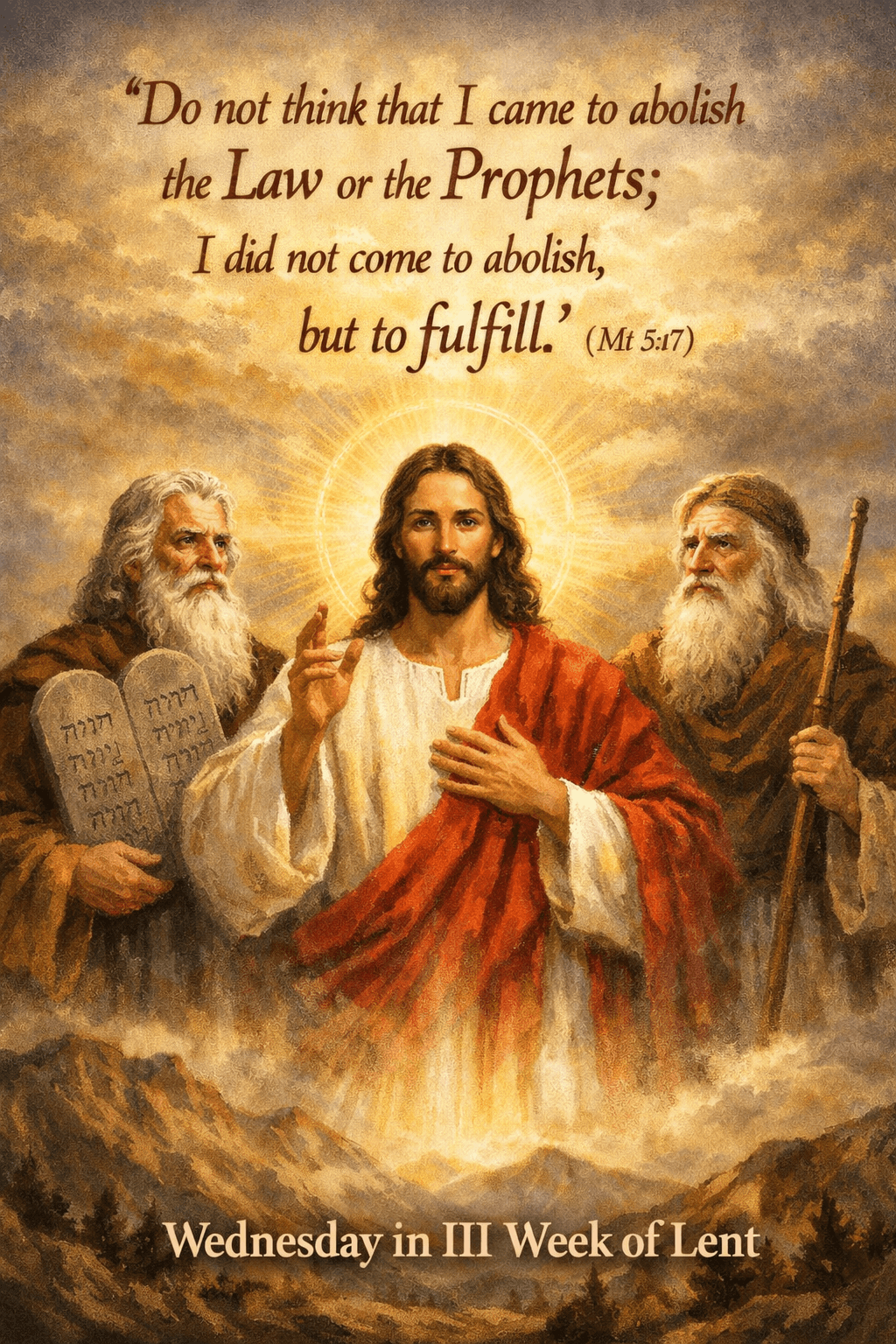
"Do not think that I came to abolish the Law or the Prophets; I did not come to abolish, but to fulfill (Matthew 5:17)
The First Reading: The Gift of God’s Law
Today’s Liturgy of the Word teaches us the importance of God’s Law and the need to observe it faithfully. In the first reading from the Book of Deuteronomy, Moses exhorts the people of Israel to observe the statutes and ordinances that the Lord had given them. This command is given at a crucial moment in Israel’s history, as they are about to enter and take possession of the land that the Lord had promised to their ancestors.
Moses says:
“So now, Israel, give heed to the statutes and ordinances that I am teaching you to observe, so that you may live to enter and occupy the land that the LORD, the God of your ancestors, is giving you.” (Deuteronomy 4:1)
For the Israelites, the Law was not merely a set of rules; it was a gift from God for their well-being and identity. The Torah — the five books of Moses (the Pentateuch) — together with the Ten Commandments, constituted the very Law of God that guided their lives. Observing the Law meant living in communion with the Lord who had chosen them as his people.
Moses further reminds them that their faithful observance of the Law would become a witness to other nations: “You must observe them diligently, for this will show your wisdom and discernment to the peoples.” (Deuteronomy 4:6)
Thus, the Law revealed not only the wisdom of Israel but also the nearness of God to his people. Among the surrounding nations, Israel would be known as a people guided and governed by the Lord himself.
At the same time, Moses warns them against the danger of forgetting God’s commandments, especially as they enter a land filled with other cultures and other gods. They must remain faithful to the Lord alone and avoid the temptation of idolatry. Therefore, Moses instructs them to remember the Law and pass it on to future generations:
“Take care and watch yourselves closely… make them known to your children and your children’s children.” (Deuteronomy 4:9)
In this way, the Law would remain alive in the life of the community and continue to shape the faith of Israel.
The Gospel Reading: Jesus, the Fulfilment of the Law
Today’s Gospel also invites us to follow God’s Law with great fidelity. We are in the section of the Sermon on the Mount, where Jesus clarifies his relationship with the Law and the Prophets. He declares:
“Do not think that I have come to abolish the law or the prophets; I have come not to abolish but to fulfil” (Matthew 5:17)
Jesus does not reject the Law of the Old Testament; rather, he brings it to its fullness and perfection. In his person and mission, everything that the Law and the Prophets foretold reaches its fulfilment. This truth is beautifully symbolized in the Transfiguration, where Moses (representing the Law) and Elijah (representing the Prophets) appear with Jesus (Luke 9:30).
The Word of God is always effective and purposeful, as the prophet Isaiah reminds us:
“So shall my word be that goes out from my mouth; it shall not return to me empty.” (Isaiah 55:11)
Jesus himself is the living Word of God. In him, the promises of God find their completion. That is why, in the synagogue at Nazareth, Jesus boldly proclaimed:
“Today this scripture has been fulfilled in your hearing.” (Luke 4:21). Thus, Jesus stands before humanity as the fulfilment of both the Law and the Prophets.
Greatness in the Kingdom of God
In today’s Gospel, Jesus also answers an important question: Who is the greatest in the Kingdom of God? He says:
“Whoever does them and teaches them will be called great in the kingdom of heaven.” (Matthew 5:19)
Greatness in God’s Kingdom does not depend on status, power, or seniority. Rather, it depends on faithful obedience to God’s commandments. Those who faithfully observe the Law and teach others to do the same will be considered great in the Kingdom of Heaven.
On the other hand, those who disregard God’s commandments and lead others to do the same will be considered least in the Kingdom. Jesus himself is the perfect example of obedience. Throughout his life he remained faithful to the will of the Father. His mission culminated on the cross when he declared: “It is finished.” (John 19:30). Only Jesus could say these words, because he had perfectly fulfilled everything that the Father had entrusted to him.
Lenten Application: Loving the Law of the Lord
Today’s readings invite us to reflect on our attitude toward God’s Word and God’s commandments.
Do we see God’s Law as a burden or as a blessing? Do we observe it with love and fidelity?
The psalmist beautifully expresses the right attitude: “Oh, how I love your law! It is my meditation all day long.” (Psalm 119:97)
During this Lenten season, we are invited to a double conversion:
1. a conversion of the heart, so that we may listen attentively to God’s Word;
2. and a conversion of life, so that we may put that Word into practice.
Listening to God’s Word and living according to it is the source of our spiritual health and renewal.
As we continue our Lenten journey, let us ask the Lord for the grace to love his Word, meditate on it daily, and faithfully live according to it, remembering that Jesus himself is the fulfilment of the Law and the Prophets.
May this Lent help us to rediscover the beauty of God’s commandments and to follow Christ more faithfully each day.
© 2026 CATHOLIC CONNECT POWERED BY ATCONLINE LLP