- 13 October, 2026
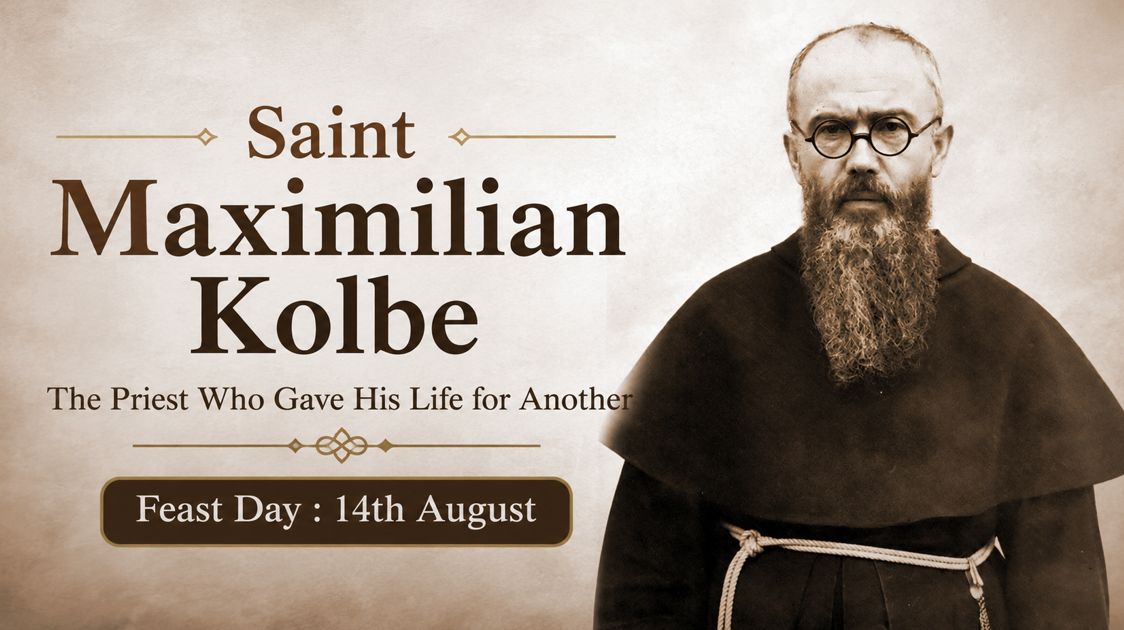
Poland, August 14, 2026: Why is Saint Maximilian Kolbe remembered as one of the most powerful witnesses of Christian love in the twentieth century? Discover the extraordinary story of the Polish Franciscan priest who devoted his life to the Immaculate Virgin Mary and ultimately offered himself in place of a fellow prisoner at Auschwitz.

Feast Day: 14 August
Born: 8 January 1894, Zduńska Wola, Poland
Died: 14 August 1941, Auschwitz, German-occupied Poland
Birth Name: Rajmund Kolbe
Religious Name: Maximilian Maria Kolbe
Canonized: 10 October 1982 by Pope John Paul II
Known For: Marian devotion, the Militia of the Immaculate, missionary work, and martyrdom at Auschwitz
Title: Priest and Martyr
Rajmund Kolbe was born into a devout Polish family and entered the Franciscan Order of Friars Minor Conventual as a young man.
While studying in Rome, he founded the Militia of the Immaculate, placing his apostolic life under the protection of Mary. After his ordination in 1918, he returned to Poland and dedicated himself to spreading the good word and Marian devotion.
(Click Here to follow Catholic Connect for regular News & Content)
Kolbe established Niepokalanów, the “City of the Immaculate,” which became a major center of Catholic publishing and spreading the good word.
His devotion to Mary was not separate from his love for Christ. Rather, he saw the Immaculate Virgin as a guide who leads souls toward Jesus. Pope John Paul II later described love for the Immaculate as the central principle animating Kolbe's spiritual and apostolic life.
Kolbe also served as a missionary in Japan, where he established another center of spreading the good word and publishing.
During the Second World War, Kolbe's religious and publishing activities brought him into conflict with the Nazi regime.
He was eventually arrested and deported to Auschwitz concentration camp.
Even amid unimaginable suffering, he continued to encourage fellow prisoners and remained faithful to his priestly vocation.
In July 1941, following the escape of a prisoner, the Nazis selected ten prisoners to die of starvation as punishment.
One of those chosen was Franciszek Gajowniczek, a husband and father.
Kolbe stepped forward and offered to take his place.
His offer was accepted.
He was confined with the other condemned prisoners in a starvation bunker. After more than two weeks, Kolbe was killed by a lethal injection on 14 August 1941.
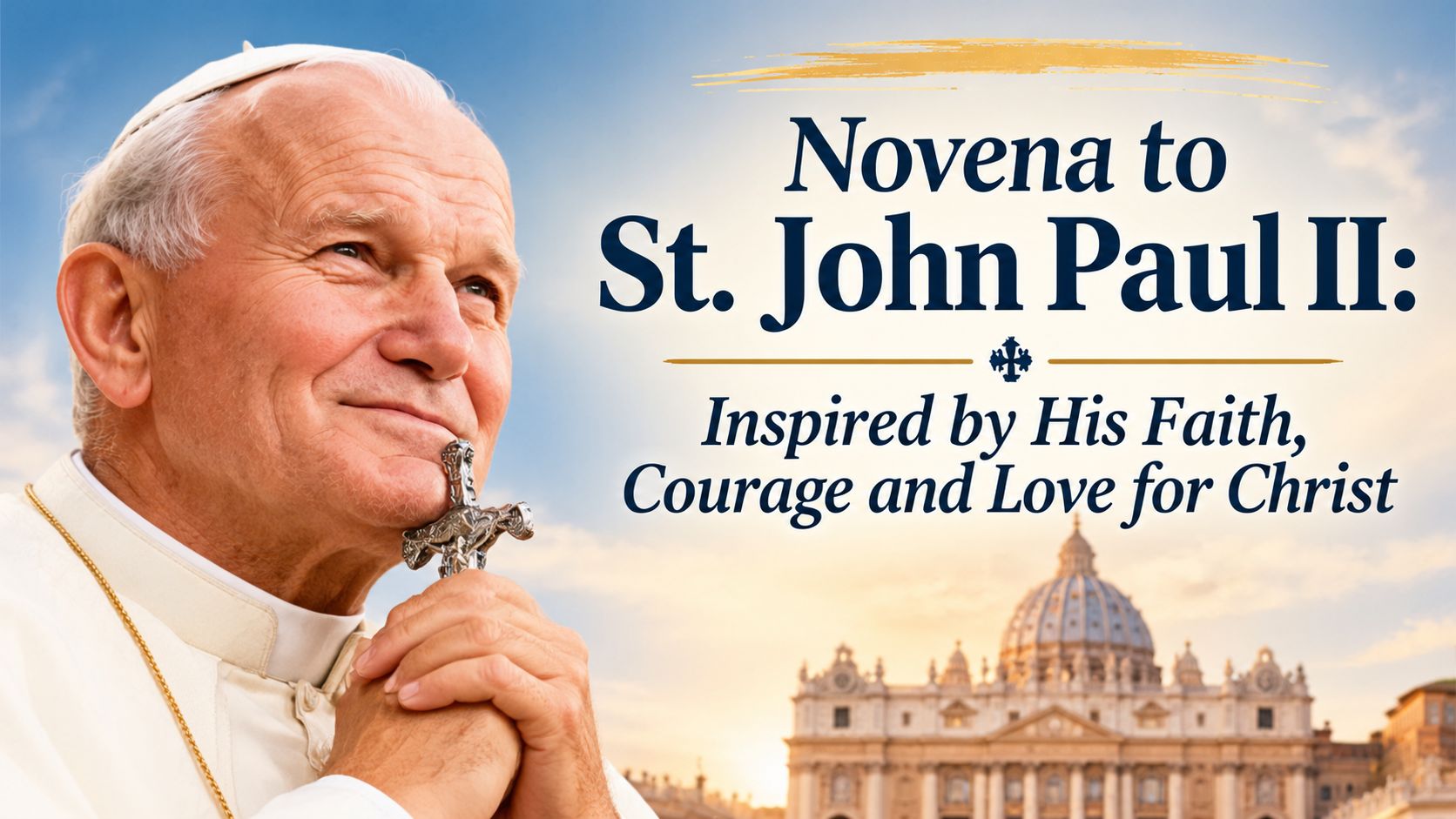
Pope John Paul II canonized Maximilian Kolbe on 10 October 1982.
At his canonization, the Pope emphasized the Gospel teaching that there is no greater love than to give one's life for another. Kolbe had lived those words literally, giving his life so that another man might live.
Saint Maximilian Kolbe teaches that Christian love is not merely an emotion—it is a decision to give oneself for others.
His life calls Catholics to defend human dignity, resist hatred, deepen devotion to Mary, and remain faithful even in suffering.
From the printing presses of Niepokalanów to the darkness of Auschwitz, Kolbe demonstrated that hatred does not have the final word.
His witness remains a powerful message for our world: Love is stronger than hatred, sacrifice is stronger than selfishness, and Christ can bring light even into the darkest places.
To know about more saints please visit the spiritual section.
By Catholic Connect Reporter
Saint Maximilian Kolbe, Saint Maximilian Kolbe feast day, Maximilian Kolbe biography, August 14 feast day, Auschwitz martyr, Catholic martyrs, Polish saints, Franciscan saints, Militia of the Immaculate, Immaculate Mary, Niepokalanów, Franciszek Gajowniczek, Catholic priests, saints of World War II, Christian love, Catholic spirituality



© 2026 CATHOLIC CONNECT POWERED BY ATCONLINE LLP