
English
Mass Readings: Jer 38:4-6.8-10 Ps 40 Heb 12:1-4 Lk 12:49-53
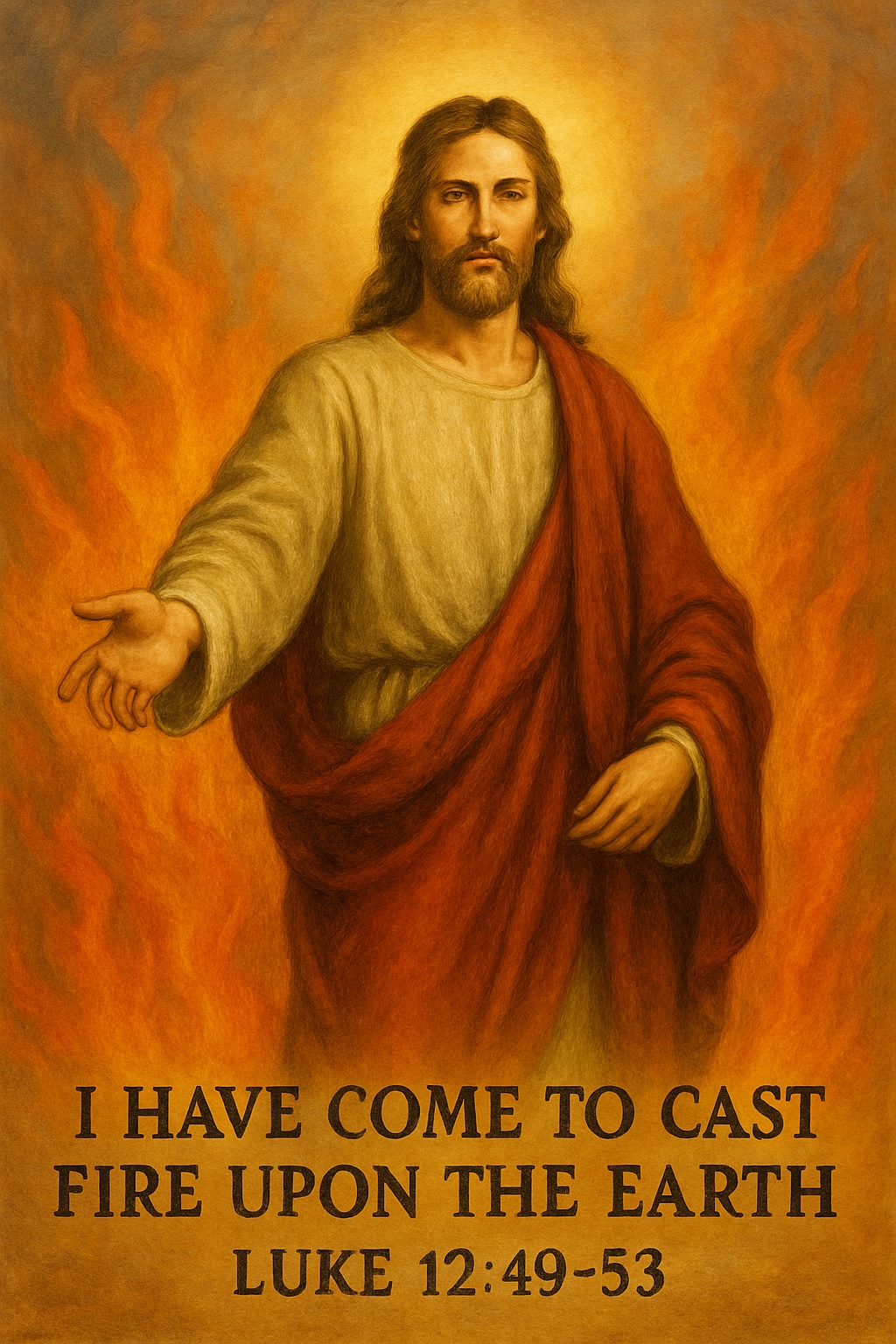
Key Verse to be Meditate: "I came to cast fire upon the earth, and how I wish it were kindled already (Lk 12:49).
Dear Brothers and Sisters in the Lord,
The twentieth Sunday in Ordinary time puts before us three things which are very unusual by Christ: Fire, Baptism and division. "I came to cast fire upon the earth” says Jesus. The readings of today urge us to embrace a faith that disturbs and transforms.
Jeremiah was a prophet who dared to speak God’s truth during a national crisis, even when it meant risking his life. His call to surrender in order to save lives was rejected by the powerful, who saw his message as a threat. Yet Jeremiah could not keep silent. The fire of God’s Word burned within him. This prophetic fire — unsettling yet life-giving — is the same fire Jesus brings to the earth.
The Letter to the Hebrews reminds us that the Christian journey is a lifelong race — a daily fight against sin and discouragement. We are not asked to simply follow rules, but to strive for spiritual maturity, looking always to Jesus, who endured suffering and remained faithful. Sin is like a weight we must cast off, lest it drag us down.
The Gospel intensifies this challenge as Jesus speaks of casting fire on the earth — a fire that purifies our hearts and ignites our zeal for God.
The First Reading
Today’s first reading reminds us that living according to God’s Word can often place us in conflict with worldly values. The prophet Jeremiah courageously speaks truth to power during a time of crisis. In 587 BC, Jerusalem was under siege by Nebuchadnezzar. Despite the people's suffering, the army generals, driven by pride and false hope, refused to surrender. Jeremiah, guided by divine wisdom, urged King Zedekiah to surrender to save the people. This prophetic voice, however, was inconvenient and threatening to the authorities, who responded by casting him into a dry well to silence him. But God, through an Ethiopian official named Ebed-Melech, saved Jeremiah, showing that divine truth cannot be suppressed for long. Jeremiah’s fire of truth could not be extinguished: “There seemed to be a fire burning in my heart, imprisoned in my bones. I could not hold it in” (Jer 20:9). This fire is the same that Jesus speaks of in the Gospel — the fire that purifies, challenges, and transforms.
The Second Reading
The second reading calls us to persevere in the fight against sin and discouragement. The author of Hebrews urges us to “keep running steadily in the race” of faith and not to lose sight of Jesus, who perfects our faith. This journey is not simply about fulfilling religious duties but striving toward Christian perfection. Sin is described as a weight — a burden that clings to us, impeding our progress (Heb 12:1). We are encouraged to throw it off, just as a soaked dog shakes off water. The Christian life is a daily struggle, a continual effort to overcome sin. The reading even challenges us to resist sin to the point of shedding blood (Heb 12:4) - reminding us that our spiritual battles require total commitment, just as Christ endured suffering for the joy set before Him. His obedience unto death becomes the model for our endurance in faith.
The Gospel Reading
The Peace that Christ Brought
Today’s Gospel places before us three striking and unusual images: fire, baptism, and division. Jesus says, “I came to cast fire upon the earth.” We are not accustomed to hearing such words from the lips of Christ. Throughout the Gospels, from beginning to end, His message consistently invites us to peace and love.
When Jesus was born in Bethlehem, the angels proclaimed, “Glory to God in the highest, and on earth peace among men with whom He is pleased!” (Lk 2:14). One of His earliest teachings was about peace: “Blessed are the peacemakers, for they shall be called sons of God.” (Mt 5:9).
Peace was also the first word the disciples heard from the Risen Lord on Easter evening. Behind locked doors, fearful of the Jews, they saw Jesus stand among them and say, “Peace be with you.” (Jn 20:19).
Jesus never endorsed violence, even when it was considered a legitimate act of self-defence. To Peter, who tried to protect Him in Gethsemane, He said: “Put your sword back into its place; for all who take the sword will perish by the sword” (Mt 26:52).
The Peace that Jesus Did Not Bring
How, then, do we reconcile this Gospel, where Jesus declares He came to cast fire upon the earth and bring division? We must understand that the peace Christ brings is radically different from the world’s idea of peace.
The key lies in understanding that the peace Jesus offers is not the passive peace of indifference or comfort. True peace often requires confrontation with injustice, sin, and complacency. Jesus confronts and exposes false notions of peace.
The Gospels present us with vivid examples of this deceptive kind of peace:
In the parable of the rich man and Lazarus (Lk 16:19–21), the rich man remains indifferent to Lazarus at his gate, unwilling to disturb his comfort.
· In the parable of the Good Samaritan (Lk 10:25–37), the priest and the Levite pass by the wounded man, preferring to preserve their “peaceful” routine rather than engage with suffering.
· Pontius Pilate, wishing to preserve political peace and avoid unrest among the Jewish leaders, washed his hands and condemned an innocent man to death: “I am innocent of this man’s blood; see to it yourselves.” (Mt 27:24).
This is not the peace Jesus came to bring. The fire Jesus casts is the fire of truth, purification, and transformation. It may cause division, even within families, but it is necessary for genuine discipleship. Christ calls us to a peace rooted in justice, mercy, and radical love—not one maintained by avoiding discomfort or difficult truths.
Jesus did not come to eliminate our sufferings, but to guide them toward justice and salvation. He came not to extinguish pain, but to set a fire—not one that destroys, but one that warms our cold hearts and purifies our inner lives. As He declared, “I came to cast fire upon the earth, and how I wish it were already kindled!” (Lk 12:49). This fire challenges the false peace of indifference that often paralyzes us. Like the prophet Jeremiah, who boldly spoke out against injustice despite opposition, we too are called to reject comfort and complacency for the sake of truth and righteousness.
Points for Personal Reflection
The readings today urge us to embrace a faith that disturbs and transforms. Jeremiah was a prophet who dared to speak God’s truth during a national crisis, even when it meant risking his life. His call to surrender in order to save lives was rejected by the powerful, who saw his message as a threat. Yet Jeremiah could not keep silent. The fire of God’s Word burned within him. This prophetic fire — unsettling yet life-giving — is the same fire Jesus brings to the earth. It is not a destructive fire, but one that purifies, awakens, and calls for justice. We, like Jeremiah, are called to be bold in our witness, even when it disturbs the false peace of the world. God still speaks through those who courageously denounce injustice and strive to bring peace founded on truth.
To Be with Christ is to Draw Near to the Fire
In today’s Gospel, Jesus boldly proclaims, “I came to cast fire upon the earth.” This fire is not one that destroys but one that ignites hearts with love, purifies intentions, and awakens consciences. It is the fire of divine love, zeal for truth, and the courage to challenge complacency. Christianity is not a religion of comfort but of transformation — of being set ablaze by the Word of God. As reflected in the non-canonical Gospel of Thomas, Jesus says, “Being with me is being close to the fire.” If we are not disturbed or challenged by Christ, our faith risks becoming passive and shallow. Jesus disturbed the peace of His time — not to sow chaos, but to shatter indifference and awaken people to the demands of justice and love.
The peace that Christ offers is not passive or detached; it is active and transformative. It demands that we fight against egoism and selfishness, which lie at the root of much of the world’s false peace. True peace is born when love triumphs over self-centeredness.
As Christians, we must be informed and engaged with what is happening around us—ready to confront injustice, resist sin, and awaken from spiritual lethargy. Let us ask the Lord to disturb our false peace, to stir our hearts, and to help us spread the fire of His justice, mercy, and love in the world.
© 2026 CATHOLIC CONNECT POWERED BY ATCONLINE LLP