Orientation Programs on Safe Migration and Social Security in the Dioceses of Nongstoin and Dibrugarh, Assam
In an effort to address the critical issues surrounding migration, the Dioceses of Nongstoin and Dibrugarh, under the North Region Bishops' Council, organized orientation programs focused on safe migration, social security, and the formation of a Workers’ Informal Forum (WIF). The sessions took place on 30th and 31st October 2024 and saw strong participation from clergy, religious, and laypersons.
Orientation Program in Nongstoin Diocese – 30th October 2024
The first program was held at the Bishop’s House in the Diocese of Nongstoin, inaugurated by Bishop Wilbert Marwein. Addressing an audience of 49 priests, including diocesan priests and religious, Bishop Marwein emphasised the growing impact of migration in rural communities within the diocese. While acknowledging the positive aspects of migration, he stressed the importance of ensuring that individuals migrate safely and remain connected to their roots for the overall growth of their communities.
Advs. Fr. Jaison Vadassery and Sr. Shobha Kandathil led the orientation sessions, sharing insights on the challenges migrants face, such as economic distress, family separation, and vulnerability to exploitation. The program, integrated into the monthly recollection of diocesan priests and religious, equipped the attendees with knowledge and strategies to better support migrant families, addressing both spiritual and practical needs.
Orientation Program in Dibrugarh Diocese – 31st October 2024
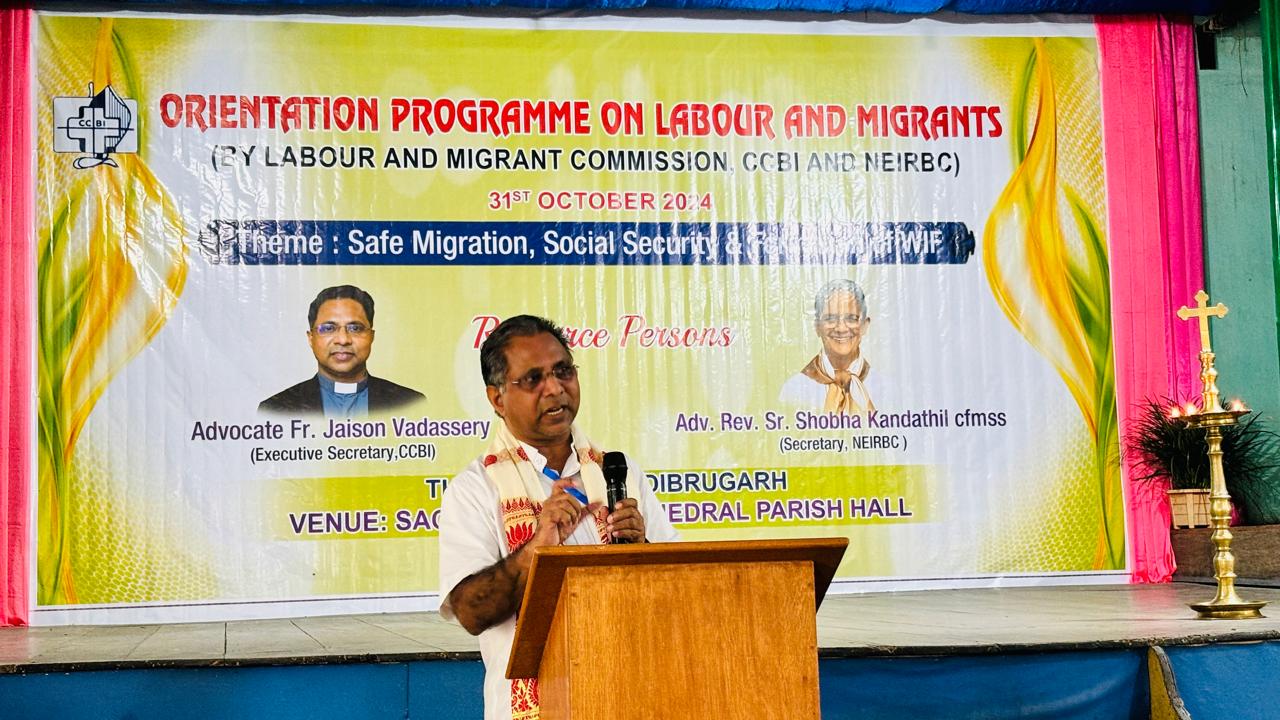
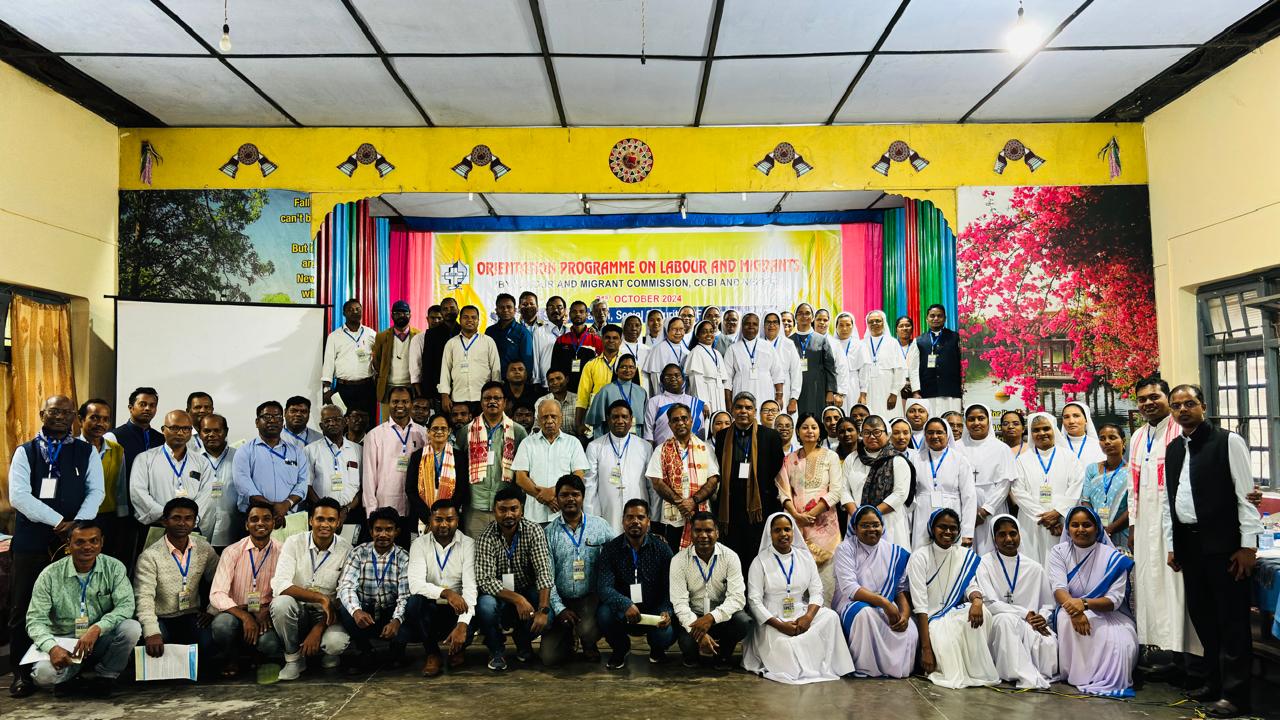
The following day, a similar orientation program was held in the Diocese of Dibrugarh with over 150 participants. Bishop Albert Hemrom, the Bishop of Dibrugarh and Vice Chairman of the Commission for Migrants of the Conference of Catholic Bishops of India (CCBI), inaugurated the event. In his opening remarks, Bishop Hemrom spoke about migration as a journey that reflects resilience and hope, drawing parallels with biblical narratives such as the journeys of Jesus and the Exodus. He emphasized Pope Francis’ vision of protecting, promoting, and integrating migrants into society as part of the Synodal journey, while also addressing the Church’s responsibility to combat bonded labor and human trafficking.
Fr. Jaison Vadassery, Sr. Shobha Kandathil, and other resource persons facilitated sessions that provided a comprehensive understanding of the migration crisis, particularly in the tea garden areas of Assam, and outlined ways to assist migrant families spiritually, educationally, and socially.
Key Strategies and Recommendations
Both programs identified common strategies to support migrant workers and families in Assam. Participants and facilitators discussed practical steps to improve migrant welfare and enhance community resilience:
Conclusion and Commitments
The combined orientation programs in Nongstoin and Dibrugarh set a hopeful tone for the Church's role in supporting migrants. The programs concluded with a shared commitment to:
© 2026 CATHOLIC CONNECT POWERED BY ATCONLINE LLP